

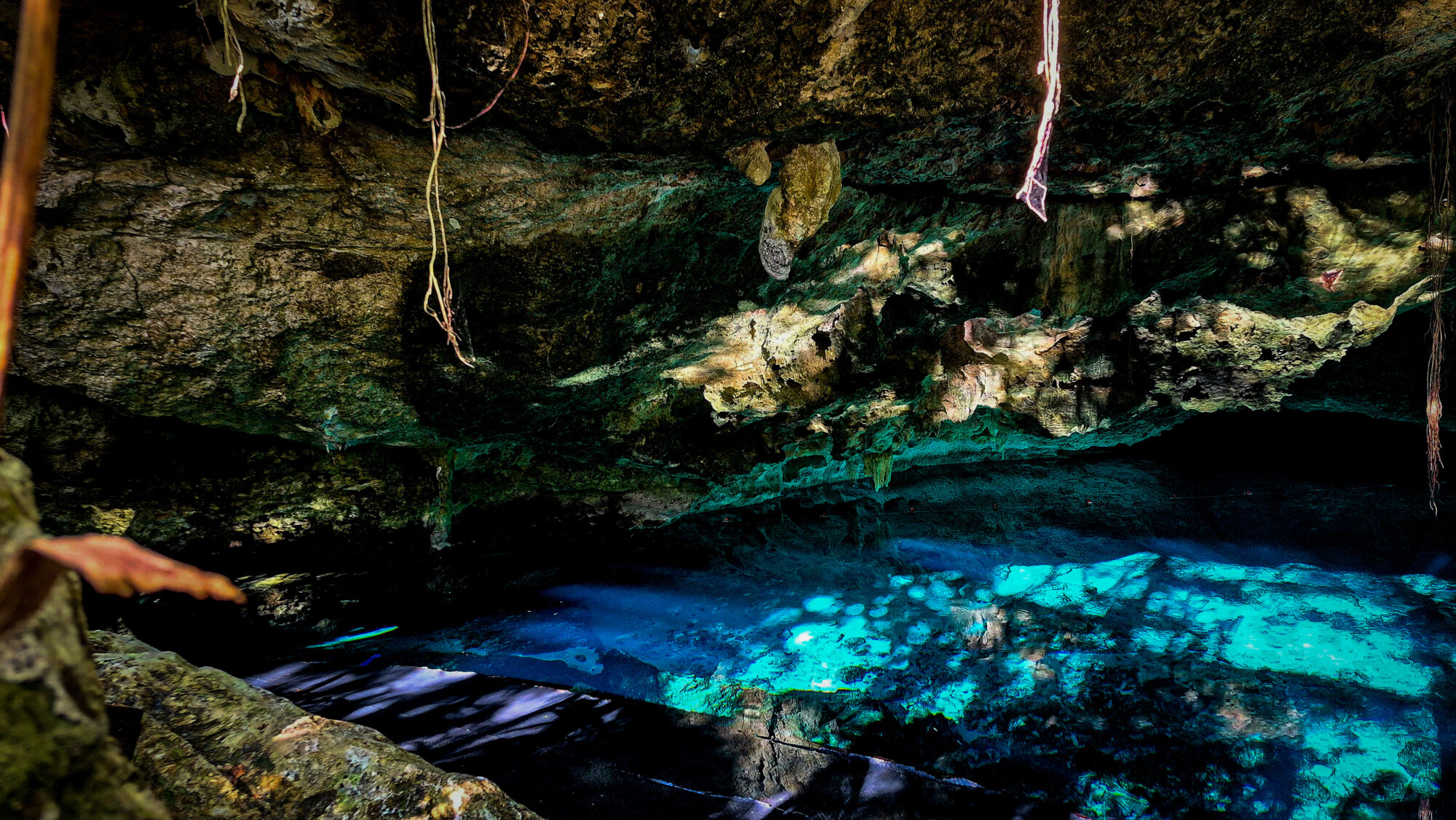
It looks like the gateway to a calm, serene, sapphire-blue world. A world of the gods, perhaps just as the Maya imagined it.
You seem to glide weightlessly through the caverns. Where the sun’s rays touch the surface, the water turns turquoise. In the glow of the torches, however, it appears crystal clear; otherwise, there’s only total darkness.
No current, total silence, broken only by the mechanical hiss of the regulator. Were it not for the damp cold creeping into the wetsuit, you wouldn’t feel the water at all. And sometimes a small fish reminds us that we have dived into its world.
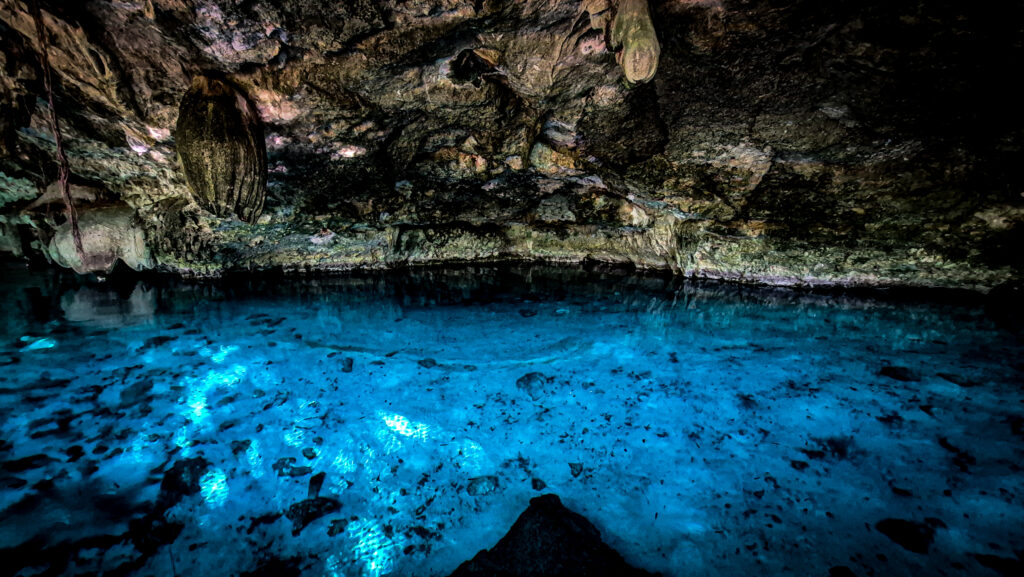
The beam of the torch cuts through the darkness. The air bubbles cling to the ceiling like silver Christmas baubles, reflecting the cold artificial light. There is no beginning and no end. As if the surroundings were reflected on the surface of a lake – only from below.
What are cenotes?
Cenotes are karst caves with access to groundwater. The name comes from the Maya language and roughly translates as ‘water hole’. The caves form in karst regions near the sea: when the sea level drops drastically, caves form in the unsaturated zone above the groundwater, filled half with air and half with water. When the sea level rises again, the water pressure supports the cavities. But this balance is fragile: the ceilings are extremely prone to collapse.
The older the cenote, the more likely it is that the ceiling has already collapsed, creating an opening to the surface. Younger cenotes are usually still found in caves, of which there are more than enough in Yucatan; estimates suggest there are over 7,000. Although most contain fresh water, at least in the upper part, there are cenotes where both sea water and fresh water are present, yet they do not mix due to their different densities.
The Great River of the Maya
A vast world lies hidden beneath the ground of Yucatán. Almost 1,700 kilometres have been mapped so far – a gigantic, transparent vein that runs invisibly through the limestone beneath the feet of unsuspecting tourists. Researchers believe it to be one of the largest contiguous systems. And for the inhabitants of Yucatán, it is the only reliable source of water. This is precisely why the Maya probably settled in the area.
Thanks to the drinking water from the cenotes, the Maya were able to build vast cities and provide for their inhabitants in the arid landscape. For there is not much rainfall in this region: around 800 mm per year, and most of it during the two-month rainy season. However, it was precisely this dependence on water that ultimately, it seems, led to their downfall. Several severe droughts from the 9th century onwards may have been one of the reasons for the final demise of the vast Maya cities.
The gateway to hell?
For the Maya, cenotes are not only a source of water, but also sacred. They see them as the gateway to the gods of the underworld, Xibalbá – literally, the ‘place of fear’.
The Mayan world is divided into three parts: the underworld, the earth and the heavens. All caves and caverns are regarded as gateways to the underworld, and although it is called the ‘place of fear’, the underworld is simultaneously a source of life, of the origin.
Researches identified the cenotes as sacred sites due to the many offerings they found in the caves, and even today, though rare, ceremonies are still held. Yet although human sacrifices were made, Xibalbá cannot be compared to the hell of the Christian faith.
It is not a hell, but a testing ground. The deceased pass through the nine levels into which Xibalbá is divided until, after trials, struggles and imposed sufferings, they are permitted to leave the place. The most direct route is via the Ceiba tree, Ceiba pentandra, a sacred tree that connects Xibalbá to the heavens through its roots, trunk and crown.
In fact, all the deceased must pass through the underworld; only those sacrificed, those who have sacrificed themselves, and women who die in childbirth travel directly to the gods in heaven.
Yet as awe-inspiring as the history of the Maya is, today’s reality at the water’s edge often looks far more mundane: it is a multi-million-dollar business.
Holy Tourists
Where priests once made sacrifices to the gods, souvenir shops now line the path to the water. The cenotes remain vital to survival, but no longer just for their drinking water; they are now tourist attractions. Unfortunately, things have reached the point where exorbitant entrance fees are charged, and these are constantly being raised. The owners’ argument? The tourists are willing to pay, so if they don’t like it, they should just visit cenotes abroad. There are indeed cenotes elsewhere, but the problem is that most (and the most impressive) are in Mexico.
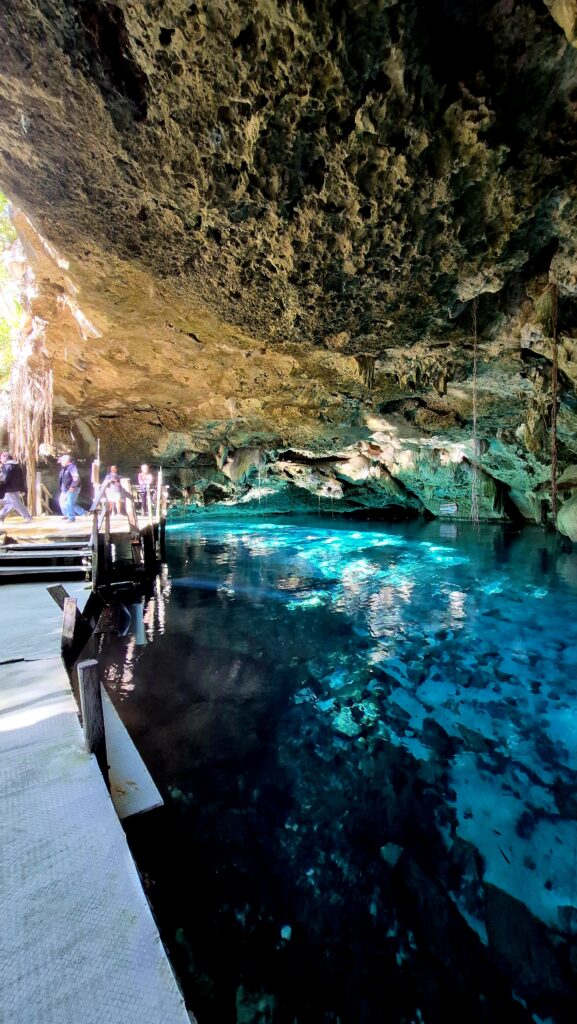
Since we’re already in the area, we thought we’d go for a dive. We book a dive online. Most diving schools don’t even have an office you can pop into anymore. We opt for the cheapest deal: two dives in the same Dos Ojos cenote for 170 US dollars.
Almost cheap compared to other online offers. And not much less than the Galapagos, although there we also had a boat trip and lunch included. The value for money is really nowhere near justified in Quintana Roo.
In return, we get to spend the night for free at the fire station and leave the car safely parked there too. Definitely well worth it.
A shivering adventure in the vast underwater cave system
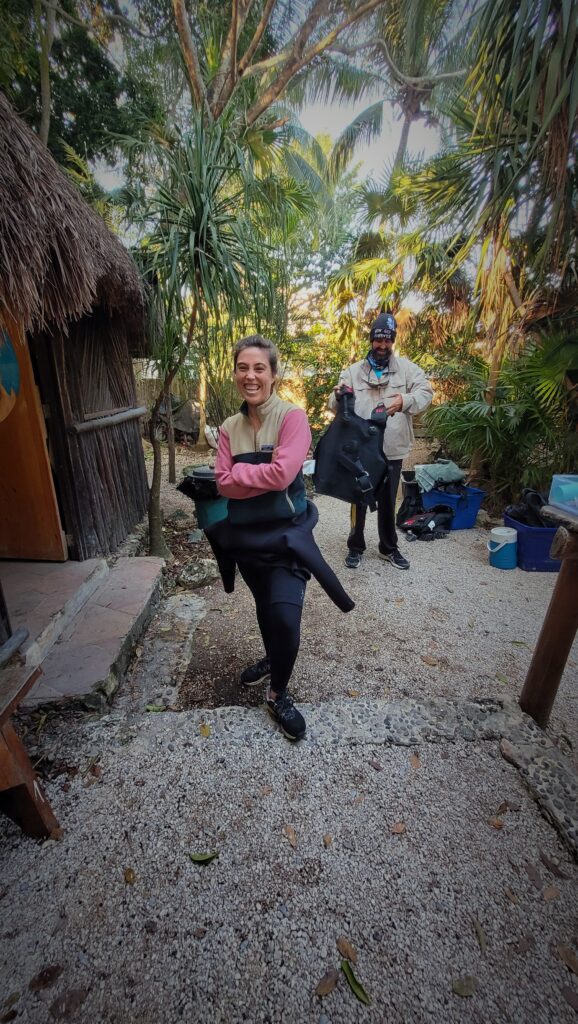
In the morning, we head to the dive shop in freezing 7°C weather. Shivering and wrapped up in hats and jumpers, we hoist the heavy diving gear onto the pick-up. Off we go to the cenote.
Well, just the entrance fee to the cenote costs 500 Mexican pesos (approx. 35 US$). Per person, mind you. The site is, of course, included in the price: at the cenote, you jump into the water twice, walk past the souvenir shops, you are allowed a quick cold shower and then have to leave again.
Well, we’re here now anyway, so we take the plunge and fork out the money.
When you dive in, the water still feels warm; it’s supposed to be around 25°C, quite constant during the year. As it’s cold outside – 15°C by now – it feels very pleasant.
The verdict? The feeling… incredible. Imagine floating in absolute nothingness. You forget the heavy kit on your back and feel as though you’re flying through an endless, blue void. Every now and then you dodge stalagmites and stalactites, watching as air bubbles cling to the ceiling and reflect the mysterious atmosphere back.
Tranquillity and silence itself – and all abruptly interrupted. Twenty divers are coming towards us – in the narrow cave. Although the diving route is marked out with a line and pre-determined, and we manage to pass each other, the cavern suddenly feels even tighter.
Luckily, we’re almost at the end. Five minutes later we’re back at the start; you can already feel the warmth of the sun’s rays, and despite the steady 25°C temperature, we emerge from the water shivering. Somehow it felt colder after all. What’s more, the tourists are only given 3mm wetsuits, whilst the dive guides dig out their own 7mm-thick suits. Obviously our guide thought it wasn’t that cold after all.
The water in the cenote is part of one of the largest underground cave systems in the world. It was only in 2018 that a connection was discovered between the Dos Ojos cenote and the rest of Sak Aktun. It is currently estimated to be a full 378 kilometres long.
There are many more cenotes, and each one is unique. However, for budgetary reasons, we had to choose just one. That’s why there were no further dives, though we did visit another cenote: Cenote Xnuuk.
And then we were all alone…
Near Valladolid, there’s a little-known gem: a campsite with a private cenote run by two German expats. We headed there – and weren’t disappointed.
This cenote is the complete opposite of Dos Ojos – not a tourist in sight. They’ve also created a unique entrance: down a spiral staircase, through a rock tunnel and across a (certainly not safety-certified) rope bridge, you descend into the earth’s interior.
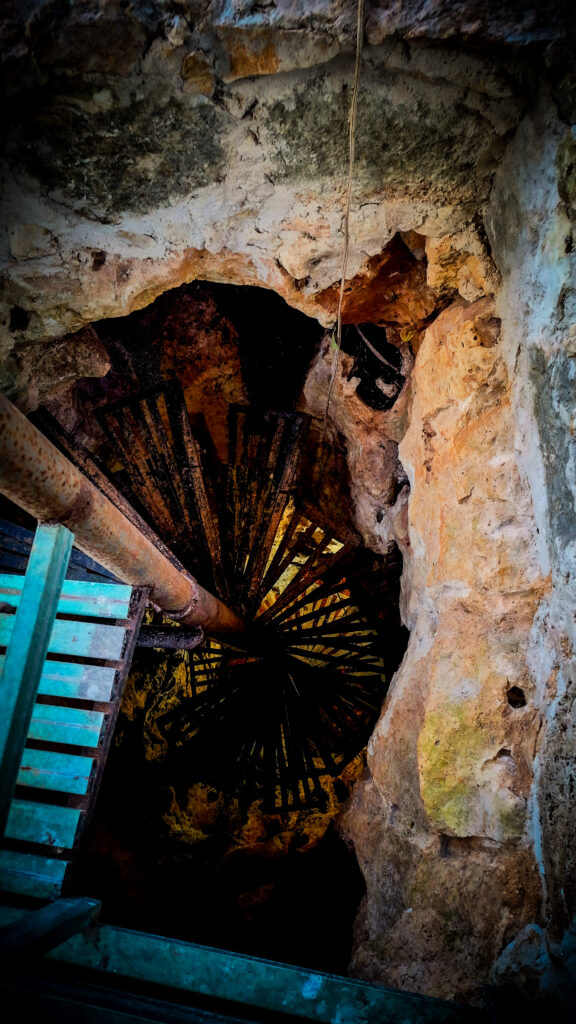
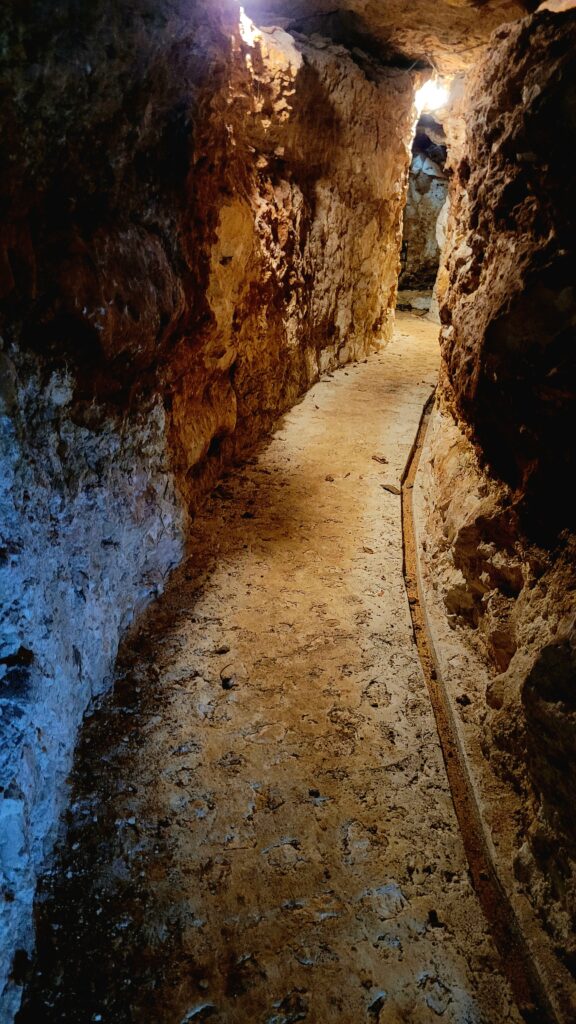
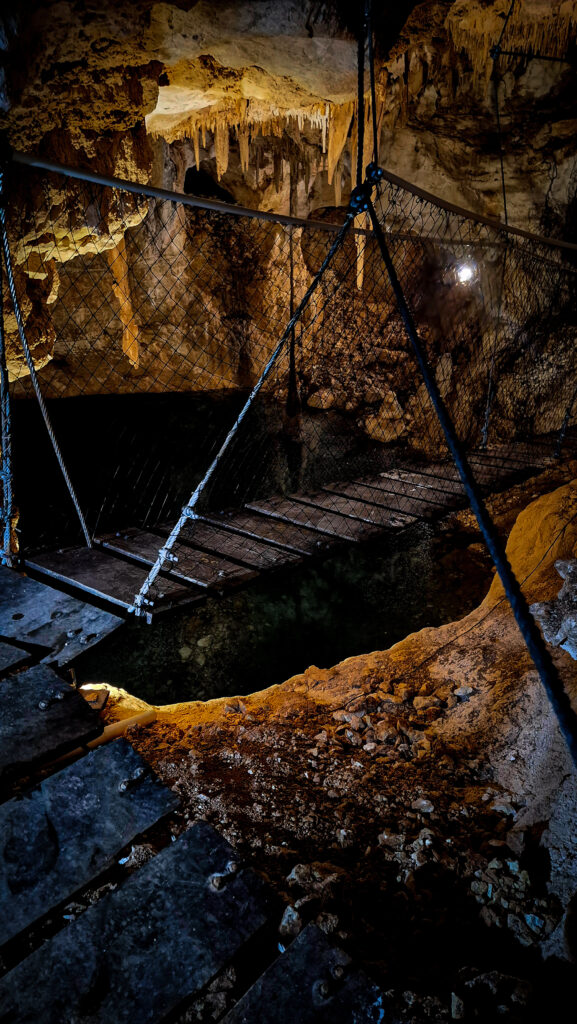
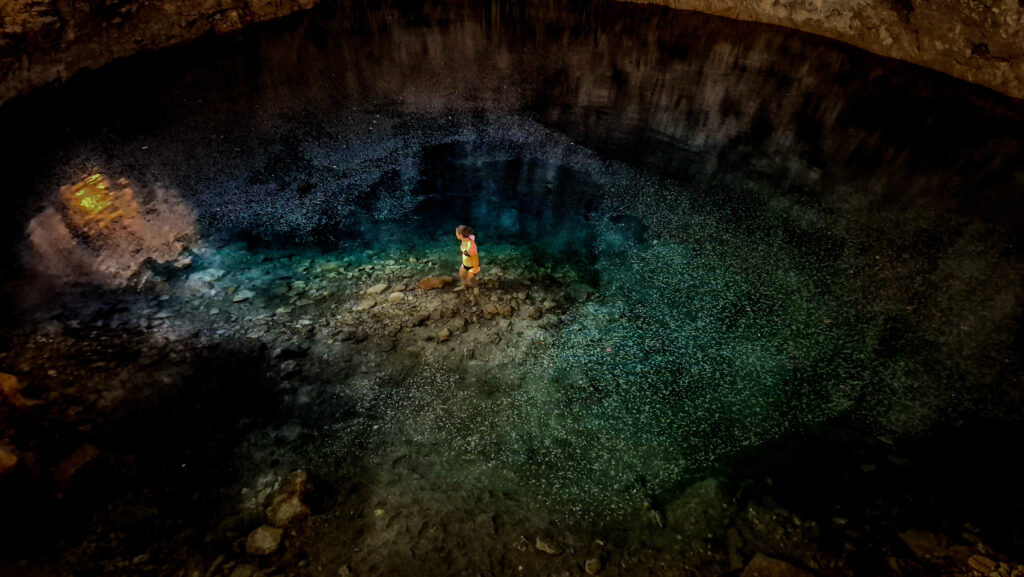
There it lies beneath us, Cenote Xnuuk, in the middle of a cave. Only two small light wells let a few rays through at midday when the sun is at its highest point of the year. Fortunately, we no longer rely on daylight, as they have wired and lit everything up. The artificial light is what really brings the cave’s vastness to life. Inside, it’s always 28°C – and as it was so cold during our stay, it felt like a proper spa experience.
This is exactly how we imagined it. Drifting on clear water, alone in a cave. Amidst a silence that permeates everything, interrupted only by the splashing of condensed water droplets. As you watch the roots of the trees in search of the elixir of life, you almost feel as though you can see a Mayan god from Xibalbá venturing up into the world of the living.