

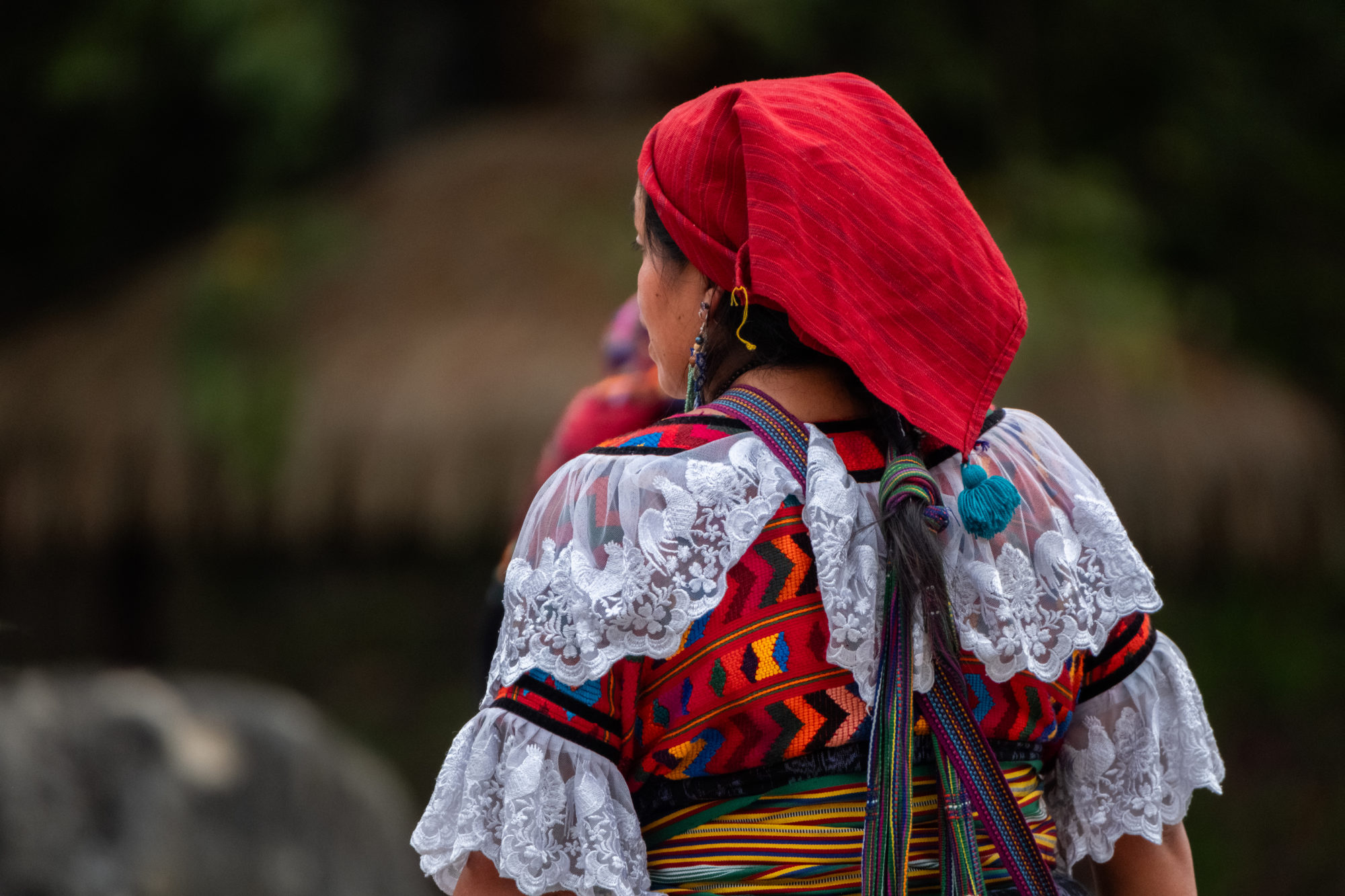
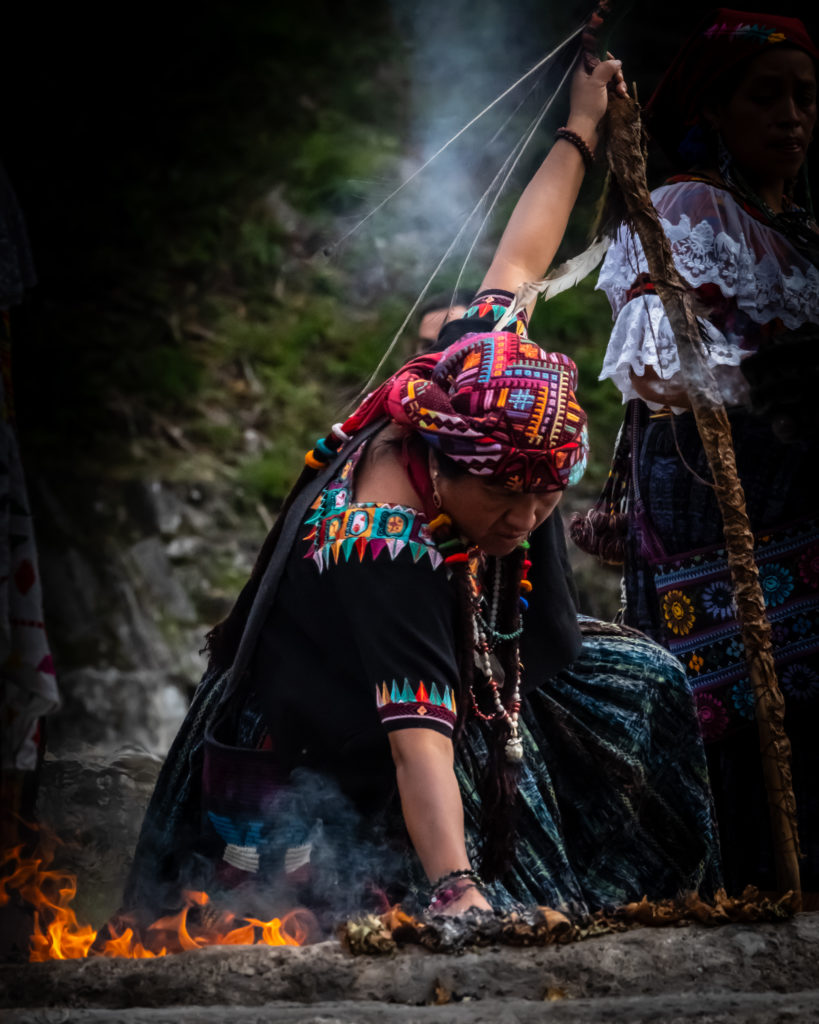
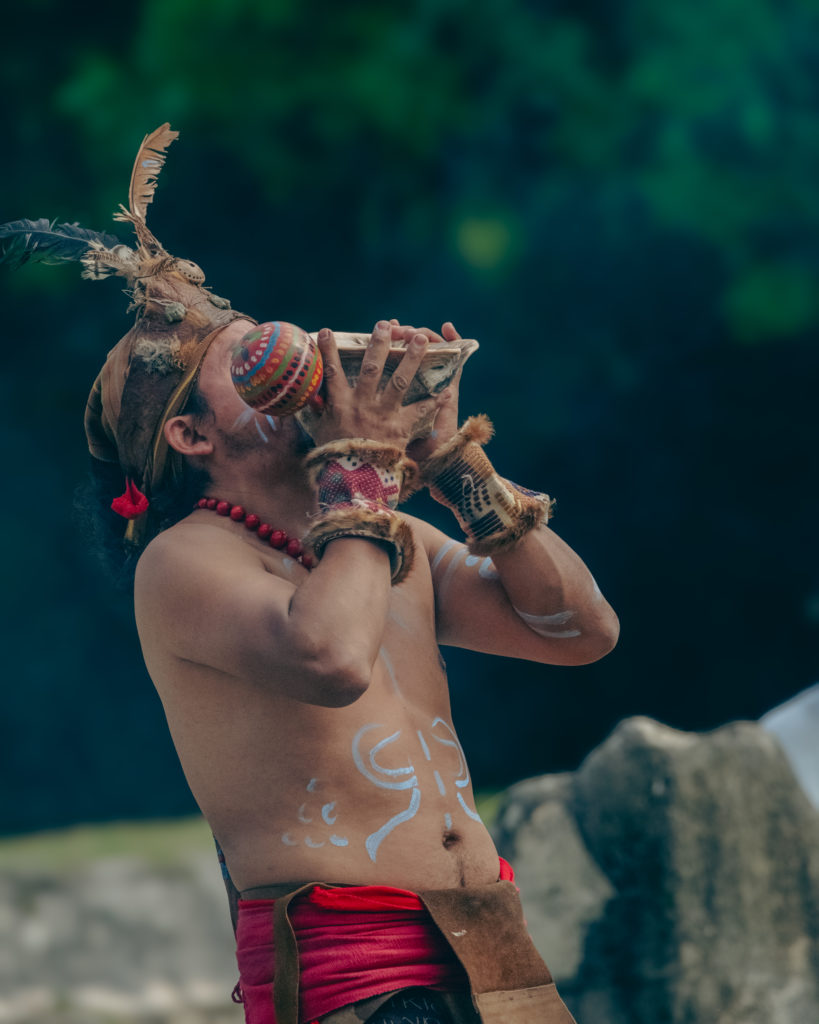
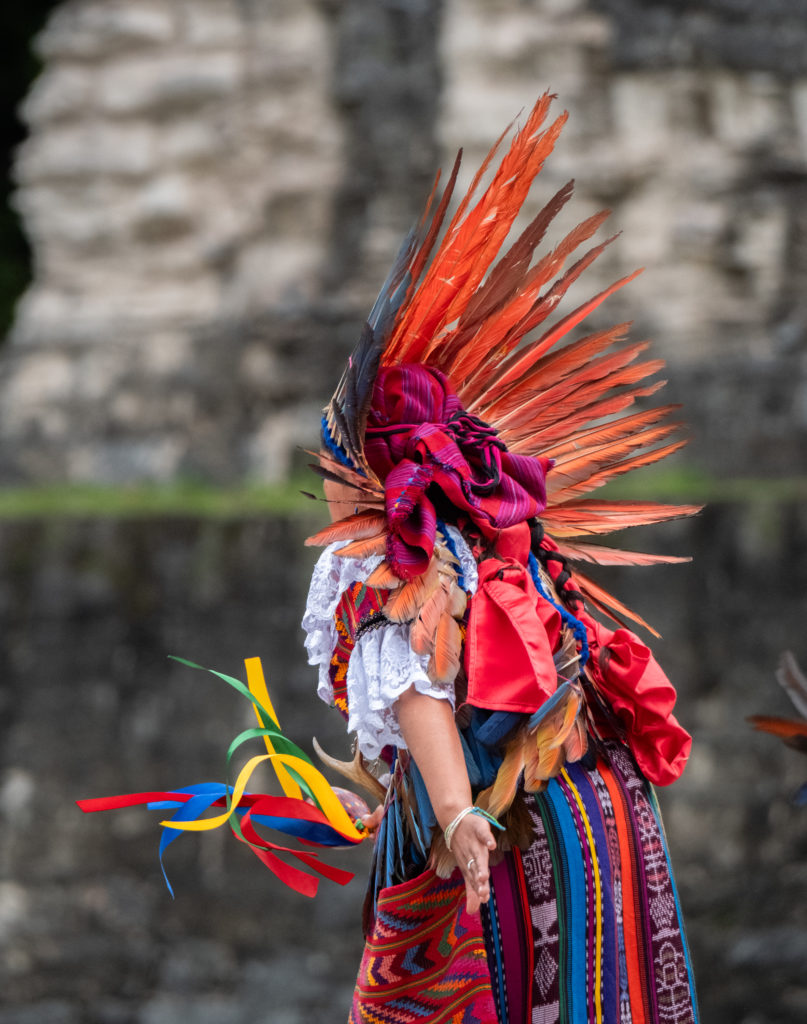
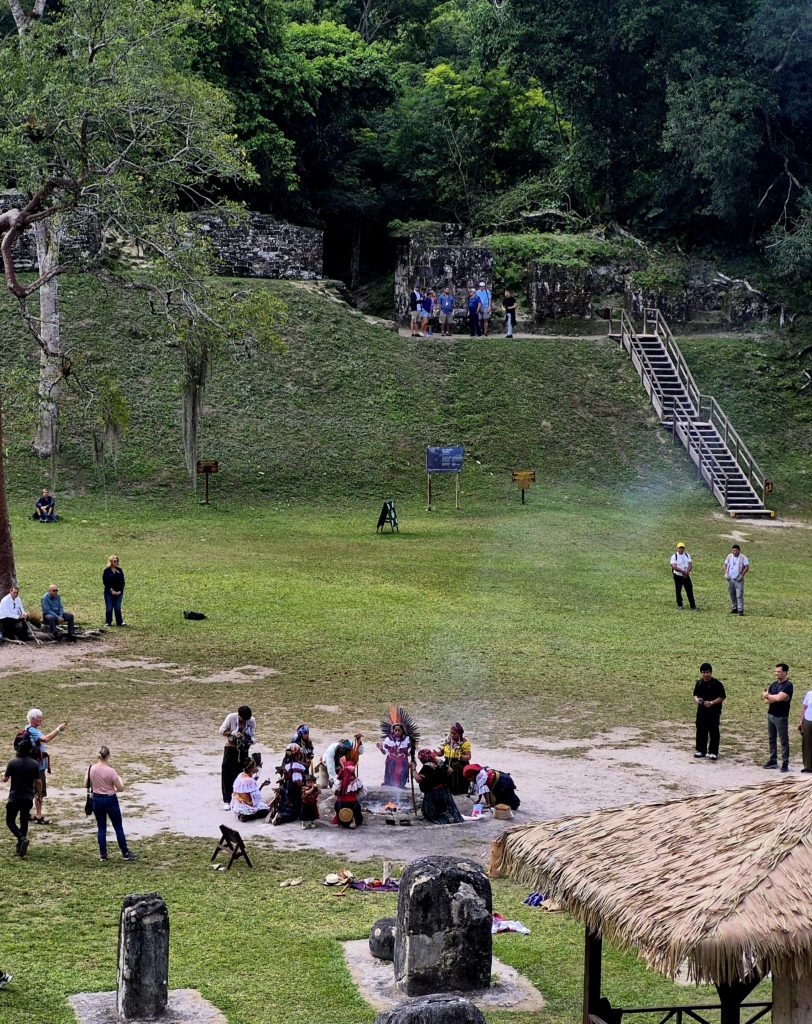
A two-year-old girl grimaces as her mother blows tobacco smoke directly into her face. Then they continue to dance around the fire. Meanwhile, the grandmother stands with her back to the fire in front of the main temple, smoking tobacco leaves and singing softly to herself.
Music plays and others circle the fire pit, performing alternating dance steps, sometimes with and sometimes without feathers. Suddenly, all falls silent, the shaman kneels down and recites a prayer.
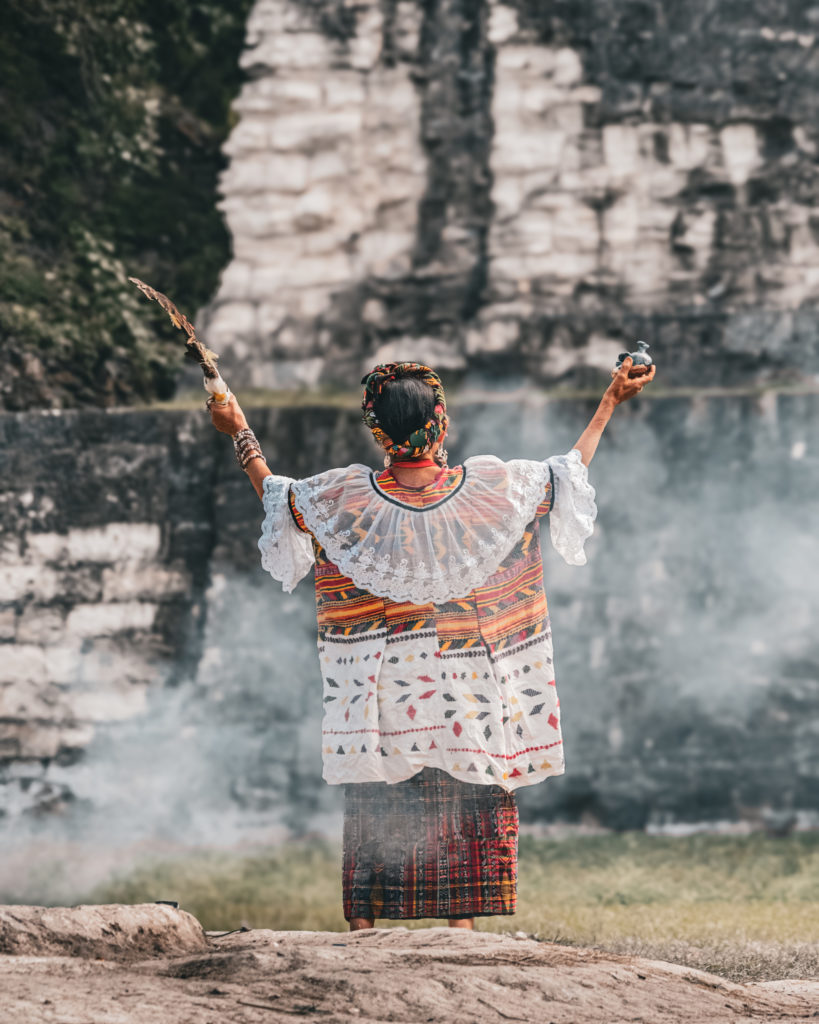
At the end of the ceremony, all of them have tears in their eyes out of joy because they have finally been able to honour their ancestors in the Mayan ruins of Tikal once again, purify their souls through fire, and thank Mother Nature.
We watched them for two hours in the main square of Tikal. It looked so authentic that we asked what was happening. Apparently, it was a real ceremony of this Mayan tribe. Rosalía, the 85-year-old grandmother, had requested it. Also Mayas need a permit to perform ceremonies like this, especially when involving fire.
History of the Maya
The Maya are not a homogeneous group, but rather various peoples referred to as Maya by the Spanish. Remains indicate that the Maya spread throughout the region around 2000 BC. At its peak, their kingdoms stretched from central Mexico to Honduras.
However, the large, well-known buildings were not constructed until Maya culture was at its peak, a period that saw the construction of some of the largest cities in the world at that time, with populations of between 50 000 and 120 000. Of course, food supply and urban planning were essential.
One of these impressive cities was Tikal, where Rosalía was celebrating her fire ceremony with her family. The temples are impressive, the steps are steep, and the jungle is dense – also a perfect playground for spider monkeys.
At six o’clock in the morning, we walked alone through the ruins. The few other tourists had all climbed the 70-metre-high temple to watch the sunrise through the mist. We, on the other hand, let the impressive buildings, accompanied by the sounds of parrots chirping and howler monkeys roaring, work their magic on us.
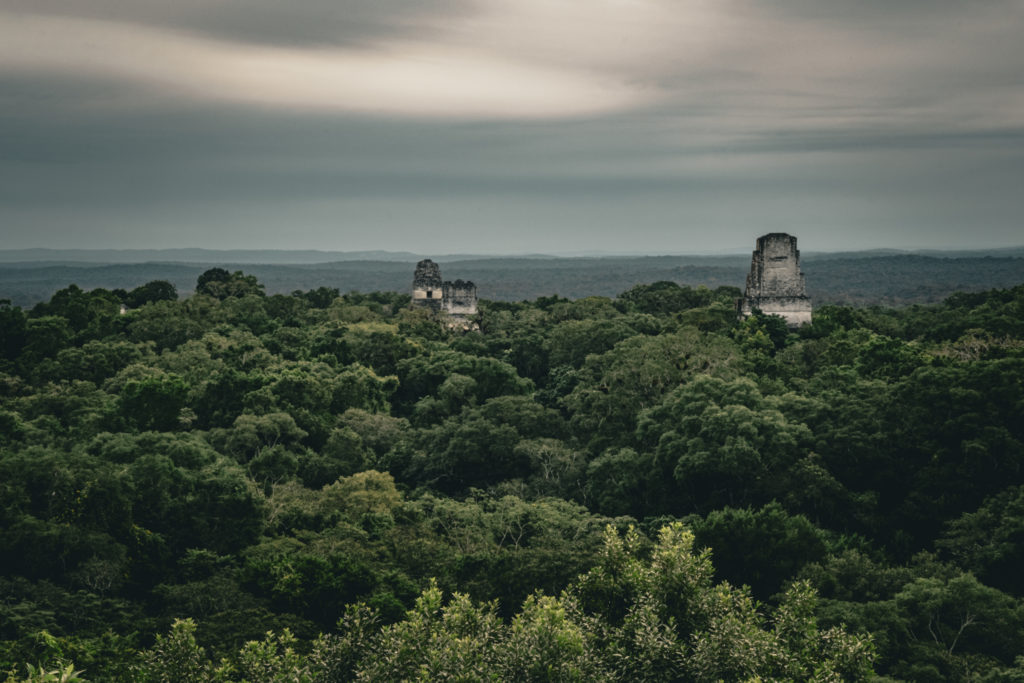
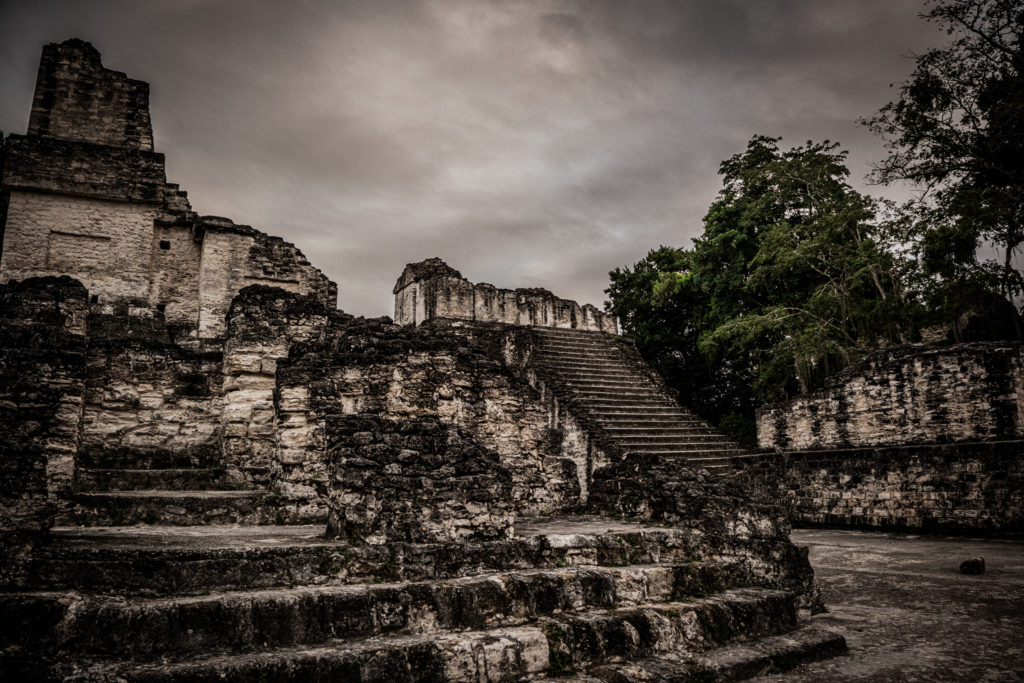
It is estimated that up to 120 000 people once walked these same streets, at least during Tikal’s heyday. Remarkably, this was achieved in an area located in the middle of the tropical jungle with no natural water source. The people there lived exclusively on stored rainwater, which is another testament to the city’s advanced planning.
In general, Mayan culture was much more advanced than researchers had previously assumed. Tikal covers an area of up to 60 km², but most of it remains hidden beneath the tree canopy. It is difficult to see. This explains why it remained unknown for so long.
People lived here for around 1 500 years until they suddenly left around 900 AD. Overpopulation and deforestation due to the use of firewood suddenly made the area uninhabitable, forcing them to leave. Although some regions collapsed, not all Maya regions did. Some even survived or grew larger after the classic ‘collapse’, such as Chichen Itzá, which lasted until 1500 AD.
The ruins of Tikal were probably not completely forgotten, but they were no longer in use. The first expeditions to the region did not take place until 1840, starting from Guatemala. Guatemalan Ernesto Méndez takes credit for rediscovering the archaeological treasure. Major excavations followed, with the help of US universities, especially from the 1950s onwards.
Slightly smaller, but more intimate
However, our first Mayan site was not Tikal, but Iximché, which is near Guatemala City. This was the 15th/16th-century capital of the Kaqchikel Maya. The Kaqchikel people still exist today. They now mainly live in the Guatemalan mountains, and there are up to 400 000 Kaqchikel speakers. Their language and culture are therefore still thriving.
And very impressively so. Iximché is a small site compared to Tikal, Palenque or Teotihuacán. We only went there because we had visitors and wanted them to experience some Mayan culture. For us, however, it was a stroke of luck, as we were able to experience the culture up close once again.
When the Spanish conquerors arrived in Guatemala, they settled in Iximché. They made it their capital. The Nahua people called the area ‘wooded land’ (Quauhtemallan). Since the Nahuatls were allies of the Spanish at the time, the Spanish adopted the name for the entire area: now known as Guatemala.
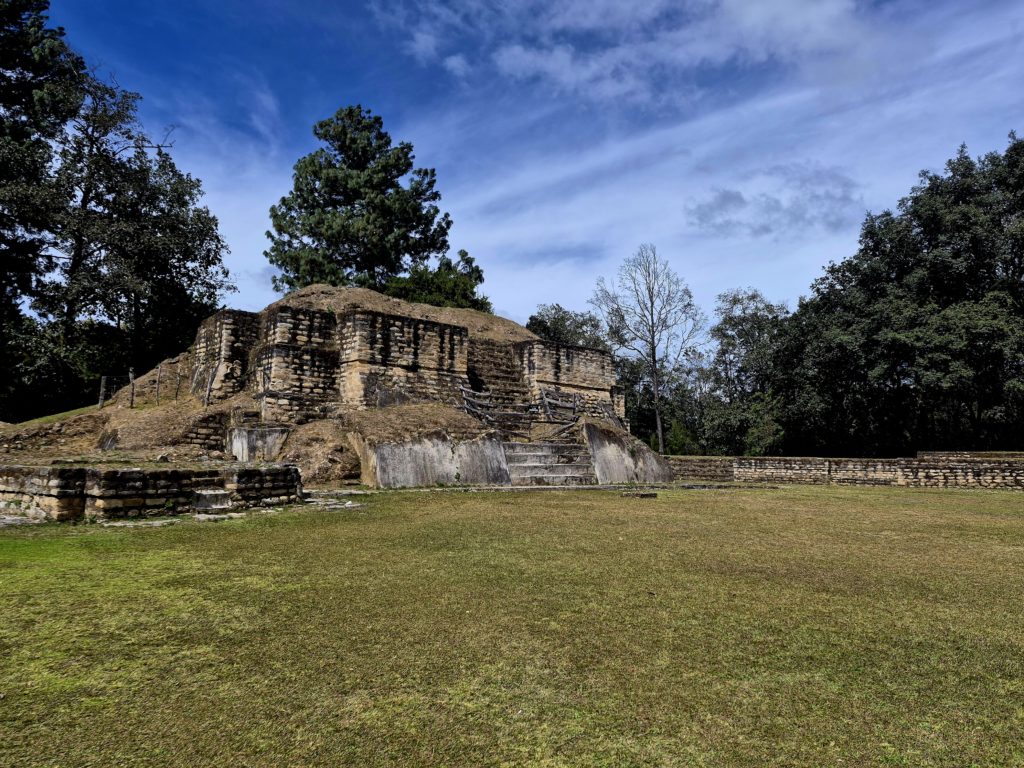
When we arrived, we put on our down jackets. At over 2 000 metres, it was cold. The car park was quite full, and everyone was wearing traditional Mayan clothing. It was Sunday. We walked through the front ruins almost alone. For some reason, no one seemed interested in them.
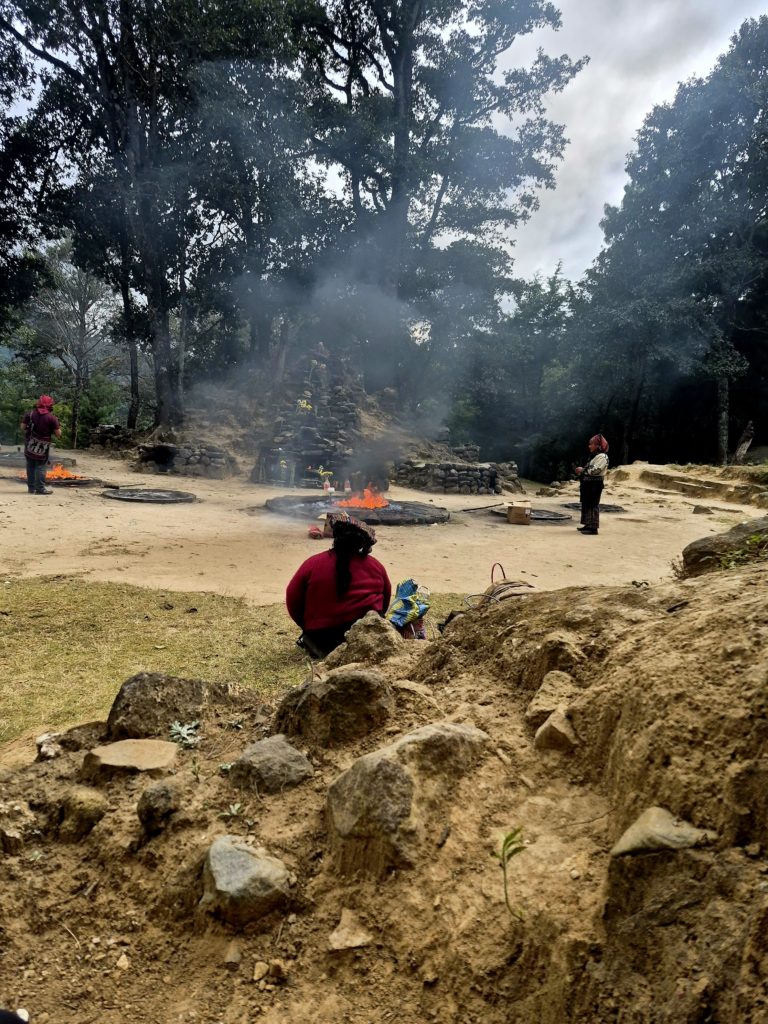
It was only at the back that we realised why – the Maya were holding their Sunday service there. Ceremonies were taking place on ancient altars that had been used since Iximché was founded.
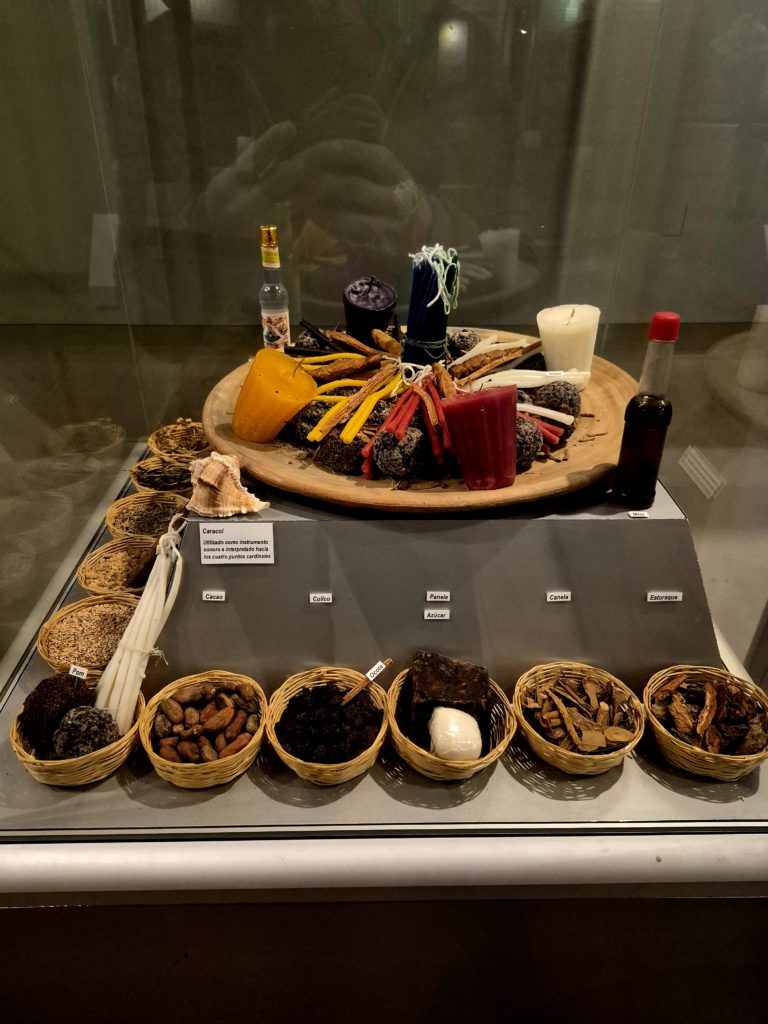
The fire burned, the smoke was sometimes black, sometimes white. The masters of the ceremony took offerings of sugar, cinnamon, cocoa and other local herbs and threw them into the fire. Families came together to take advantage of the gods’ favour, barbecuing and celebrating the New Year.
Our visit to the two Guatemalan sites was impressive. Once again, it became clear that what happens usually has a greater impact on us than the ruins themselves. Tikal is impressive in size, but experiencing the culture in real life is even more so.
Pingback:Teotihuacan and Palenque – Travel & Wildlife