

A city no one built and one guarded by the jungle
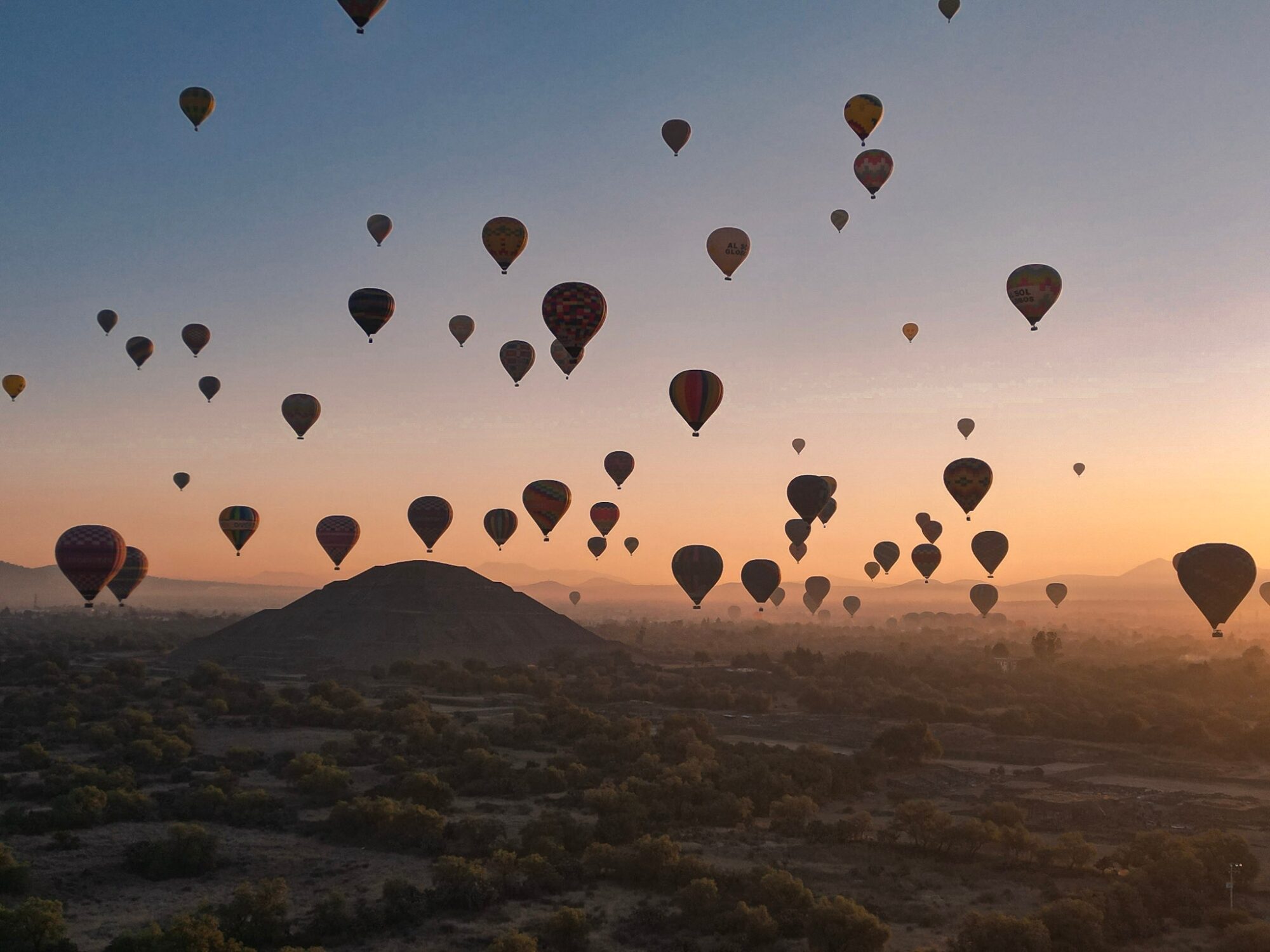
The sun is only just peeping out from behind the Pyramid of the Sun. A hot-air balloon drifts silently past in the distance. In the early morning, the Avenue of the Dead still feels deserted, truly living up to its name.
As we circle the massive stepped pyramid—65 metres high and the third-largest in the world—it is still chilly. You can feel the cold night of the high plateau. However, the sun is steadily gaining strength, warming our path along the Avenue of the Dead towards the Pyramid of the Moon.
Wir sind mitten in Teotihuacán. Der ruhige Morgen ist inzwischen einem heiteren Trubel gewichen. In Begleitung zweier Freundinnen aus Spanien bestaunen wir dieses Meisterwerk. Doch ein GWe are in the heart of Teotihuacán. The quiet morning has since given way to a cheerful bustle. Accompanied by two friends from Spain, we marvel at this masterpiece. Yet one thought keeps nagging at us: was it really the Aztecs? The answer is a resounding no. Teotihuacán is a riddle that reaches much further back in time.
Who built the City of the Gods?
Between 100 and 650 AD, Teotihuacán grew into one of the largest cities in the world. It is estimated that around 100 000 people lived here at its peak. The Pyramid of the Sun was built in one continuous phase around the year 100; an entire system of streets and canals was precisely aligned with the city grid. The inhabitants engaged in brisk trade, created fine art, and yet left behind almost no written records. Who they really were remains a profound mystery.
The city was abandoned quite suddenly. Around 650 AD, the people began to relocate. The reasons for this remain unclear to this day. It might have been overpopulation and the resulting food shortages; perhaps droughts and cold drove the people away, or massive deforestation led to a lack of vital firewood.
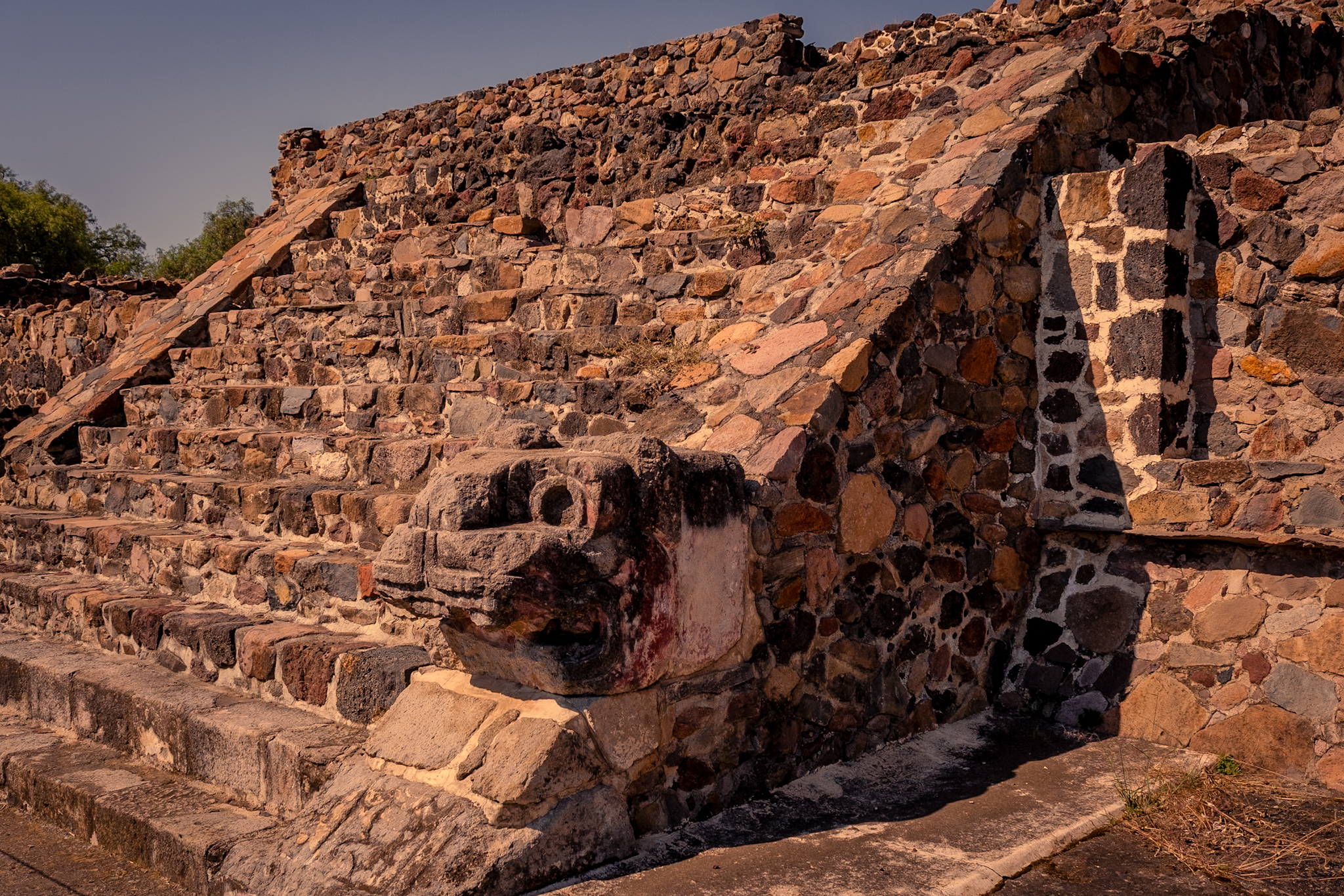
The few characters and symbols found by researchers have not yet been deciphered. Consequently, archaeologists can only speculate about the identity of this culture through indirect finds. Religion was certainly a defining part of daily life: murals depicting various gods can be found throughout the complex.
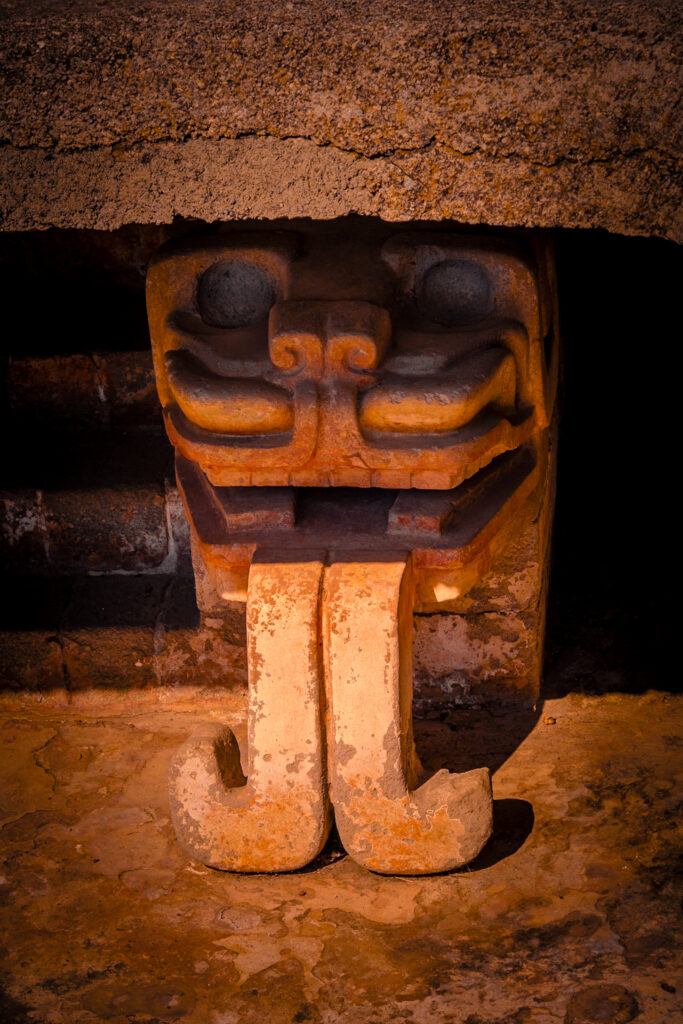
At one time, almost all the buildings—including the great pyramids—seem to have been painted a vibrant red. Sadly, only the dead can tell those stories now.
The legacy of the Mexica: Namers, but not builders
From the year 700 onwards, only ghosts inhabited the Avenue of the Dead in what was once Mesoamerica’s most powerful city. It never faded entirely into oblivion, but it was scarcely ever used again.
The Aztecs, who gave the site its name, did not arrive in Teotihuacán until the 12 or 13th century. The Mexica brought the ruins of Teotihuacán back to life, but it never regained its former scale—for then came the Spanish.
Though their culture left a lasting mark on the country. They called themselves Mexica – here is the country’s name.
Palenque: The green counterpart in the south
Teotihuacán was not alone in its decline. Almost at the same time, around the 8th century, a significant Maya city in the south also vanished: Palenque.
While Teotihuacán impresses with its sheer scale, Palenque offers a sense of intimacy—you feel like an explorer who might stumble across a new stone tablet at any moment.
Palenque grew steadily under Maya rule from the 4th century onwards—and how! This medium-sized city is famous for its fine and highly detailed stucco reliefs, which chronicle the history of its kings almost without a gap.
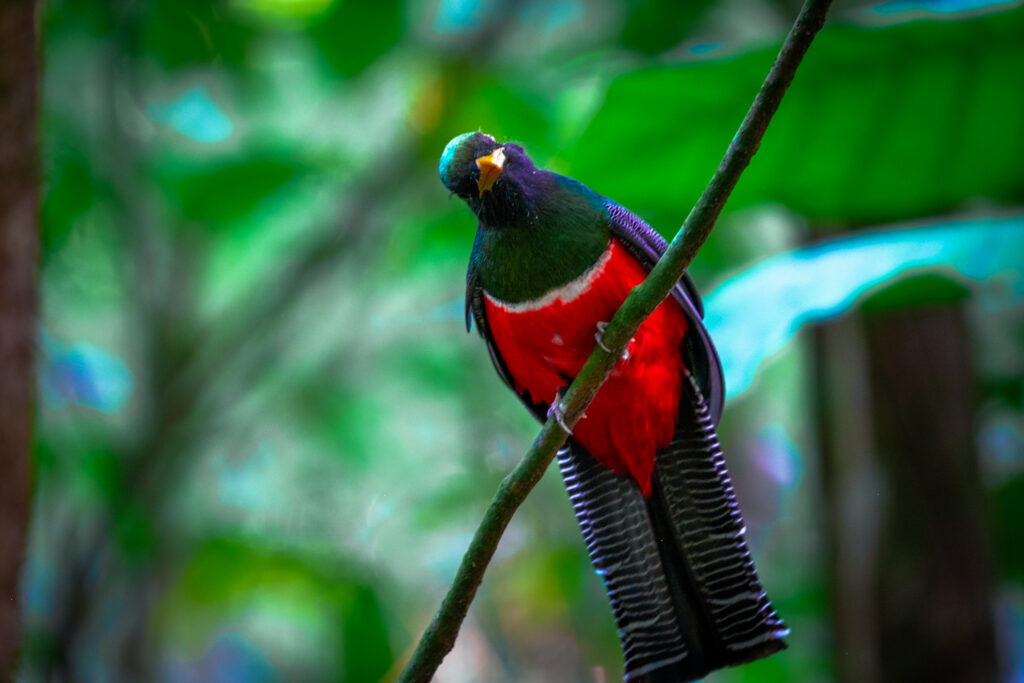
Walking through the ruins of Palenque today, you can hear howler monkeys and parrots screeching. The trees grow tall and wide into the sky. The deep green of the leaves competes with the yellowed walls of the temples. The grey of the stones hints at everything these buildings have witnessed over the centuries.
The city in the heart of the jungle grew into a major power in the lowlands and allied itself with Tikal. Even though the surrounding cities were also ruled by Maya tribes, they were not always on peaceful terms with one another.
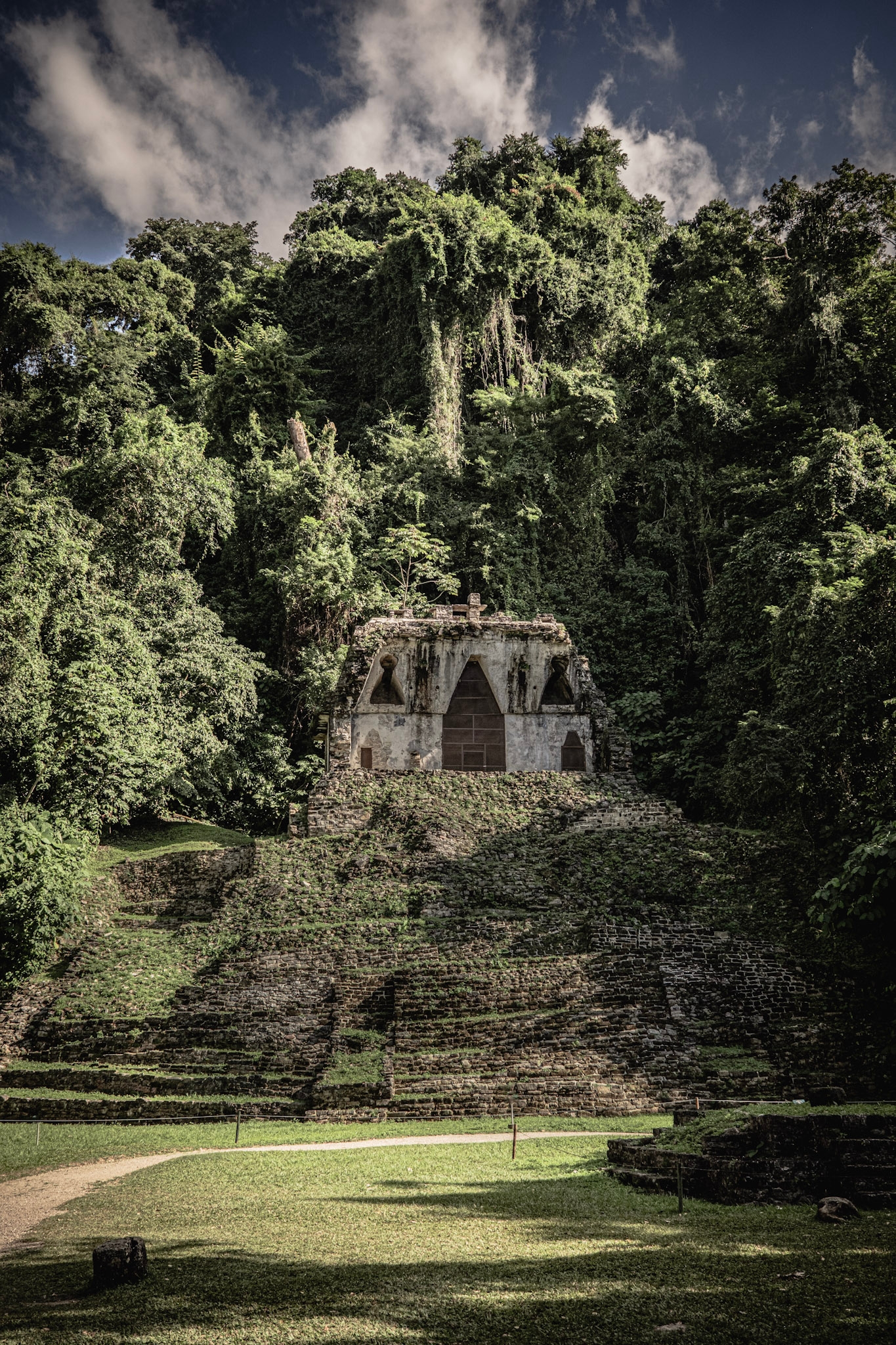
Today, you wander through a beautiful forest in Palenque, crossing small bridges time and again; water seems to be more than abundant here. Yet this ancient Maya city, like Teotihuacán or Tikal, fell victim to its own glory. It, too, was suddenly abandoned around the year 800.
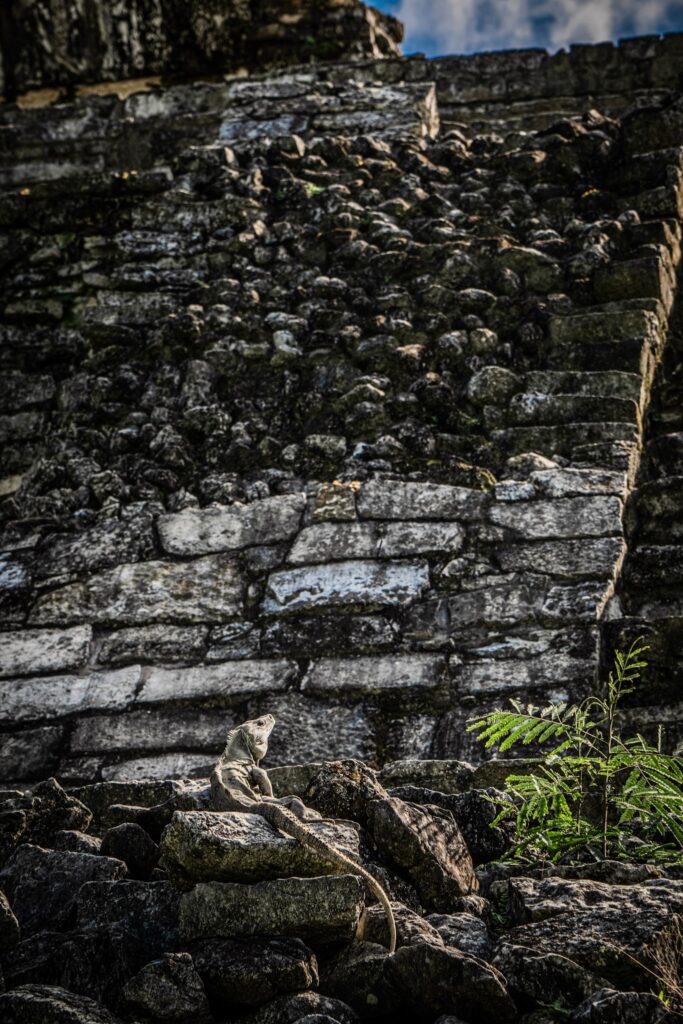
Meanwhile, the jungle relentlessly reclaimed the territory. Today, you see the massive roots that have held the stones together for centuries and wonder what else is being guarded by the forest. Although the city was one of the first to be archaeologically explored—the first excavations took place as early as 1800—only about 10% of the area has been uncovered to date.
Teotihuacán und Palenque: zwei mesoamerikanische Teotihuacán and Palenque: two Mesoamerican metropolises that could not be more different. One tropical and humid in the middle of a dense forest, the other arid, dusty, and exposed to the scorching sun. And yet they are similar: both continue to hide the final secrets of their history somewhere between the stones and the earth.