
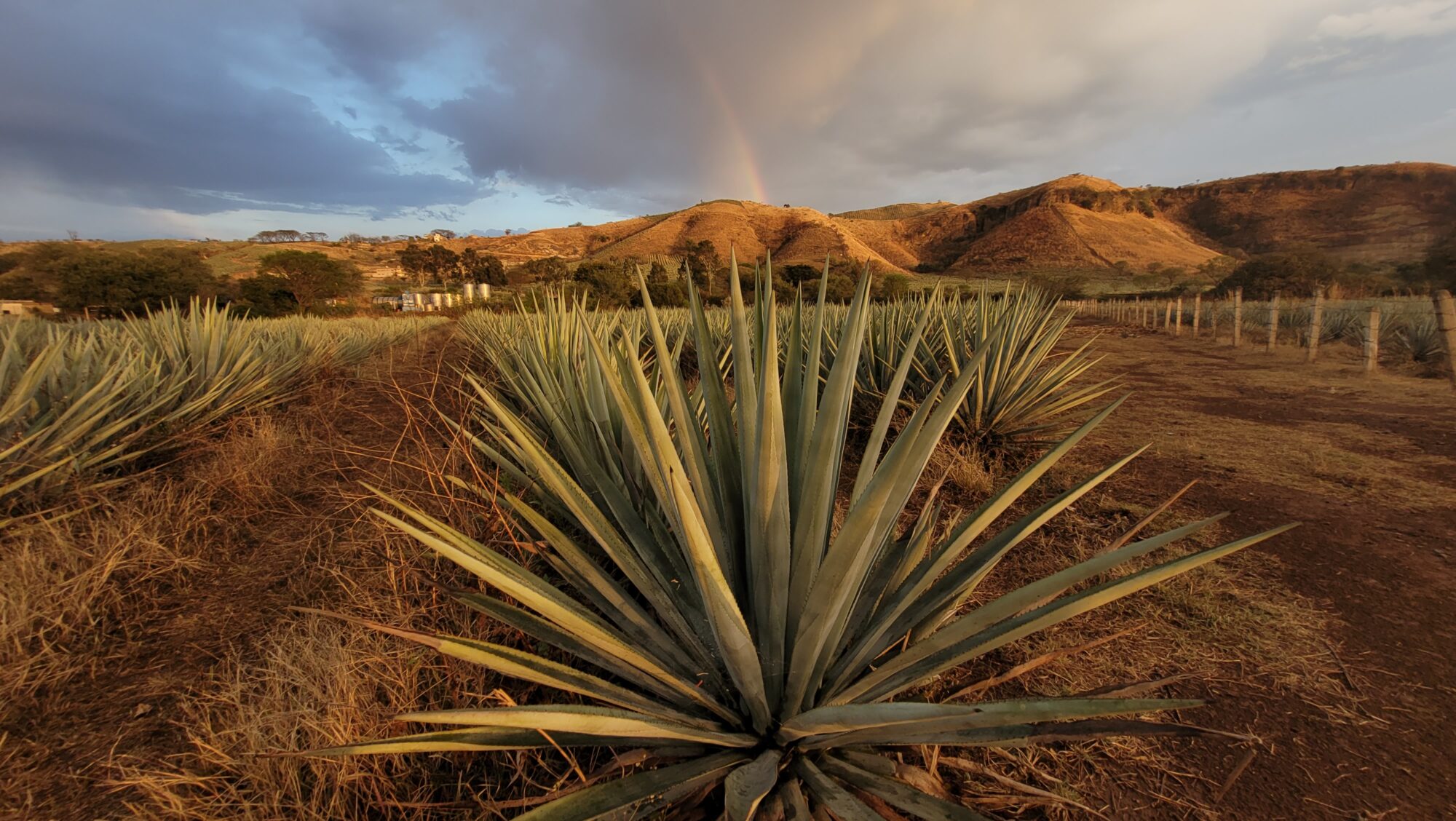
Or a story about the green cow of Mexico.
The air smells slightly musty after the unexpected rain in a place where it rarely rains. The water falling from the sky has hijacked the power lines; there is no electricity. We are sitting at the bar in near darkness, a shot glass and four bottles of tequila before us. The mobile phone torch serves as a lampshade, the cap of one of the bottles sits on top, scattering the light romantically. We feel like we are in an underground bar in a gangster movie – the perfect place to talk about the unspeakable. And so we do.
José sits elegantly in a blue shirt behind the bar, his sombrero cast aside. He apologises for the lack of power and, with a smile peeking out from beneath his moustache, tells us the story of the Tequilería Casa Puntual. Seeing our keen interest, he also speaks of the reality of Mexico – particularly in a municipality where the mayor was arrested for corruption in January 2026, and where cars were set ablaze just a week before our visit following the death of Mexico’s biggest drug lord.
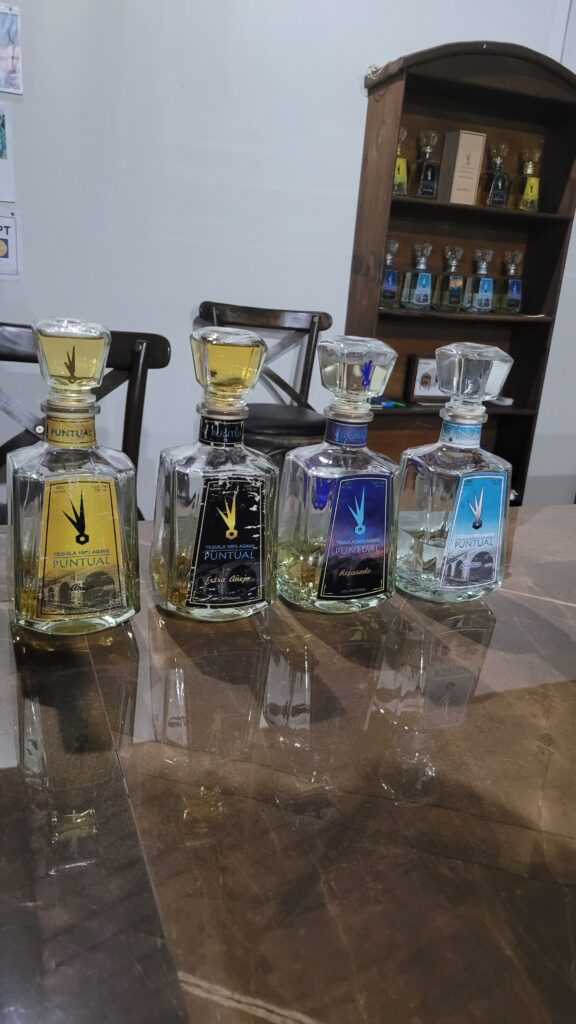
With his Mexican sing-song and the occasional English word thrown in – most tourists speak no Spanish, so he conducts the tour mainly in English – it all sounds less dramatic than the media makes it out to be. And in the brief pauses, we sample our way through the four tequila bottles.
More than just a sombrero: the end of a teenage trauma
Mexico does not only amaze with its nature; it also makes you forget everything else the moment you decide to look a little too deep into the glass. The culprit? Tequila, of course.
Which of us didn’t have one shot of tequila too many as a teenager? Most likely Tequila Sierra with the red sombrero. A drink so poor that it can only be stomped down with plenty of salt and lemon. In the shops of Mexico, however, you hardly ever see it.
In the town of Tequila, we are taught better: tequila is drunk at room temperature, neat and savoured – without salt or lime, and certainly not in one gulp. We spend the evening this way with José, chatting and tasting, laughing and refilling until almost midnight. Slightly swaying, we fall into bed – or perhaps it is the car swaying in the wind?
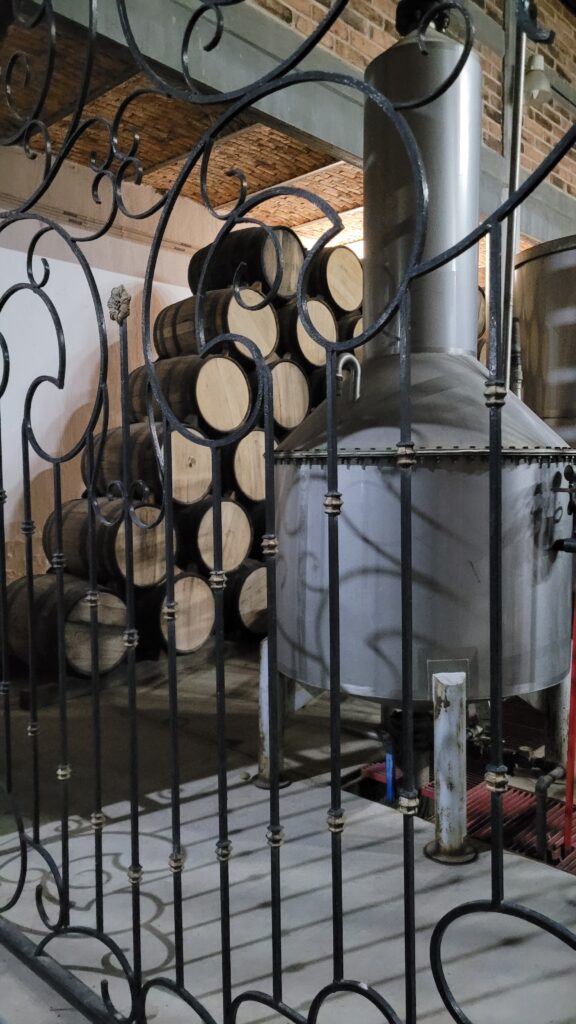
To understand what we are actually drinking, a look at the numbers helps: 900 million litres of tequila are produced annually. That is equivalent to roughly 360 filled Olympic swimming pools.
However, not everything is 100% tequila. Authentic tequila comes from within a 120-kilometre radius of the village of Tequila. About 20 000 litres are distilled annually in the village itself; the rest comes from the surrounding area, José tells us. Furthermore, 100% tequila may only be bottled in Tequila itself. Otherwise, the regulatory council steps in, as the name has a protected designation of origin – much like Champagne. Tequila is no longer just a drink; it is the flagship export of the Mexican economy.
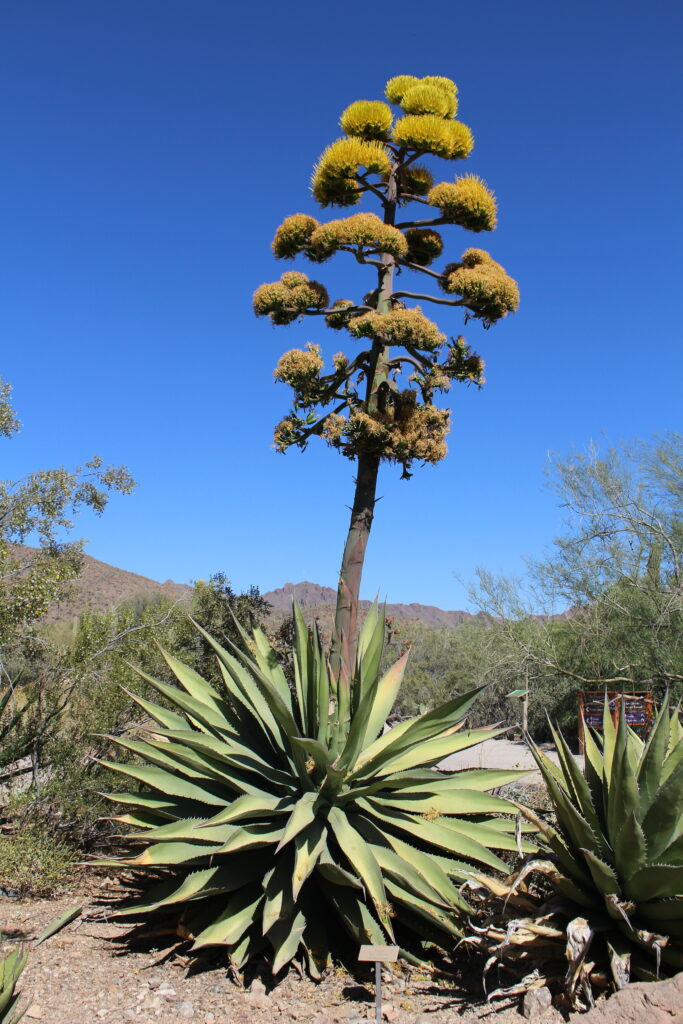
The basis for this success is the agave, a low-maintenance member of the asparagus family. Yet, depending on demand, it can become a test of patience for any farmer: it blooms only once in its lifetime. As soon as its massive flower spike – reaching up to 12 metres in the Agave americana – shoots towards the sky, its fate is sealed. Shortly after, it dies. Consequently, the true art of tequila lies not in the cultivation of the plant, but in the distilling of the spirit.
A question of origin
Is it Tequila or Mezcal? Mezcal is hardly known abroad, yet the distinction is clear: every tequila is a mezcal (a spirit made from the agave plant), but not every mezcal is a tequila. While mezcal, made from various agave species, undergoes a single distillation process in the palenques, only the heart of the Blue Weber Agave (Agave tequilana) is permitted for tequila, and a double distillation is required. Aside from the white Tequila blanco, other varieties mature in wooden casks for up to three years.
But the world’s thirst is now so great that tequila is often diluted. For the pure drink, the bottle must state “Tequila 100% de Agave”. Otherwise, you are drinking 51% agave spirit mixed with other alcohols, distilled from cheaper options such as cane sugar, for example.
The Aztecs already appreciated the agave, though they mostly chewed on the fibres of the heart or used them to make fabrics. It was the Spaniards who brought the knowledge of distillation and began to burn transform the heart of the plant into a liquid.
Saving the green cow
Away from the export hit of tequila, an older, almost forgotten tradition exists: Pulque. When another type of agave, known in Mexico as Maguey, is in bloom, a sweet sap shoots through the stalk. The Aztecs fermented this sap into a milky, nutritious drink. The problem: pulque is extremely perishable and must be consumed quickly.
For centuries, Maguey agaves were the most important agricultural asset in the region. The entire plant was utilised:
- Pulque from the sap
- Building material from the leaves
- Firewood and fibres for fabrics
- Medicine from extracts
- As Hedgerows between estates and for erosion control
A kind of Aztec “Swiss Army knife” of plants – or indeed, a green cow.
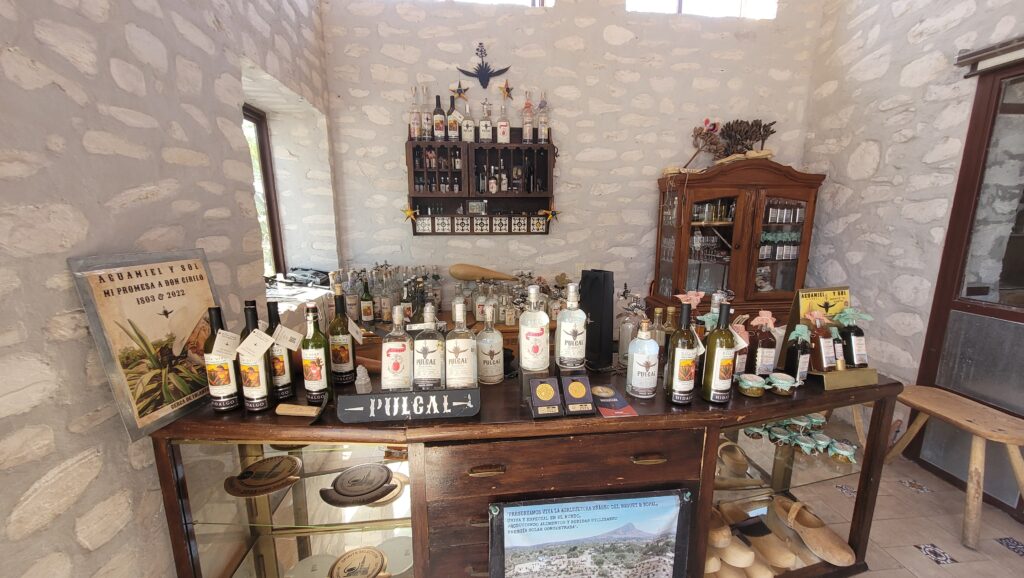

Even today, the work is mainly done by the tlachiquero. The plant grows for 15 to 20 years before it blooms. Then the tlachiquero cuts into the flower stalk and using the acocote – a long tool made from a dried gourd – sucks up the sap. However, the tradition is being lost or, even worse, forgotten.
Though, here comes a modern twist. Even Charles Darwin believed that this honey-sweet sap should be made shelf-stable. Today, many decades later, a German named Gregor has taken up this idea. In the desert-like highlands at 2000 metres, in the province of Hidalgo northeast of Mexico City, he is attempting to revive Mexico’s “green cow”.
Using only solar energy, he distils the fermented sap into a new spirit: Pulcal. Gregor, who has lived in Mexico for over 30 years, is interested in more than just the alcohol. In a region where traditional agriculture is increasingly being displaced, his small-scale, sustainable production offers local farmers a new perspective. The agave grows year-round and defies the drought – a symbol of resilience.
The Verdict
One question remains: which of the Mexican distillates won us over? The tastes in the car are as diverse as the landscapes of Mexico. While Michael found his favourite in the Pulcal, I prefer to stick with the Gift of the God Teocalli: a well-matured, golden Tequila Añejo – enjoyed slowly.