


Snakes and other reptiles in Mexico – Part I
As we fought our way through millions of bats in Kantemó to reach the hungry rat snakes, we had no idea that shortly afterwards, we would almost be carrying a rattlesnake as an involuntary hitchhiker.
It all begins in total silence. Despite the darkness of the cave, we know the sun hasn’t set yet. But the first few faint wingbeats soon multiply, growing louder and louder. They slice through and churn up the air, which thickens with the scent of guano. Our face masks are meant to protect us from health risks, yet the acrid stench penetrates every filter. The air in the cave vibrates palpably; millions of small mammals are seeking the exit to turn the night into their hunting ground.
The hanging snakes of Kantemó
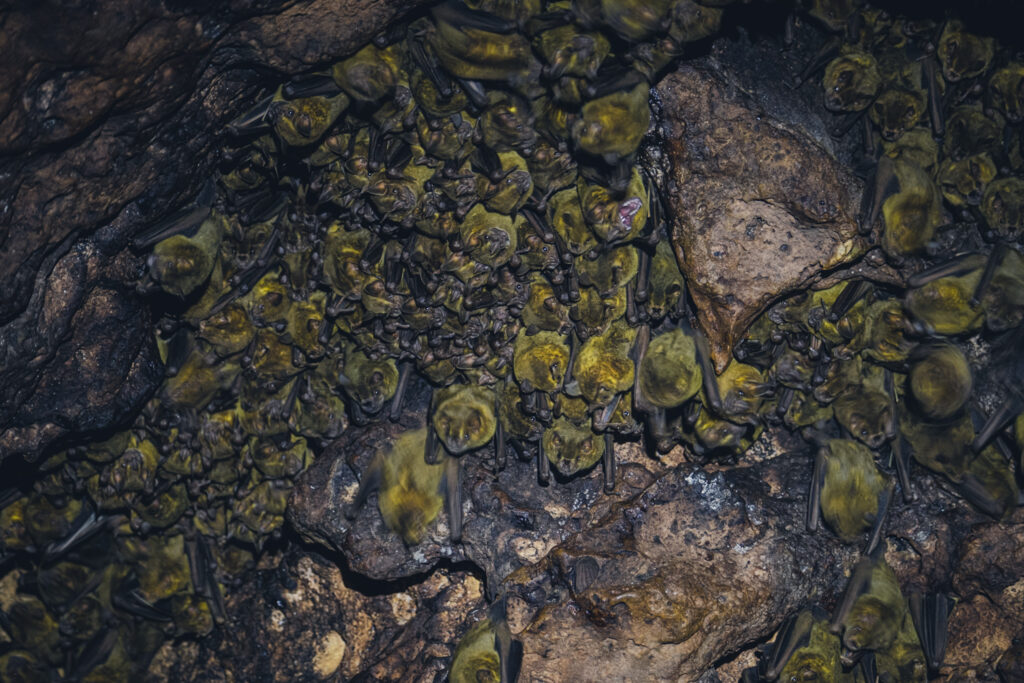
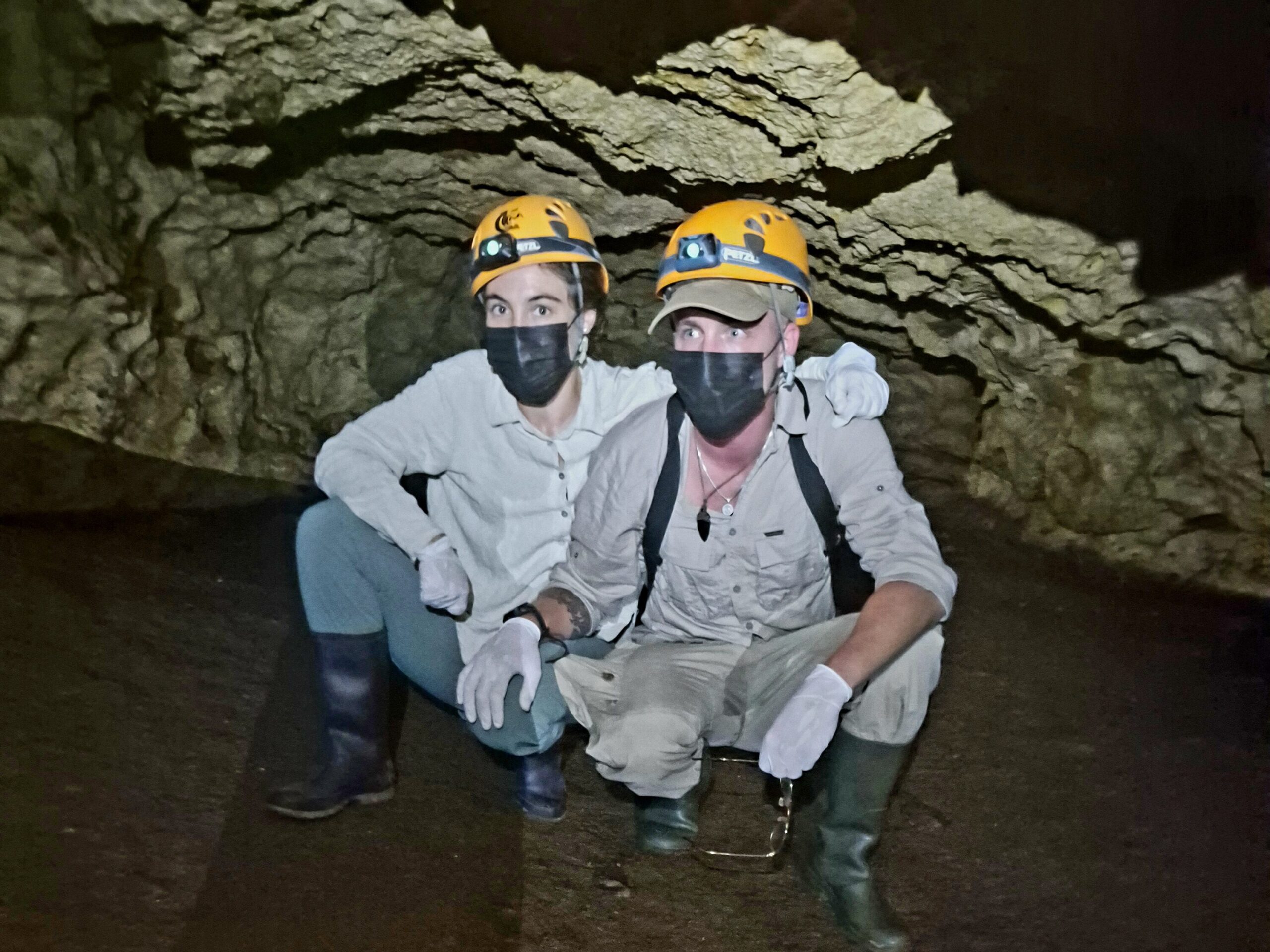
We are standing right in the heart of the Kantemó cave, accompanied by two guides from the local Maya community. Our gear is practical: masks, latex gloves, wellies, and long clothing. It drips from the ceiling—bat urine, an inevitable part of this ecosystem. Before us lies a crevice from which an avalanche of bats squeezes out every second.
That is where we must enter. Crouched and only with the pale glow of our torches, we struggle forward. To our left and right, the animals shoot past us, guided by their precise echolocation, which veers them away from our faces at the very last millisecond—most times, at least.
The deeper we venture, the more stifling the air becomes. We are surrounded by life; a fleeting thought of “Patient Zero” creeps in as the walls close in. But we are here for a very specific inhabitant: the yellow red ratsnake (Pseudelaphe flavirufa).
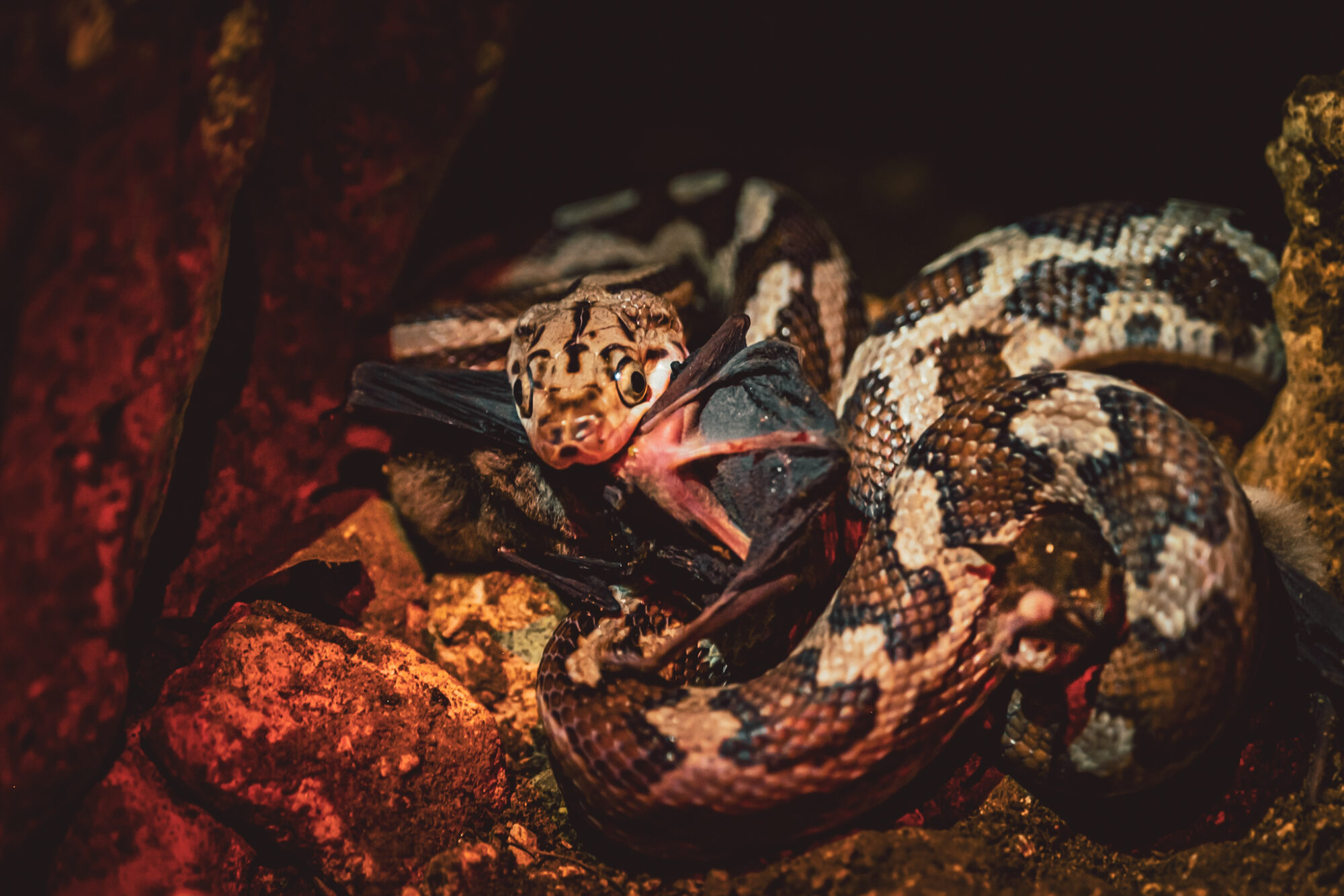
These animals are unique masters of adaptation. Unlike vipers, they do not possess thermal vision. They live in permanent darkness and have never seen daylight—and yet, they see. Their reddish, oversized eyes look like rubies in the torchlight, perfectly adapted for localising bats. The snake colony of Kantemó is estimated at about 100 individuals—a microcosm that survives by hunting bats mid-flight.
The snake with the double catch
After a while, we get lucky. In a narrow crevice, we discover a specimen strangely low on the ground; usually they are mostly hidden in the rocky ledges. This ratsnake, however, has likely lost its balance, as it has snagged two bats at once: it holds one constricted with its body, while it is already swallowing the other, with wings still protruding from the sides of its mouth.
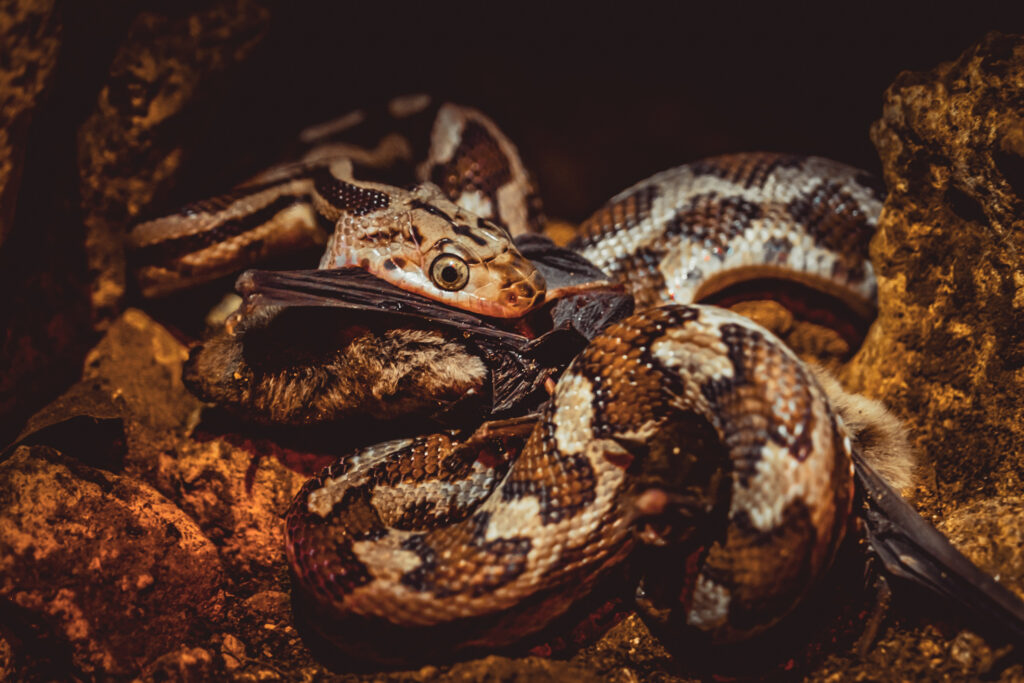
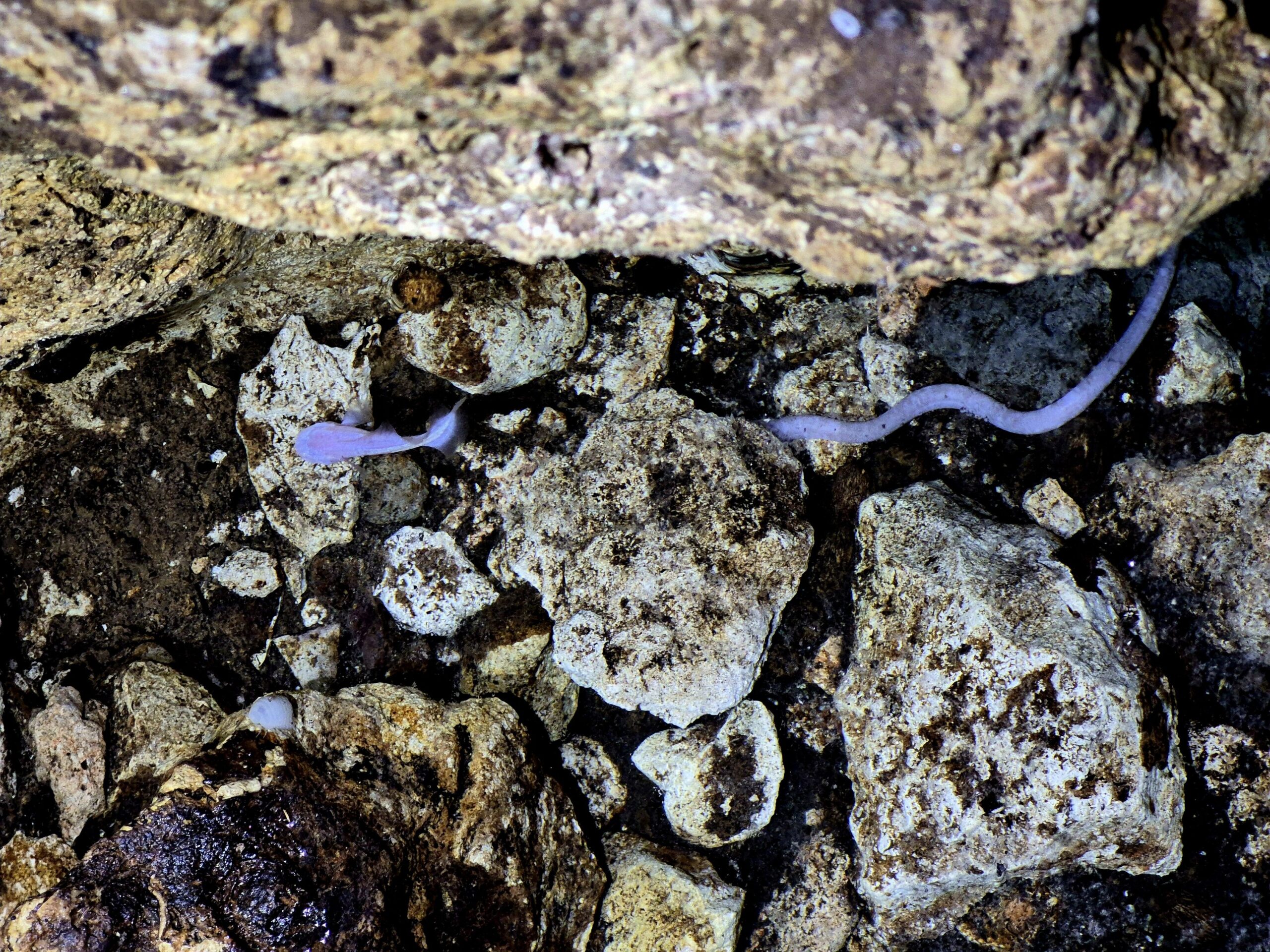
We see another snake slithering past; apparently, its hunger wasn’t quite great enough. All the other individuals seem to prefer fasting that Friday. Yet, seeing that one snake was a bizarre, fascinating spectacle of nature—especially in the red light of the torch. But still, relieved, we later reach the exit, tear off our masks, and enjoy the fresh breeze.
From the humid Yucatan to the dust of Baja California
In March, the desert on the peninsula Baja California awakens. The air still blows cold from the sea, but the sun is already warming the ground. Amidst dust and thorny bushes, we encounter a different calibre: the rattlesnake.
Venemous snake handling: When Michael’s training saves the day
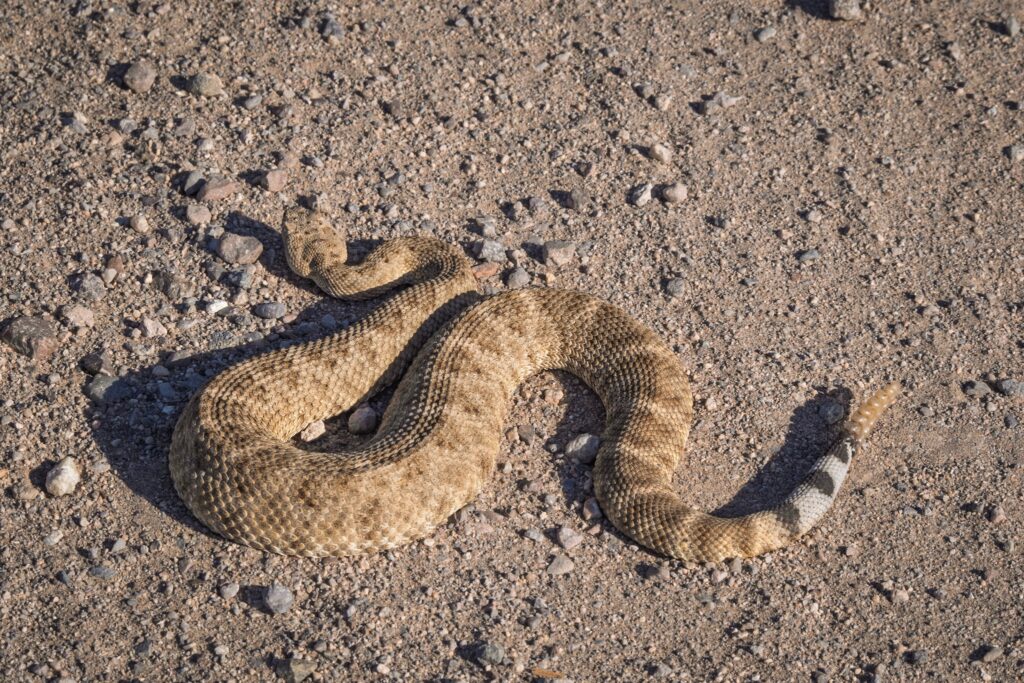
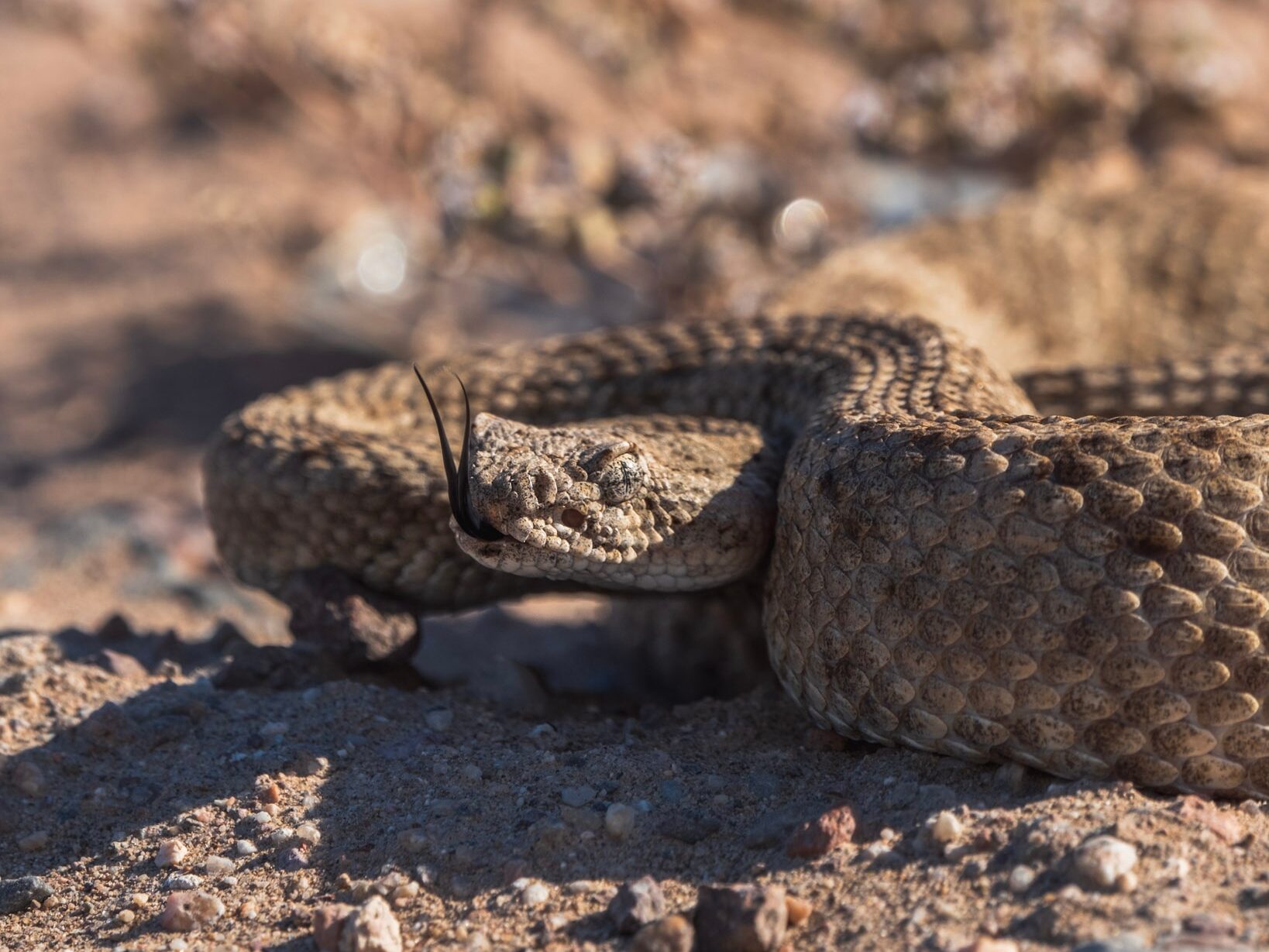
The rattle makes you shudder instinctively—a sound that goes right through you. We had almost run over a specimen; she was lying exactly between the wheels. Thanks to Michael’s training in handling venomous snakes, we are able to safely get the animal away from the road. All the while, she rattles incessantly with her keratin rattle at the end of her tail—a remnant of every single shed—letting us know she is dangerously venomous.
Rattlesnakes are pit vipers native only to the American continent—but found there from Argentina to Canada. It took us a while to see one, the first one not until Baja California: a Speckled Rattlesnake (Crotalus mitchellii). It was about time, considering most snakes of this species live in Mexico.
This feared species is found on the ground and usually sounds the alarm if you get too close, but when they bite, “dry bites” are rare. Their haemotoxic venom decomposes blood cells, leading to very painful internal bleeding, tissue destruction, and swelling. The only option then is to find a hospital quickly and hope they have antivenom in stock.
A stowaway of a different kind
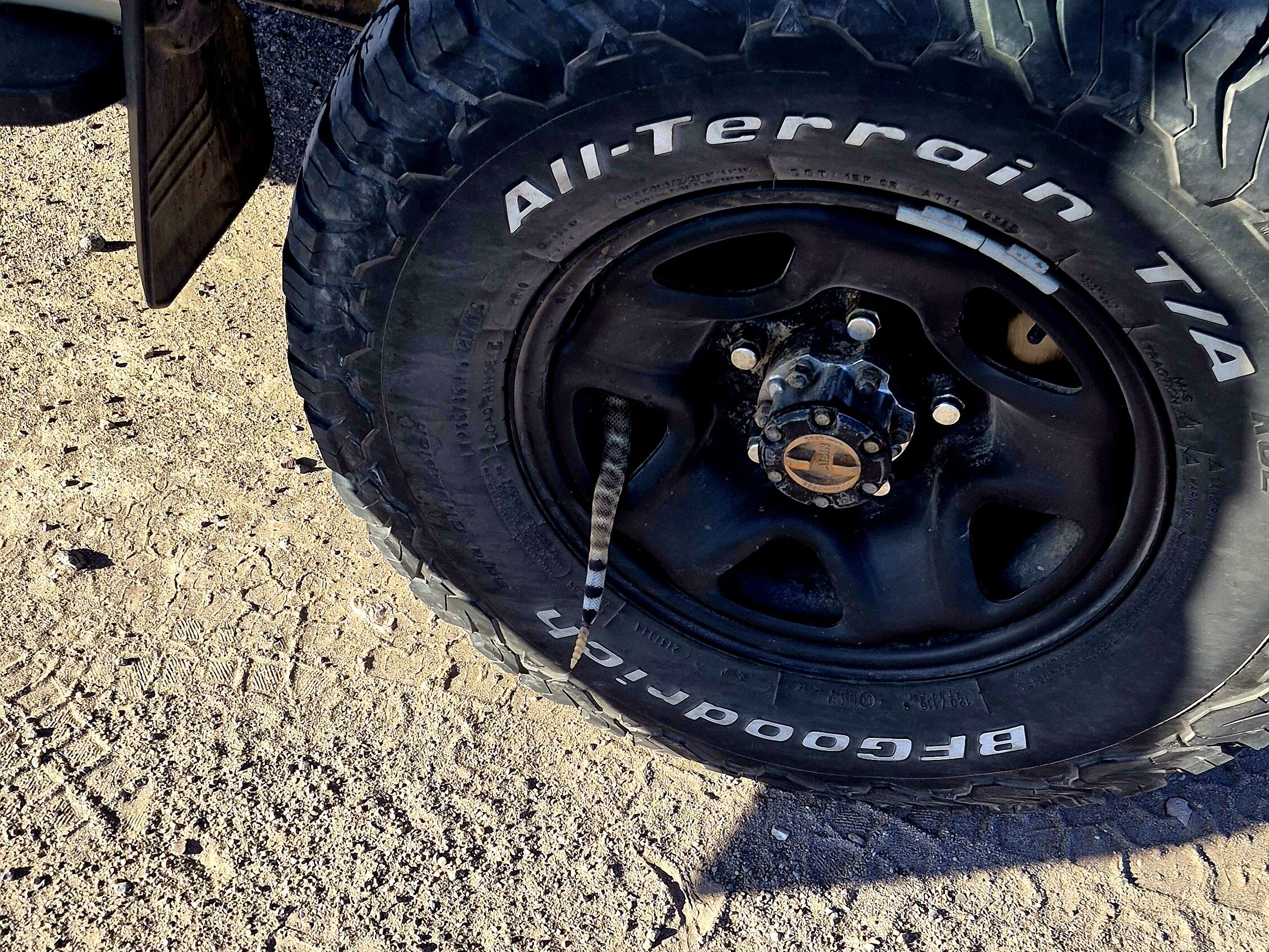
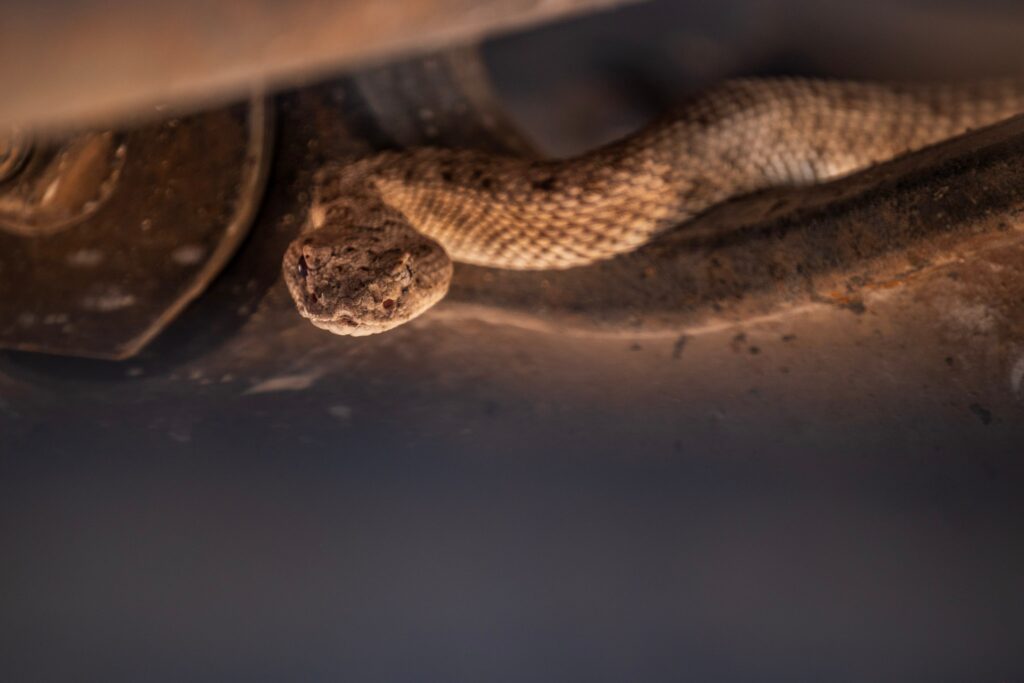
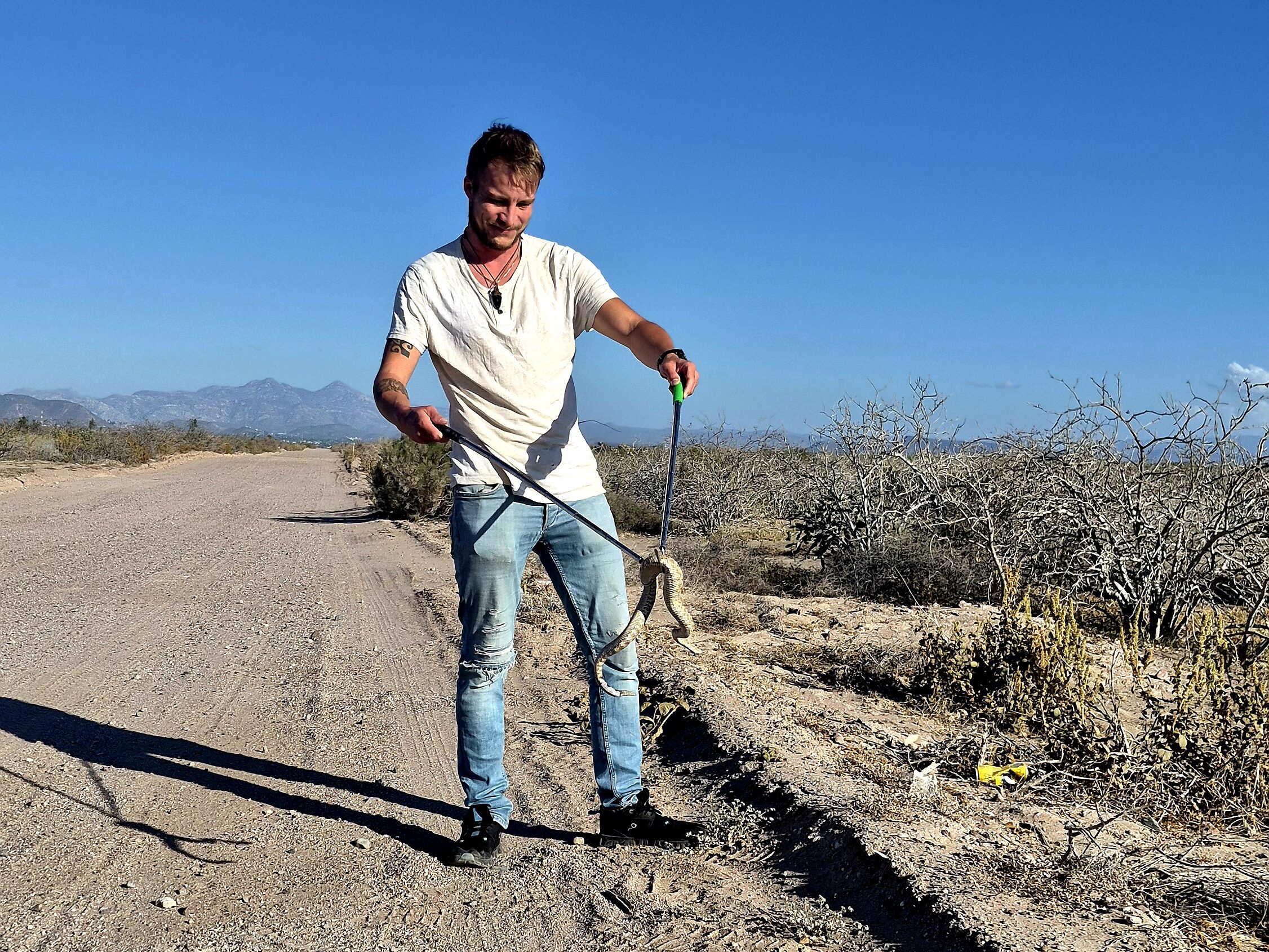
From the car, just before driving on, we look back once more at where the rattlesnake should have been curled up by the roadside. She is no longer there. Nor is she anywhere further away. That’s when we see the tip of her tail disappearing into the wheel of the Land Cruiser.
It seems the residual heat of the engine appealed to her more than a sunbath in the dust. A second, cautious rescue attempt is necessary; with distance, a snake hook, and practice, we succeed. And this time, she retreats into the freedom of the desert, away from the road.
Pingback:About heavyweights and mist dragons – Travel & Wildlife