


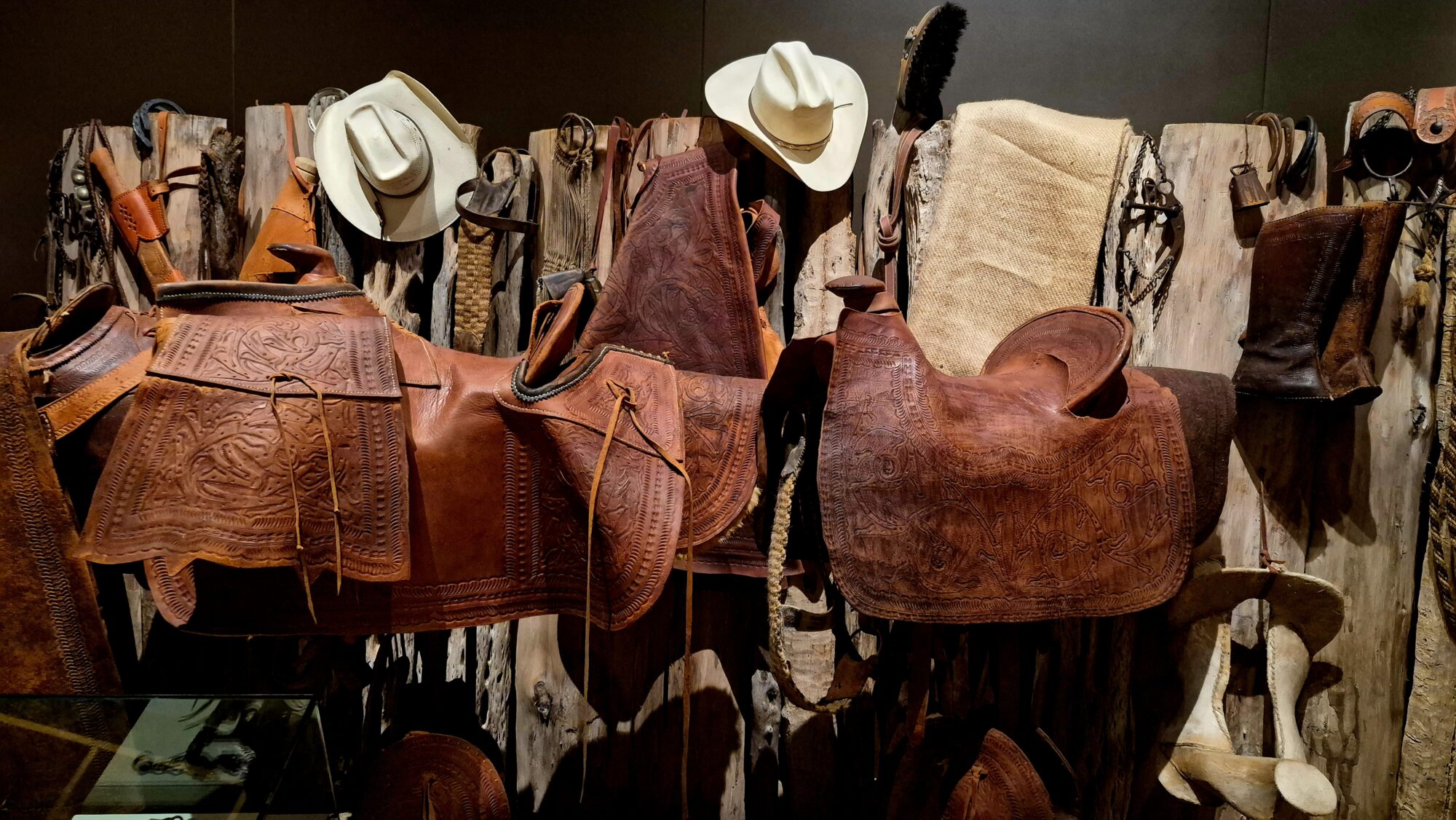
The story of the cowboy
It is somewhat surprising to be standing in front of the Muvaca, the Museo del Vaquero de las Californias. What could this arid place possibly have to do with the art of herding as depicted in American films? Much more, as it turns out, than we had ever imagined before stepping inside. After wandering through corridors lined with historic saddles and leather garments, we discover the fascinating story of vaqueros whose legacy travelled much further than they could ever have dreamed.
North America and cowboys seem inseparable, forming the very soul of the Wild West. However, the iconic silhouette of the rider with a hat and spurs did not originate on the plains of Texas, but in viceregal New-Spain, what nowadays is Mexico. Before they were cowboys, they were vaqueros.
Upon their arrival in the Mexica land, the Spaniards encountered dogs and turkeys. The indigenous peoples were unfamiliar with nomadic pastoralism and dedicated themselves to hunting local wildlife and agriculture and they transported goods by sole human force. In South America, meanwhile, they had domesticated alpacas and llamas and bred guinea pigs.
Caiman steak, maize, tomatoes, a brown drink called cacao, and who knows what other delicacies were put in front of the first conquistadors. I picture them looking utterly lost before a table brimming with exotic foods. Unsurprisingly, it did not take them long to bring their own things over.
On subsequent voyages, Columbus brought his livestock with him. Pigs, cows, sheep, goats, and poultry disembarked, making it seem as if a European Noah’s Ark had arrived in the Americas. One might wonder whether this was a biblical rescue or a descent into hell for the indigenous peoples of the Americas. However, without a doubt, it was the dawn of the cowboy era.
‘To the right of the Indies there is an island called California’
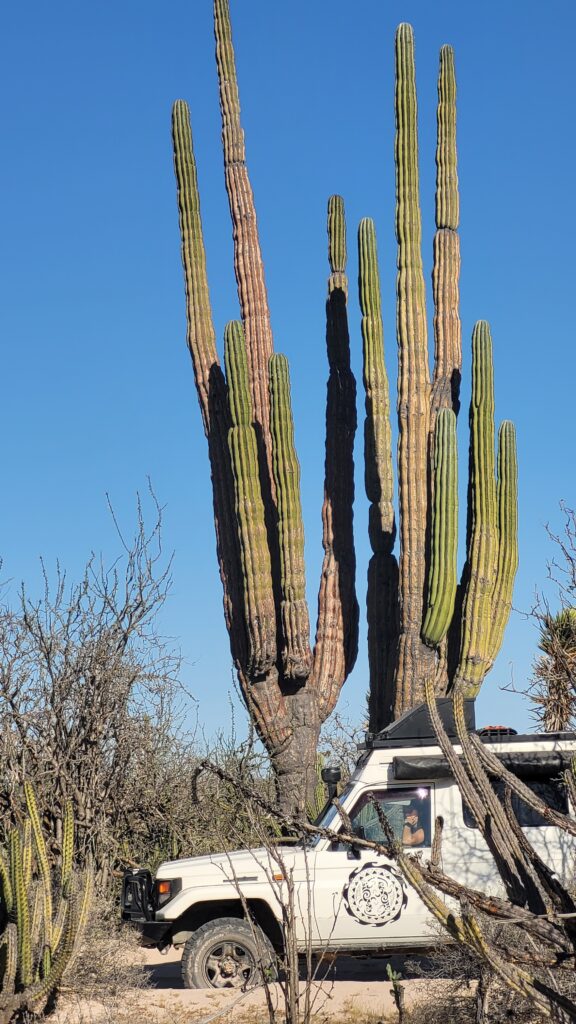
“To the right of the Indies, there is an island called California, very close to the side of the terrestrial paradise. It was populated by black women, with no men among them, and they lived like Amazons,” stated the old chivalric spanish romance Las Sergas de Esplandián.
Inspired by these myths, the Baja California peninsula was ‘discovered’ by Europeans thanks to expeditions funded by Hernán Cortés. Nevertheless, Cortés did not set foot in what is now the Bay of La Paz until 3 May 1535, on his third attempt. The first expedition failed, and on the second, the crew mutinied under the command of Fortún Jiménez, sealing the tragic fate of the journey. They believed they had reached an island rich in pearls and gold, inhabited solely by black indigenous women. Following the arrival of the Europeans, which spelled catastrophe for the Pericú women inhabiting the southern part of the peninsula at the time, the locals fought back and killed the mutineer.
European settlement of the Baja California peninsula was slow to develop. The extreme aridity, rugged terrain, and lack of supplies discouraged colonists from settling there. Thus, they had to innovate — and who was better suited to the task than the Jesuits?
In 1683, the first Jesuit mission was established in Baja California, bringing with it the first cattle ranches. In these vast, arid expanses, the missionaries realised that they could not herd cattle in the traditional way. Fortunately, however, they were not entirely out of their depth, as the hacienda system was already in place in the Iberian Peninsula, where large herds needed to traverse vast lands to find sufficient forage. So, rather than driving the livestock on foot, they did so on horseback.
A homecoming for the horse?
Around 10 000 years ago, the ancestors of horses inhabiting the American continent went extinct alongside other megafauna. It was not until the 15th century that the evolved animal set foot on these lands again. It did so astoundingly well becoming an essential pillar of the livestock economy of an entire region.
Vaqueros would accompany their herds on horseback and wear leather chaps (from the spanish chaparreras) to protect their legs and the animals’ backs from the thorns of cacti and shrubs. What today looks like mere decoration was, in reality, a suit of armour against nature.
As the number of ranches grew, they expanded into Alta California — a Mexican state that encompassed what are now the US states of California, Utah, Nevada, and parts of Arizona, Colorado and Wyoming.
Vaqueros turned into buckaroos and cowboys
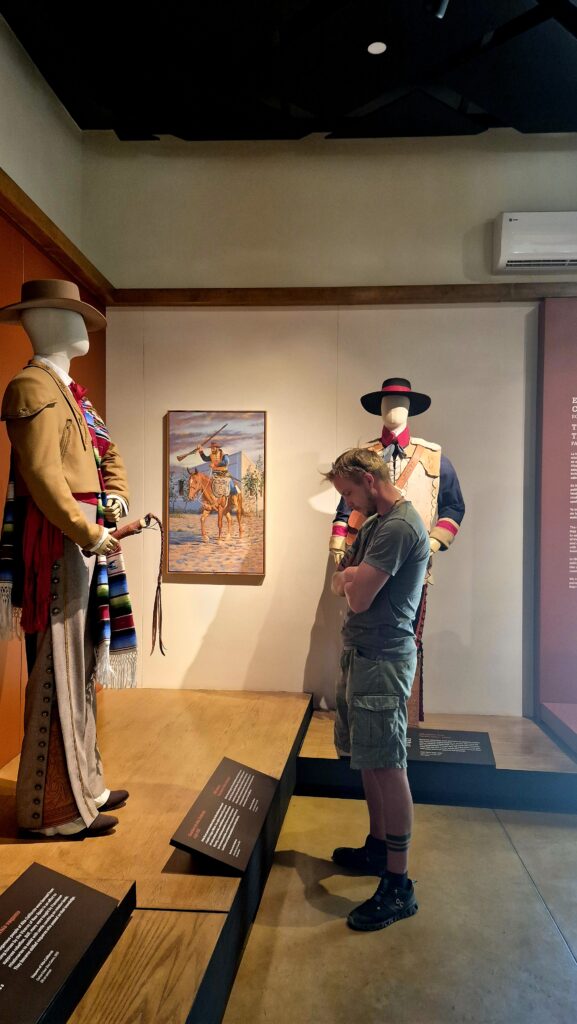
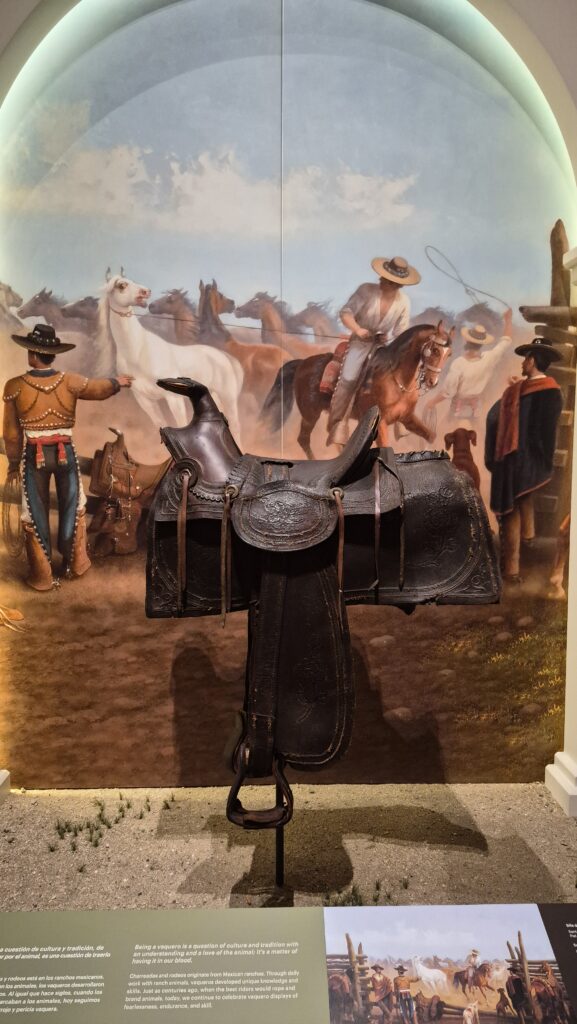
The Mexican-American War of 1848 ended with the cession of vast territories to the United States, including California, which became the 31st state in 1850. Ranch culture and the vaquero lifestyle were already deeply entrenched in the region, and having adapted to modern life they endure to this day. Vaqueros in California and the Great Basin region still call themselves ‘buckaroos’ — an English adaptation of the word ‘vaquero’.
Meanwhile, in Spanish Texas, expert horsemen drove Longhorn cattle — a breed highly resistant to drought with immense horns spanning up to 2.4 metres. From 1860 onwards, cattle were driven along long trails northwards to meat commercialisation hubs. A single journey from Texas to Montana could last up to six months.
It was at this time that the role of the cowboy became even more significant in safeguarding the interests of the ranchers. They drove between 2000 and 5000 head of cattle from various owners, each bearing its own brand. It was like a massive jigsaw puzzle, and the cowboys emerged with stories rather than money. It was by no means a well-paid job.
Ultimately, vaquero culture became so deeply integrated into American culture that the cowboy and the buckaroo blended seamlessly in, to the point where cinema and myth erased their Latin roots entirely.
However, here in southern Baja California, a museum tries to set the record straight on this small piece of history.