

Doesn’t sound quite as idyllic as under palm trees, but it is actually a lot less dangerous – despite the thorns – because at least you won’t have coconuts or palm branches dropping on your head.
Wherever we look: sand, sand, and more sand. To be expected at the beach, but here, in the heart of the peninsula, the wind whips the fine dust into the furthest crevices. Not a single ear stays clean. At some point, you have to ask yourself: is our hearing actually still intact? And where is this constant roaring coming from – the distant sea, the tyres on the dirt track, or simply the relentless wind?
Carretera Federal 1 stretches for over 1700 kilometres through the barren desert landscape of the peninsula of Baja California in northern Mexico. The endless stretches alongside small bushes, in a constant battle against the wind, leave plenty of time to think – or for getting bored.
Short sections bring a bit of variety: a small green palm oasis, deep red mountains, a shimmering blue of water. But the true treasures of the Baja California peninsula do not lie directly on the Transpeninsular Highway. Here, you only win if you venture off the beaten track.
The unplanned path
There aren’t many roads out here, and paved ones even less so. A sense of adventure is our most important companion on this road trip. After the small settlement of Francisco Mújica, we turn right, heading into the unknown, guided by Google Maps. The tarmac gives way to deep sand. It’s time to drop the tyre pressure to avoid getting stuck.
We pass a settlement half-asleep. The skeletons of unfinished houses look forgotten, but the desert is deceptive: oil is still being pumped between the ruins. In front of a few doors, new curtains flutter in the breeze, meant to let the fresh wind in and keep the dust out.
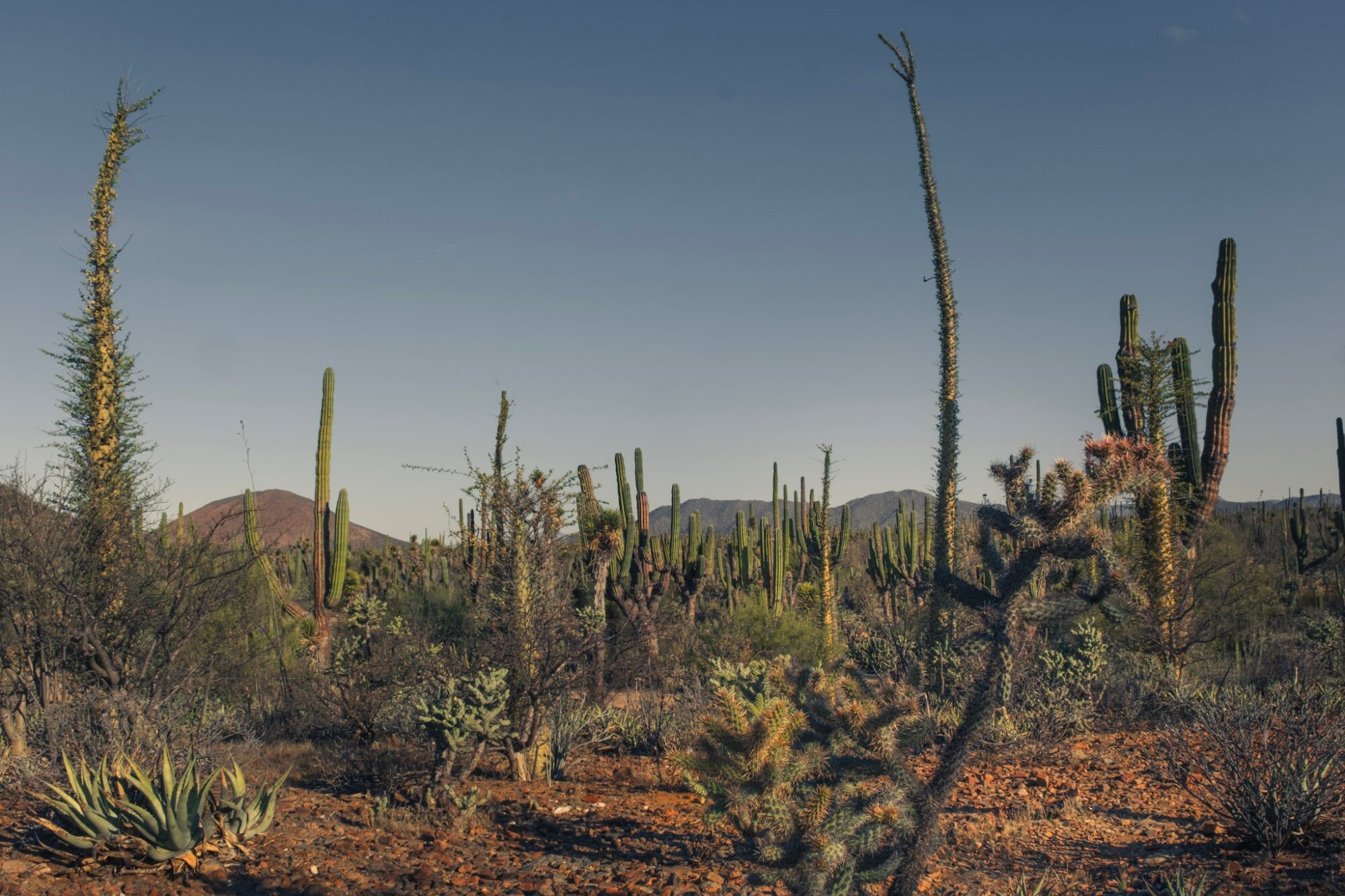
The track continues, signs pointing the way to far-flung ranchos. The sand remains, yet nature begins to change. Small cacti become larger and larger, little patches of green growing into tall trees. We find ourselves standing in the middle of our first real cactus forest. The path weaves tightly through them – “watch out for the thorns” is the order of the moment.
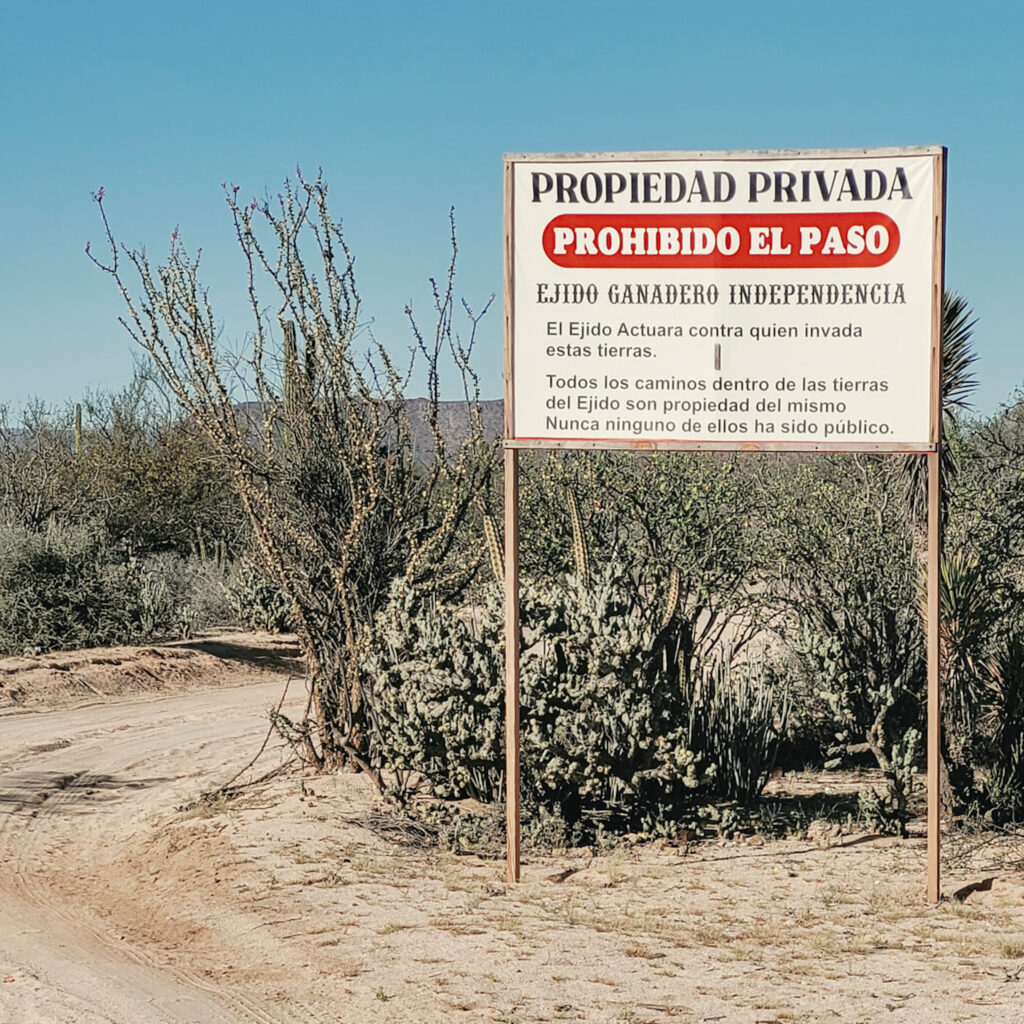
But of course, after such a long time on the road, we should have known better than to trust Google blindly. After 40 kilometres, we hit a sign: Private land, no through traffic.
Time for Plan B: Reading satellite imagery
A small turning, that shows on satellite images, seems to be our salvation. The ruts, filled with cow hoofprints, suggest that no vehicle has passed this way for a long time. The already narrow path becomes even narrower – but turning back would mean a massive loss of time. The sand track leads over mini hills, like a miniature rollercoaster, that leads straight onto the clay track right by Pozo Alemán.
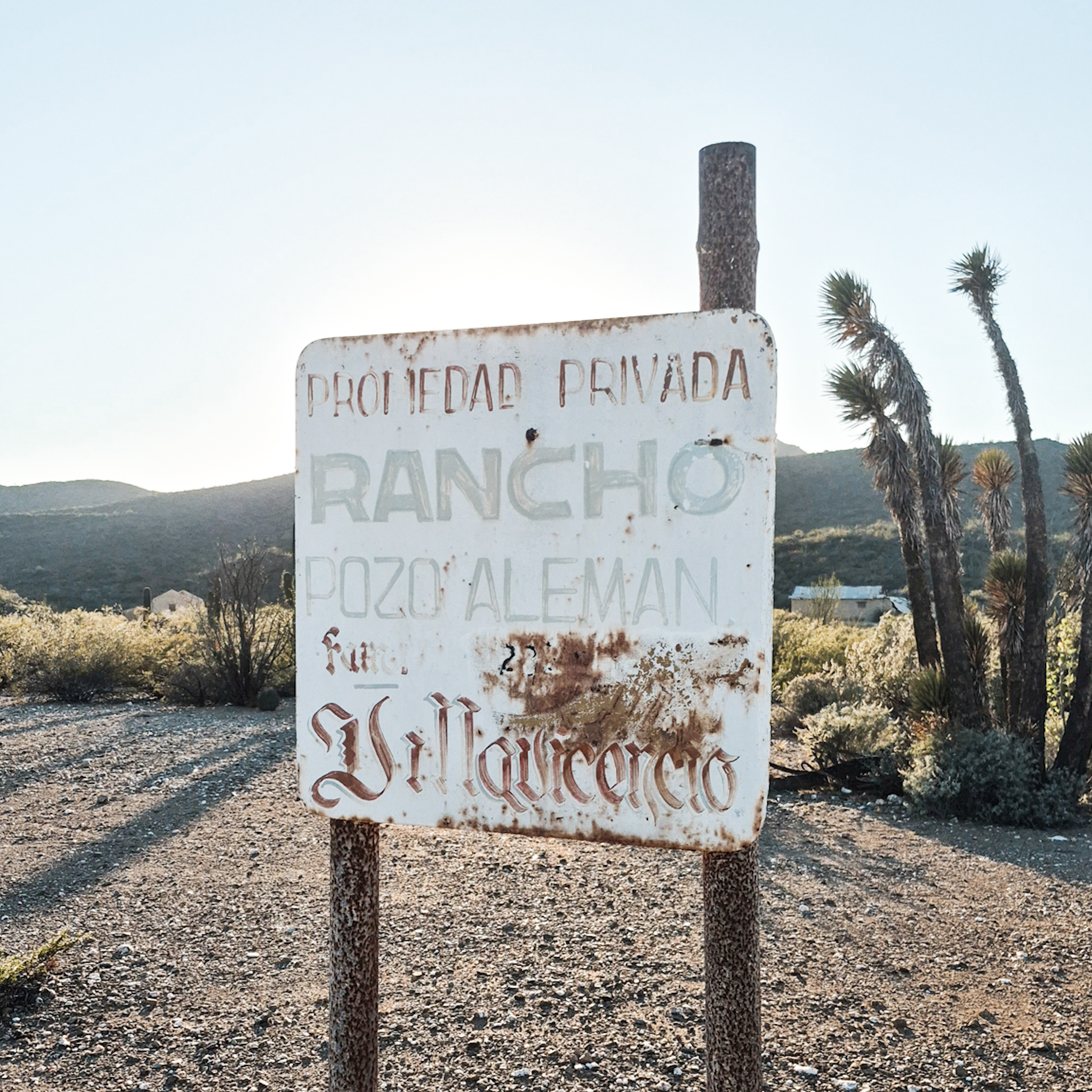
The source of gold dried up long ago. Most of the houses and buildings have been abandoned for years. Pozo Alemán is a ghost town, a relic of the late 19th-century gold rush. Although it seems nobody has lived here for an eternity, the cemetery is smothered under a sea of surprisingly vibrant plastic flowers.
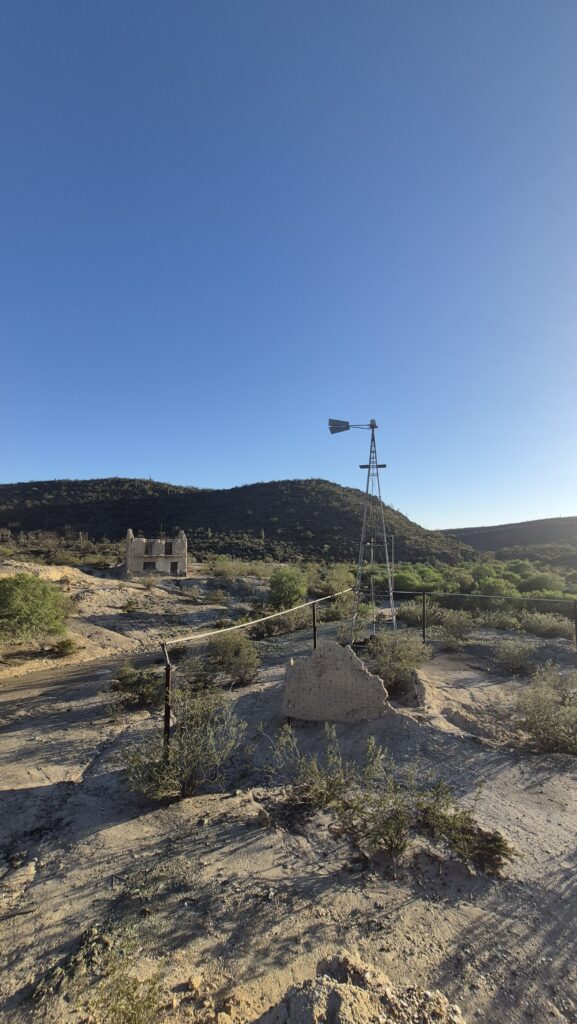
A sign still warns of private land, while an ancient windmill creaks lonely in the wind. And quite astonishingly: a modern padlock has survived, the chain still locking the door. What might lie behind it?

The sun disappears behind the ridges, and before the ghosts can catch us after all, we decide it’s best to drive on. The best decision of the day.
A sunset over the sea of cacti
The already shaded dirt track leads over the hills into a massive, oval valley. The last sun rays make the cactus forest glow in a vibrant green. This seems like the perfect spot to set up camp for the night.
HIf the small forest at midday impressed us, this one leaves us speechless. The slow-growing cardón cacti (Pachycereus pringlei) were surely standing here when Pozo Alemán was still inhabited – and probably long before that. They are among the largest cacti in the world, reaching up to 19 metres in height and a metre in diameter. They look remarkably like their cousins, the saguaro cacti. The differences are best left to the experts, but saguaros don’t grow here on the Baja anyway; that makes it a bit simpler for us to identify them.
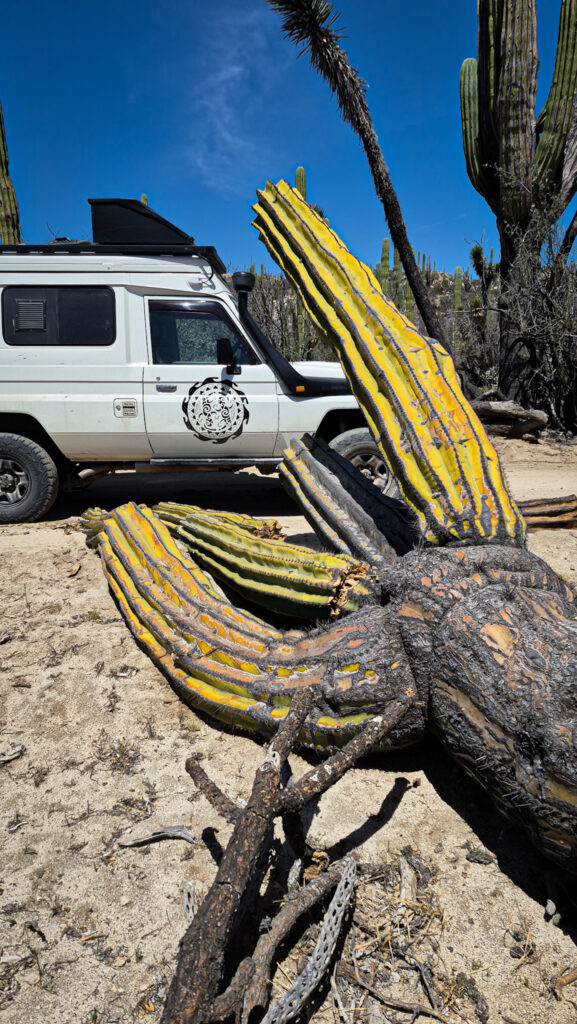
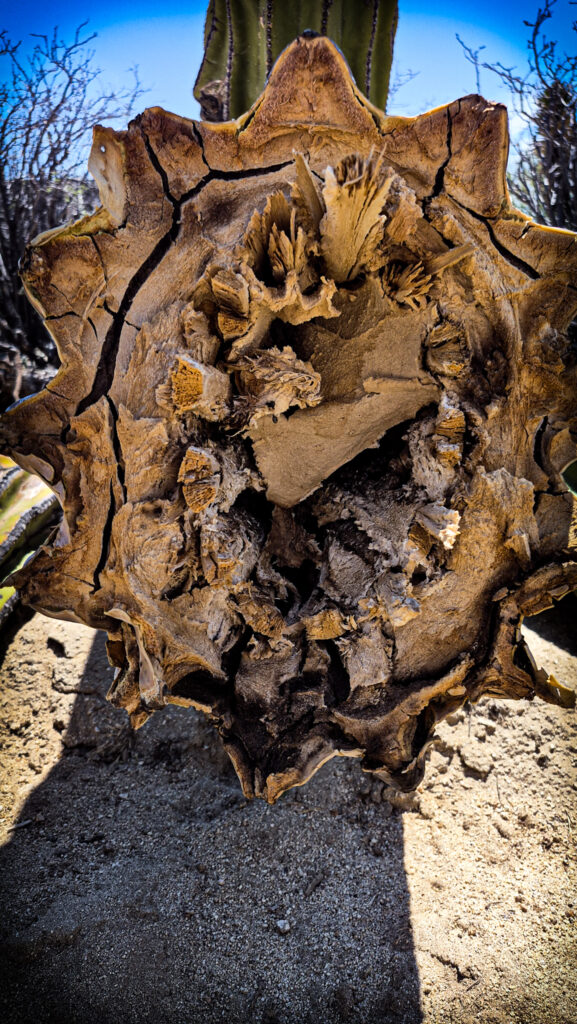
Time and again, cactus forests line the Baja peninsula, some better known, others less so. We battle our way through this valley completely alone, just before the sun vanishes entirely.
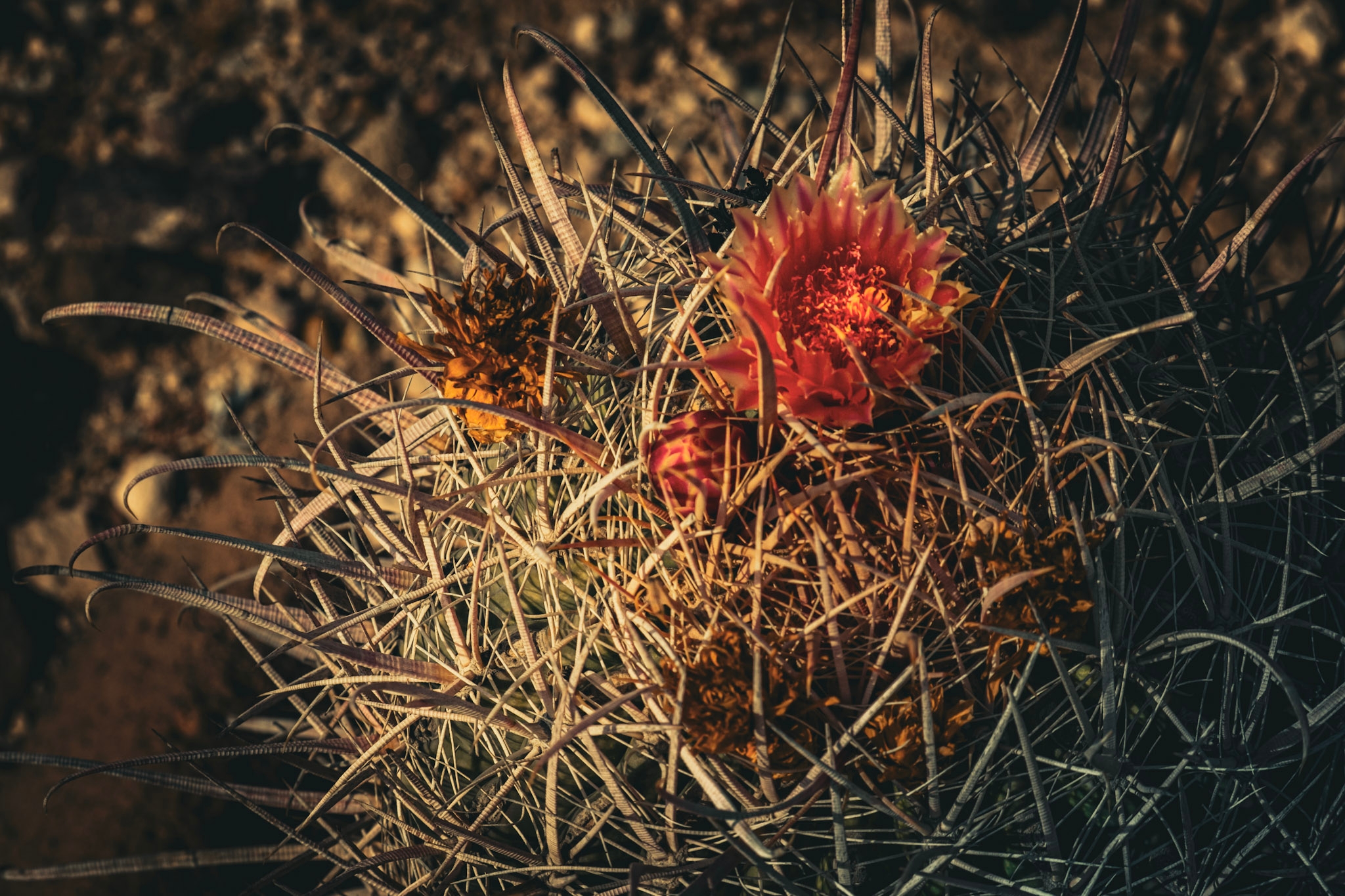
LiTo our left and right tower cacti of all shapes, sizes and colours. The first heralds of spring, even in a desert, are already sporting bright blossoms. Dead, fallen cardón giants give us an inkling of their immense water storage capacities – between 2000 and 3000 litres. And while most of these prickly plants grow straight up into the sky, they are interspersed with bizarre trunks that look like drunk, upside-down carrots.
The cirio (Fouquieria columnaris), or boojum tree, isn’t actually a cactus at all, but its appearance disrupts the prickly hierarchy. This succulent, with its thick, woody base, belongs to the ocotillo family. It grows tall like a lonely, vertical branch dotted with tiny leaves. The younger specimens stand completely straight, while the older ones grow into strange arches – or is that an age-induced hunchback pushing through?
There are over 100 cactus species in Baja California. We look on in disbelief. A place so dry, a desert, glows in lush green. What we experience on the ground as massive trees look like tiny dots on the satellite imagery. A bizarre contrast.
A night walk to the ghosts of the Cochimí
The ghosts of bygone times leave us no peace. Under the brightly shining moon, we walk up the hill, originally in search of nocturnal animals. This night seems too bright, though, with only a tiny scorpion showing.
Instead, something entirely different captivates us: ancient cave paintings. In the pale moonlight, red and black figures come to life on the rock faces. They stand with outstretched arms, as if they’ve been welcoming every visitor with open arms for thousands of years. Their exact age remains a mystery; while some estimates date their creation to 3000 years ago, others suggest that the early Cochimí left their mark here as far back as 5000 BC.
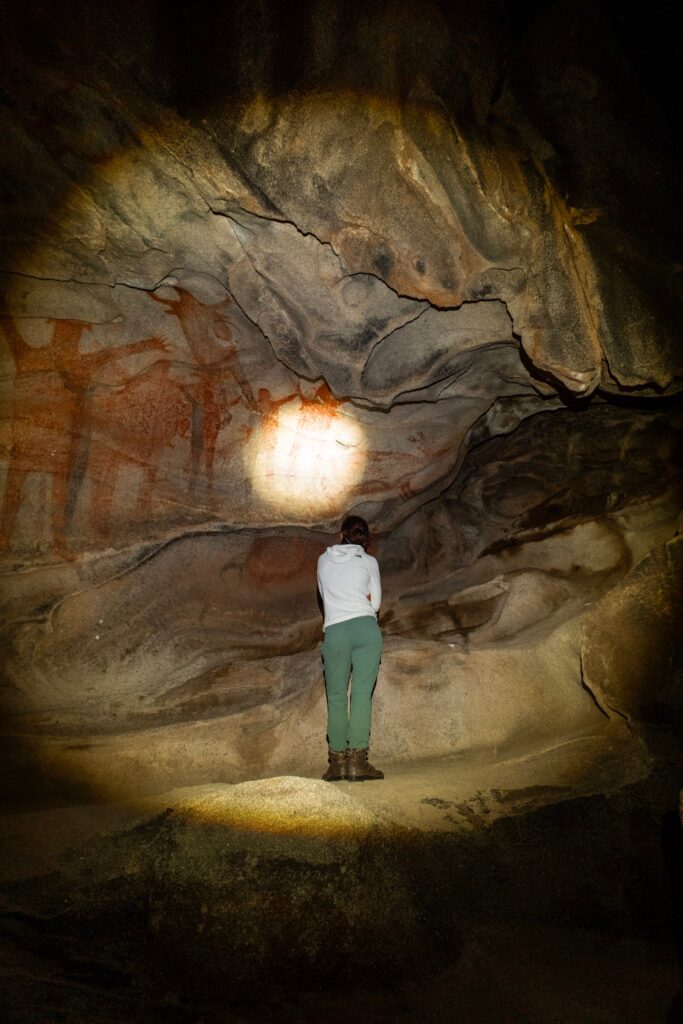
Back at our camp, we crawl into bed, taking one last look through the cactus branches in the moonlight. Sleeping beneath these prickly giants has something strangely comforting about it. No rustling of palm fronds, just the mighty, dark silhouettes of the cardóns silently watching our sleep.
The next morning, we venture up to the cave once more. In the glow of the rising sun, we search again for the region’s largest predator, the puma, but this one remains merely painted on the stone and has not come to life yet.
The storm by the coast leads us to a desert dragon
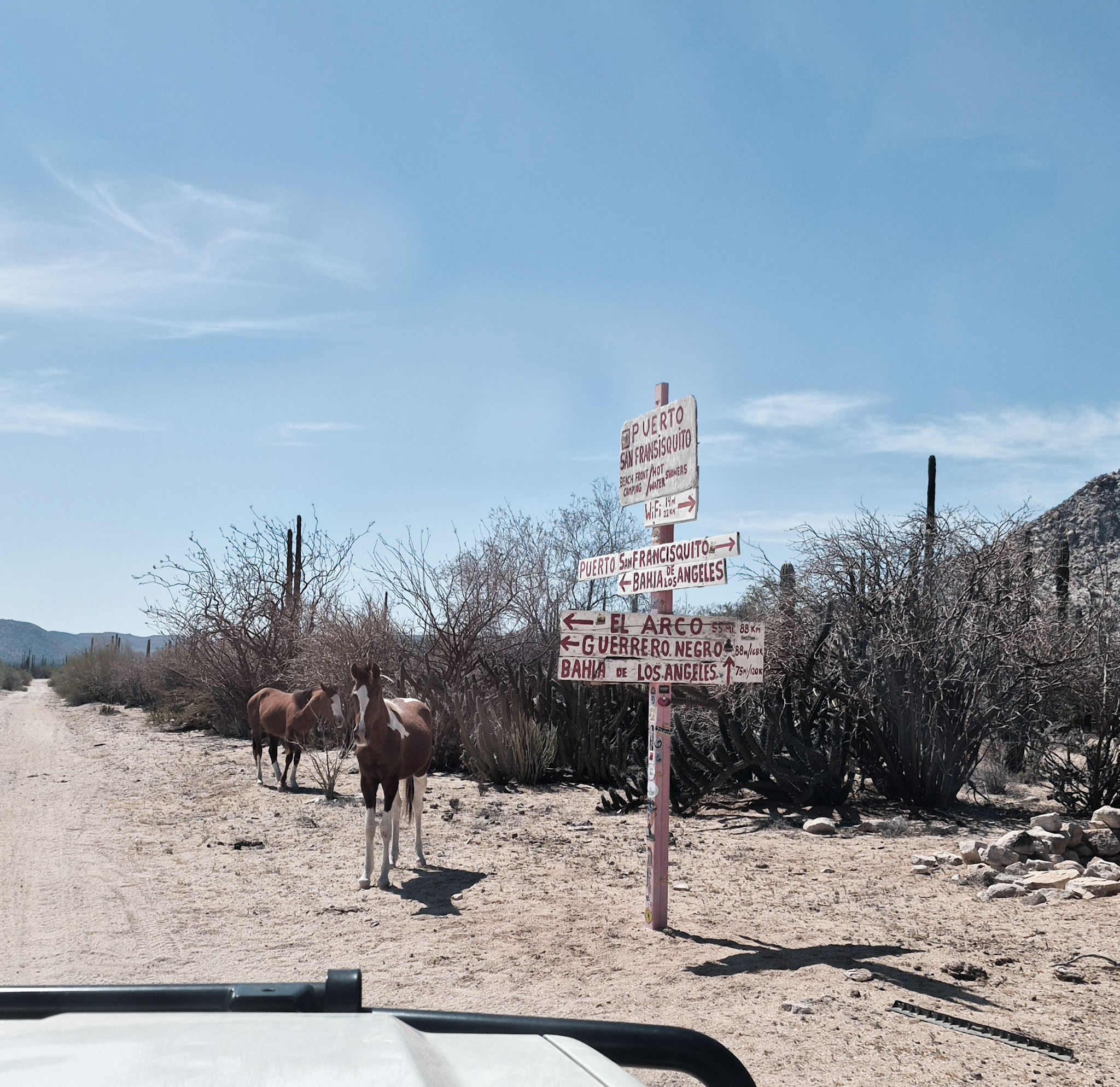
The track gets rougher. It leads down narrow switchbacks, passes lonely ranchos and demands absolute concentration at the wheel. While the dust stings our eyes, horses stand by the track like silent signposts. The landscape shifts: the cactus giants give way to barren scrub clinging defiantly to bare stone. It is a mystery how these roots extract any energy at all.
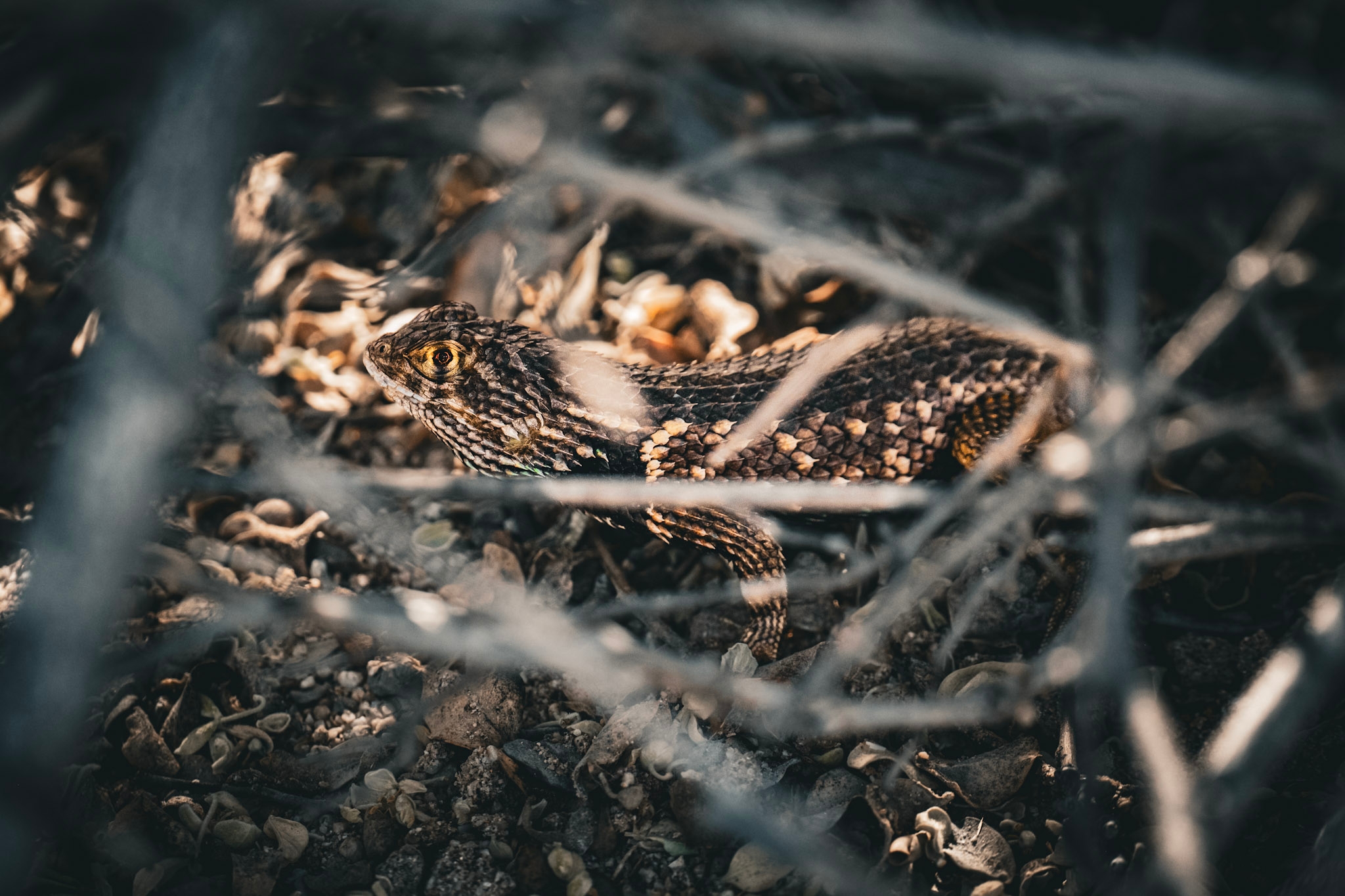
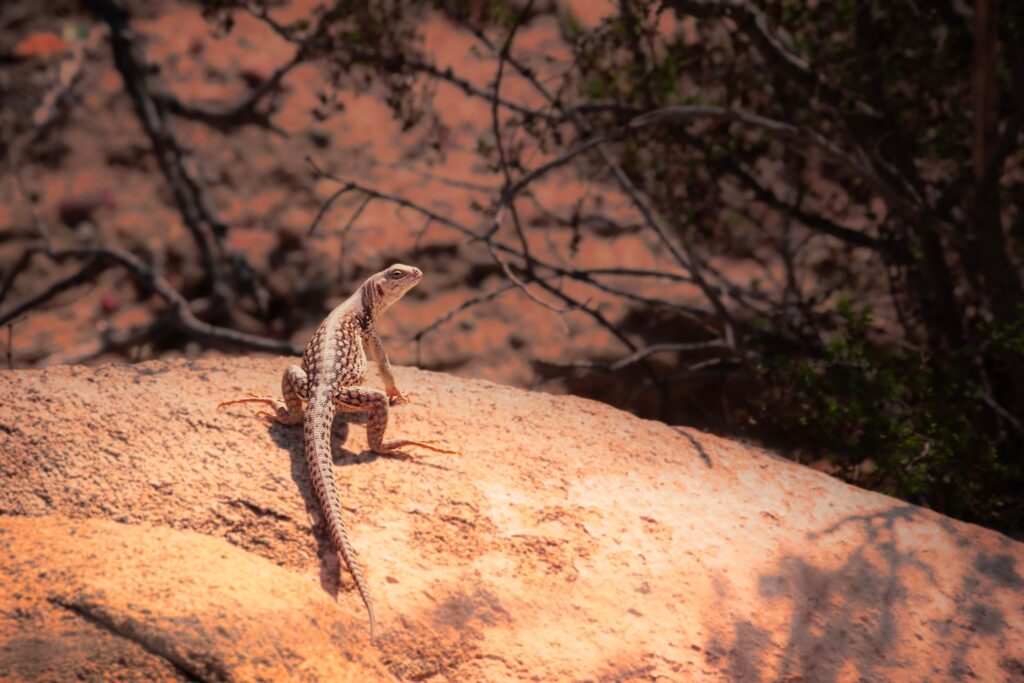
Small lizards bask in the sun, while larger ones gleam golden in the sunlight and always dart away from us instantly. The Baja spiny lizard (Sceloporus zosteromus) isn’t overly fond of us, speeding away the moment they hear us.
The coast draws closer after more than 150 kilometres. The air turns damp and a low-hanging fog engulfs us. The temperature drops instantly. The closer we get to the coast, the less we see. At the beach, we find ourselves facing a thick wall of fog – meaning we won’t be seeing any whales here. It smells of decaying seaweed; everything feels even more deserted than the ghost town. We decide it’s best to drive on again. And once more, it is the right decision.
On another long, straight-as-an-arrow dirt track, Michael suddenly shouts: “Stop!” There it is at last, perfectly camouflaged by the roadside: a small coast horned lizard (Phrynosoma coronatum). Its clumsy name is deceptive, because this flat, slightly pink-shimmering mini-dragon is absolutely fascinating.
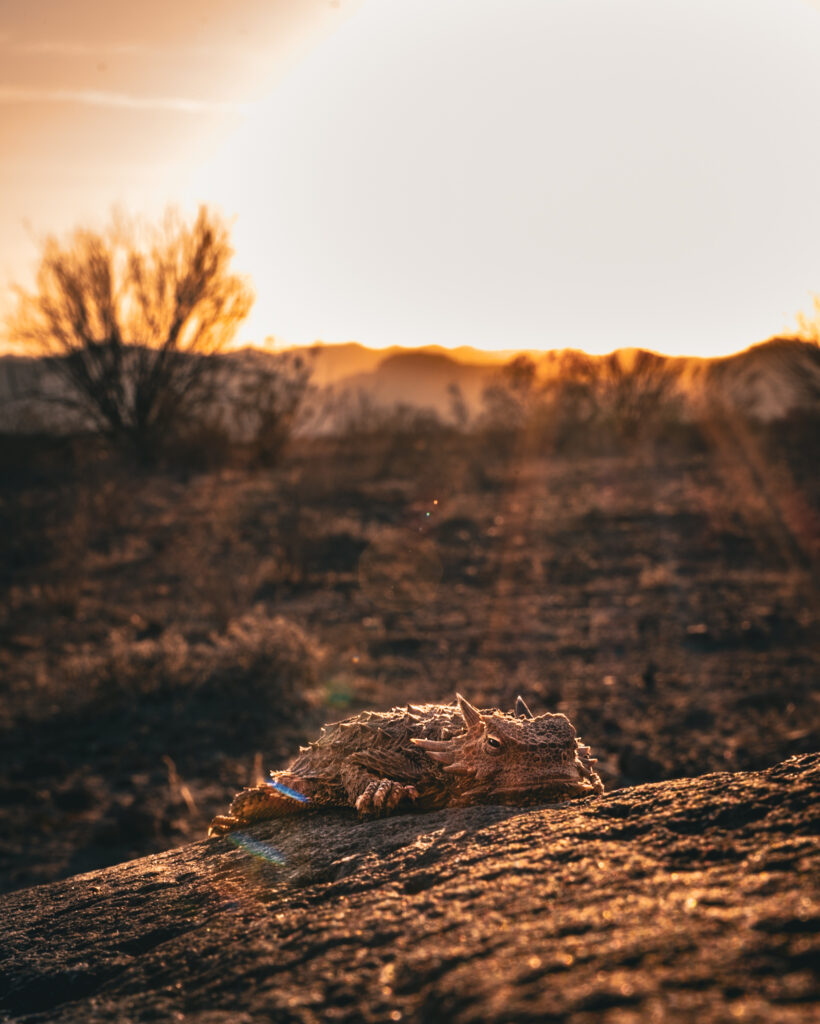
Its “dangerous” spikes are pure bluff – they feel surprisingly soft. To defend themselves against coyotes or foxes, these lizards use a bizarre tactic: they engorge the area around their eyes and, in an emergency, squirt blood directly from them. Luckily, the creature doesn’t use this autohaemoorrhage tactic on us. For our little fellow, the encounter simply means: it’s time for a quick photo session before we release it back into the wild.
Bratwurst from a cactus fire
That night we sleep in the middle of a dried-up riverbed. Not exactly the safest option, but during the dry season, the risk is minimal. A crackling fire made of fast-burning cactus wood and dry scrub provides warmth in the chilly desert night, whilst simultaneously delivering the perfect embers for a well-deserved bratwurst dinner.
By the next morning, civilisation has almost caught up with us again. The road improves, the cacti shrink in the rearview mirror, and then the blue shimmer of Bahía de los Ángeles appears in front of us.
Three days of driving through a bone-dry desert full of hidden life end right here: with a campsite right on the bay and a sea lion to welcome us. We turn off the engine, wipe the sand out of the car, and wash the dust out of our hair with a quick plunge into the cold water. The adventure in the hinterland is over; the next one is already waiting in the sea.