
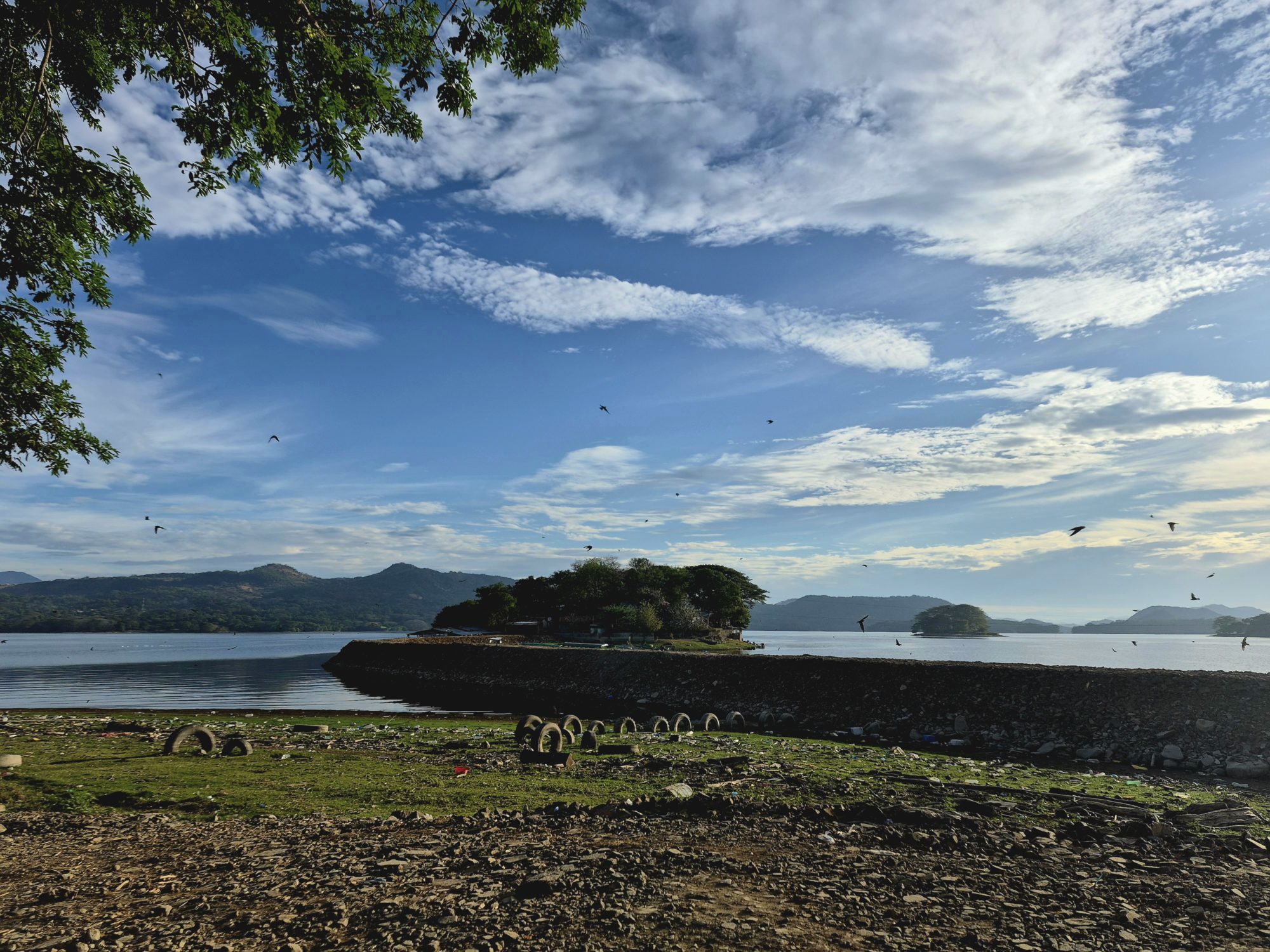
The border appears tidy and clean. The officials are organised, and only a few people are queuing to enter El Salvador from Honduras. The roads are in good condition, and we reach Suchitoto fast, a picturesque little village in the east of the country. Here, too, is a similar picture: not much going on, everything looks orderly. It is only when we arrive at our overnight spot by the lake that the perfect image breaks: the entire shore is littered with plastic.
This first day is symbolic of the situation in Central America’s smallest country. On the one hand, order and cleanliness; on the other, massive problems behind the scenes – or are they already starting to peek out?
One thing first: we never felt unsafe. Not for a single moment. Not even when we spent the night by the lake at the only reasonably clean spot.
A country in transition
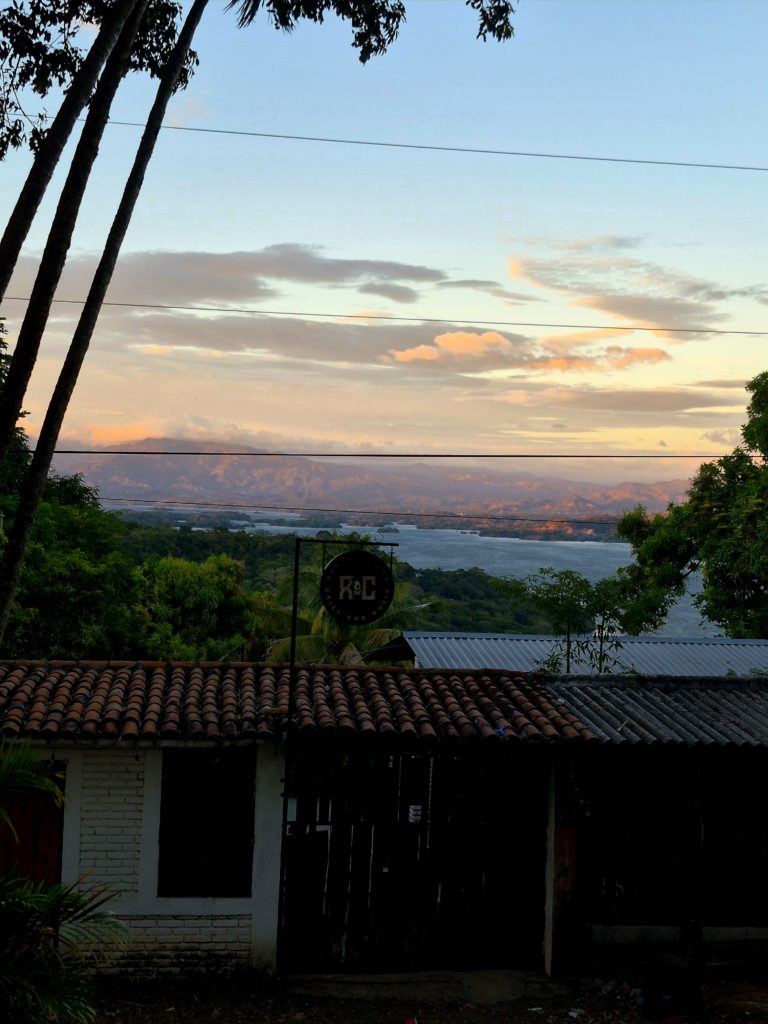
The Salvadoreños are proud of the changes over recent years. While El Salvador was still considered one of the most dangerous countries in the world in 2017, by 2025 it ranks as one of the safest in the Americas, alongside Canada and Uruguay. We drive further towards the capital, San Salvador. Work is happening everywhere: motorways are being expanded, roads renewed, and buildings erected. Things are moving; investment is flowing. The country, and especially its president, presents itself as modern and open.
Security is the priority, and the homicide rate has dropped drastically. But the question remains: at what price?
Bukele’s popularity
Most people we spoke with are satisfied with the government’s performance. Polls from 2025 confirm that 85% of Salvadoreños continue to support President Bukele – despite the fact that his re-election was actually unconstitutional. Nevertheless, the people elected him.
Since 2022, El Salvador has been living under a state of emergency. What was originally intended for 30 days has already been extended 20 times and remains in place today. The trigger was a “black weekend” during which 88 people were murdered. Since then, the state has been waging a “war against the gangs”. Among other measures, a massive high-security prison for “terrorists” was built, providing space for 40 000 inmates – and there are already talks of doubling its capacity.
The darker side and Human Rights
However, not everyone who ends up behind bars is a criminal. Human rights activists are sounding the alarm: many are arrested in arbitrary raids and languish in pre-trial detention for years. Even children are being imprisoned for alleged gang membership, often without proof.
Furthermore, corruption remains present, and people earn very little despite the relatively high prices – especially those working for the state. And yet, for many, satisfaction prevails. They enjoy being able to move around the country without the constant fear of violence. We heard few critical voices, and those we did hear were mostly regarding the economic situation. El Salvador has become expensive; inflation has arrived there, too.
The Salvadoreños are friendly. They greet you often, and we are repeatedly asked how we like El Salvador. People proudly point out that it is safe everywhere and that we could spend the night anywhere. For this region, that is indeed extraordinary.
A glimpse into the future
How things will continue with Bukele as president? No idea. Whether his ambitions will eventually moderate or if he will become increasingly dictatorial, only time will tell. At the moment, the Salvadoreños seem content. But whether they will find the balance between repression, security, and democracy in the long run remains to be seen.