


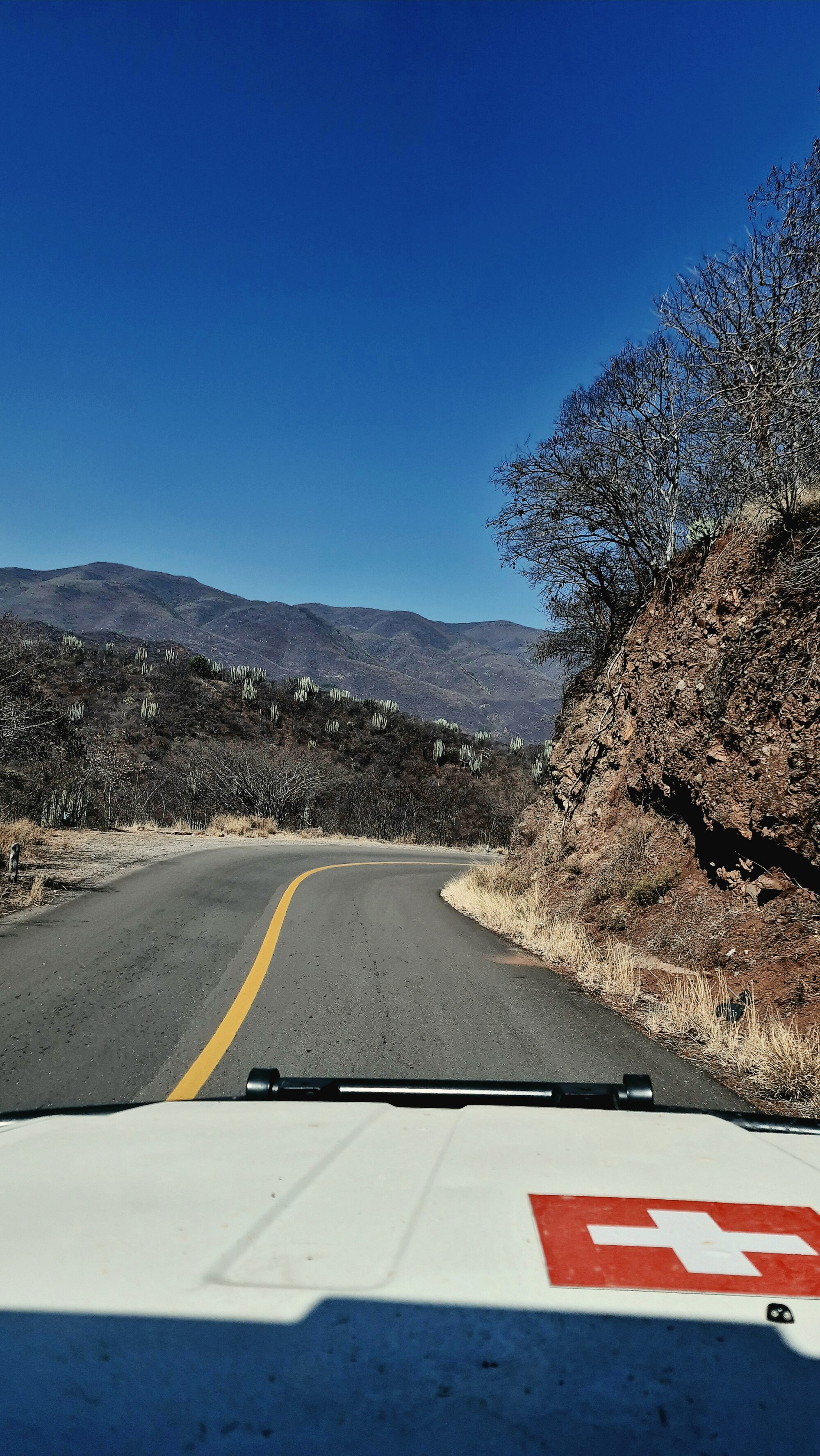
How safe is it to travel through Latin America and especially Mexico by vehicle?
‘You know, I opened this campsite to take away travellers’ fear of Mexico,’ Raúl tells us at his ranch in the north of the Baja California peninsula. The ranch is less than an hour away from the border between Mexico and the USA. Many people fear this border. There are travellers who believe that as soon as they drive across, they will be mugged, and a corrupt police officer will be waiting on every corner.
We are at the end of our journey through Mexico. Raúl’s ranch is our final stop before the border crossing. And to be completely honest: he doesn’t need to convince us anymore; Mexico enchanted us a long time ago. Staying with him is the unexpected, crowning final.
We spend Good Friday eating fish tacos around the campfire, together with his family and friends who have come here for Easter. The horse ranch is so idyllic that instead of staying for one night, we end up staying for another four – delaying our border crossing into the USA for as long as possible.
Is it really that dangerous to travel through Latin America?
Just like Raúl, we heard plenty of negative things about Latin America before we set off. A continent full of dangers, where violence rules everywhere and corruption lurks around every corner. What did we actually see of it? Very little.
And no, we didn’t just drive the “safe” routes. We travelled through coca-cultivation areas in Bolivia, Brazil and Peru. We visited the guerrillas in Colombia. We ventured off the beaten track, driving right through the jungle and through cartel territories. The ultimate highlight? Venezuela, back when Maduro was still firmly in the saddle.
A list of absurdities: whisky, roadblocks and presents
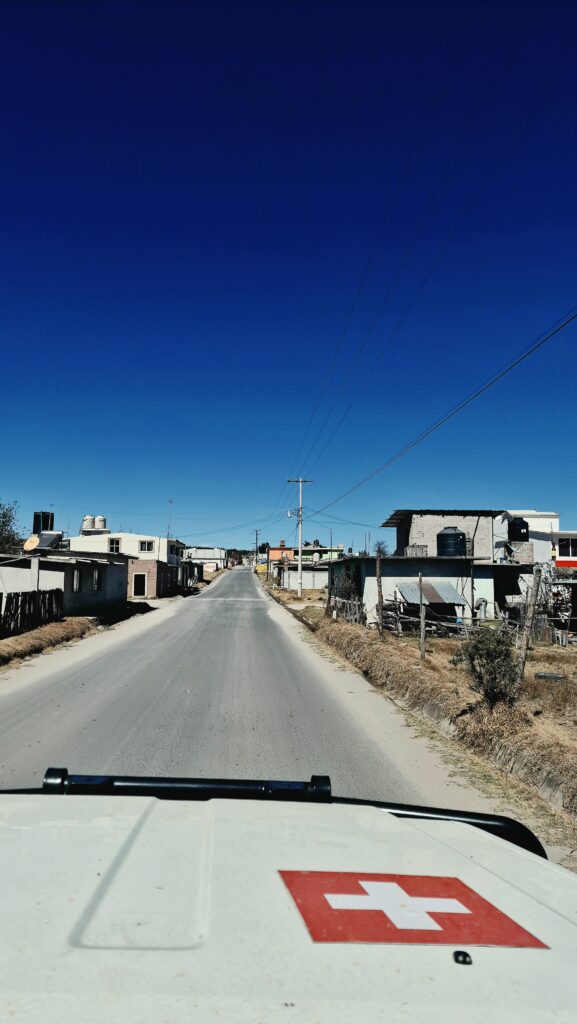
This doesn’t mean we just blundered through blindly in search of adventure. We spoke to the people living on the ground – a lot, and very intensively. It wasn’t just about the beautiful sides of life, but also about their daily struggles.
We were in contact with the rich and the poor, expatriates and locals. And we certainly experienced corruption first-hand:
- Military patrols that suddenly turn up at the coffee farm just before the harvest begins, simply to show once again who your “good friend” is.
- Police who collect their monthly ration of whisky just so the hotel can keep running for another month.
- A high-ranking commander who, thanks to weekly money transfers, is always reachable by phone whenever normal cargo shipments need to pass through the country.
- Indigenous groups who block public roads and demand cash to let you pass, or who block entire main traffic arteries for weeks at a time in protest.
- Police officers who carry out checks and hand out fines even though you did everything exactly the same as the locals. But as a foreigner, it turns out it wasn’t quite permitted to turn left at that spot along with ten other cars. Complete with a polite request to provide a little “tip”.
- Or a general night-driving ban between 6 pm and 6 am in guerrilla territory.
The list seems long and certainly shows how complicated life in these countries can be. Yet on the vast majority of days, we experienced absolutely none of it.
At most police and military checkpoints, we were given helpful advice; in Venezuela, we were occasionally offered coffee and usually a witty comment or two. Mexico was no exception.
Is it safe to travel through? Our experience
Mexico is the final Latin American country on our journey to Alaska. Before entering the southernmost country in North America, we are warned constantly – far more than with any of the other countries. The last time we experienced this level of intensity was before Nicaragua and Venezuela.
We were told we would experience countless police checks. That the military would have a heavy presence. That we would encounter widespread corruption or indigenous communities demanding money to let us pass. That there would be many closed roads and, of course, cartel violence.
Notice a pattern? It’s essentially the same list as before. Definitely nothing we hadn’t already known or heard about.
Since we were approaching from the south, the negative reports didn’t put us off as quickly as they did many other travellers entering from the north. We had heard similar warnings about almost every country – and after more than 200 police checks in Venezuela, it takes a lot to ruffle our feathers.
Even so, just for fun, we decided to keep track of the checkpoints again. The result? In just under two months, we drove through 34 checkpoints. We were pulled over at 12 of them, and we had to open the boot at 7.
Was money demanded? Not by anyone. Not a single time. Not even remotely.
Between cartel violence and everyday routine
Mexico is not a safe haven – certainly not in certain tourist regions or in the immediate vicinity of the notorious drug cartels. All the same, the day-to-day life of most people is not characterised by violence.
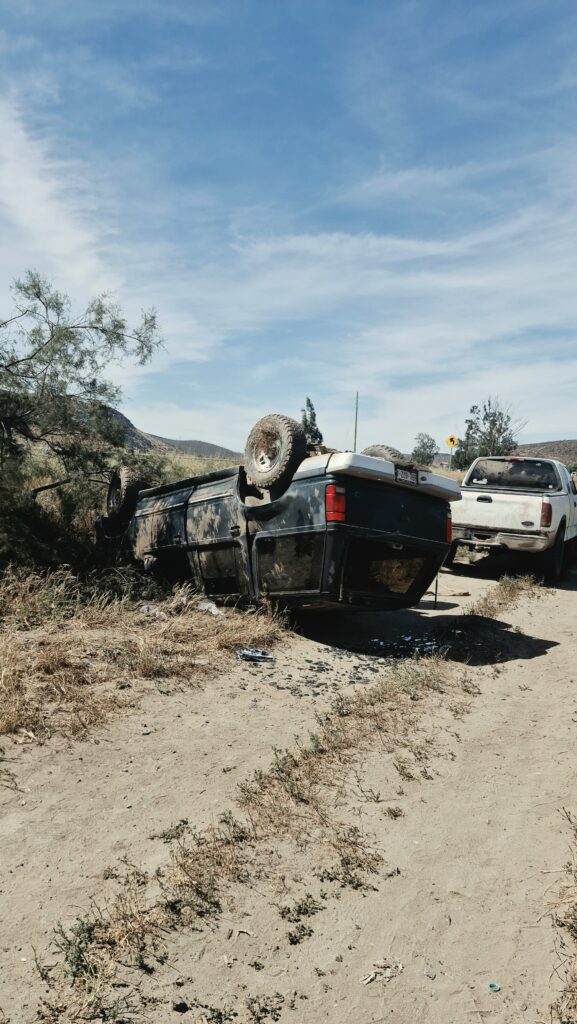
The people we met have adapted to Mexico’s peculiarities. They have all been checked by the police at some point and asked for a small “donation”. There have been curfews due to escalating violence, and they too know countless stories about what the cartels are up to. Their lives are admittedly a little closer to these problems, but even for them, it is not an unremitting daily reality.
No one we interacted with told us about extortion or paying protection money – something we witnessed first-hand in other countries. That this exists in Mexico is indisputable. The fact that the drug trade and the illegal criminal underworld generate vast amounts of money, undermine politics and justice, sow violence and complicate matters is a reality. Especially in impoverished areas where young, unemployed people are promised fast cash. Furthermore, the cartel world is regularised and glamourised through narcocorrido songs, which even make it into the pop charts.
However, in a country inhabited by 134 million people, this is not the reality for the majority. It is the media’s attention that remains glued to it – and the cartels know exactly how to generate that media spotlight. A striking example was the death of El Mencho in February and the subsequent roadblocks across the entire country. If cartel members know one thing, it’s how to bring a state to a standstill in no time.
Even in the state of Jalisco, the main headquarters of the Jalisco Nueva Generación cartel, there is a life that happens entirely outside of the drug trade. The majority of people live completely normal lives – just always a tiny bit closer to the dark side than is the case in Europe.
What is the danger for travellers?
The danger for us as tourists exists – here too – primarily where there are lots of tourists. Wherever others know there is something to be gained from holidaymakers, things can get dicey. Most of the time, it’s vehicle break-ins or the police looking for their own “subsidy”. Because even if all your paperwork is in order, a poorly paid police officer might just try his luck; the officer rarely has much to lose.
We experienced nothing of the sort in Mexico, though we do know first-hand accounts from other travellers. All our checks went smoothly. Perhaps our approach helps us here: we don’t expect anything negative to begin with. Just like at a checkpoint in Europe, the security forces are, first and foremost, just doing their job.
Our tactic: Trust, but with a system
But that doesn’t mean we leave everything to chance. Long before we even run into a checkpoint, we think about how we would react in any given situation – yes, even very tricky ones.
The keyword is: Situational Awareness. We want to know what is happening around the vehicle. To manage this, we have installed a dashcam and other small cameras. We don’t mind the security forces seeing that they are being filmed. Furthermore, for our own safety, we have made it a rule to always keep all doors locked – even during a check.
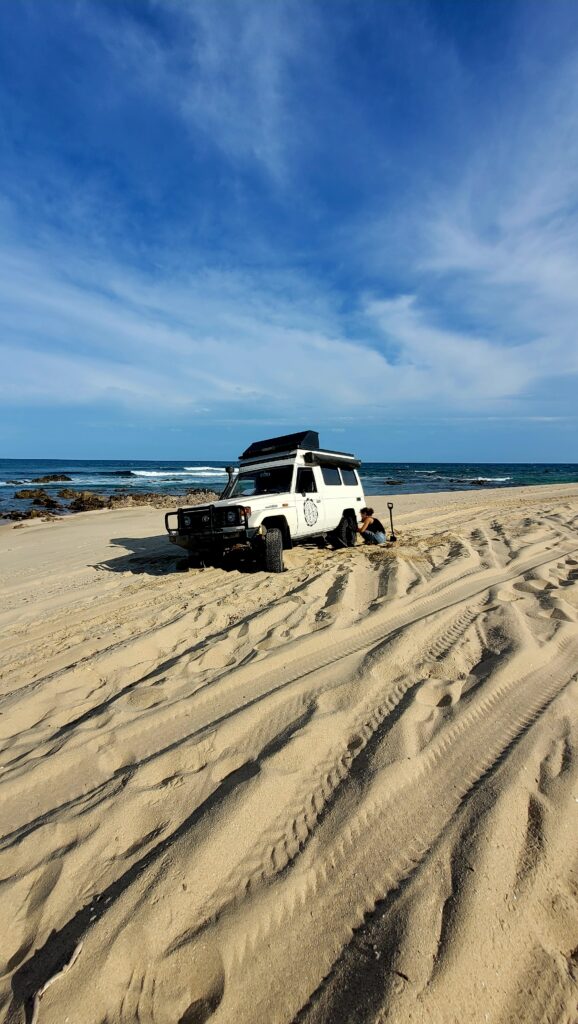
This means the police can’t just fling the rear doors open. They have to wait until one of us has switched off the engine, opened and closed the driver’s door, and walked to the back to open up. This prevents multiple people from searching the car simultaneously; instead, their attention is focused on a single spot. What’s more, the interior of the Land Cruiser is designed so that the first thing you reach is the first-aid kit. That always leaves a positive first impression.
A popular trick in Mexico seems to be wanting to search your wallet. Since the start of the trip, we’ve made it a habit never to leave valuables lying around in the open. Our real wallet is accessible, but you have to know where to look. In addition, our vehicle documents, driving licences and passports are kept strictly separate from any cash. This way, the officers aren’t tempted to look any further. A small pouch containing a few 5-dollar notes is kept within arm’s reach in the glove box – you never know when you might need to show that you have some cash on you. We pack a few expired credit cards alongside it.
Are rural roads really that dangerous?
Before we entered the country, we were often advised to stick strictly to the toll roads (cuotas) in Mexico, as they were safer. Hmm. If they mean safer from the countless speed bumps (topes), then it’s true – and you save a lot of time, though they are also horrendously expensive. If they mean safer from police checks, we actually encountered most of them on the toll roads rather than in the small villages. We did, however, avoid driving across the mountains where cartels are known to fight over territory.
Just like in South America, we constantly kept ourselves actively informed: by asking the police, the locals, other travellers or via travel apps. This gives you a good picture of the current situation. If you ever have a bad gut feeling, it is always best to find an alternative route.
We leave Mexico with tears in our eyes. Because here, too, we experienced the hospitality of Latin America in its absolute abundance. The long Easter weekend at Rancho La Bellota was a worthy finale. There is no better description for the people of Latin America: good food, deep conversations, plenty of laughter and an incredible warmth.
If we take a single insight home from this journey, it is this: the vast majority of people are, at their core, simply good.
Our 3 golden rules for safety in Latin America
- System over chance: Think ahead of time about how you want, should or could react in specific situations. Clear procedures create confidence when things get hectic.
- Gather local intel: Actively ask police officers, locals and other overlanders about the current situation on the ground. Use travel apps.
- Trust your gut and assess the situation: Got a bad feeling about a route? Turn around and look for alternatives. The most important thing is to always be aware of what is happening around you (Situational Awareness).
More similar posts:
First impressions on Venezuela
Impressions on Nicaragua and more info about this Central American Country
Safety and Crime in South America
Travel plans in South America and everything that can go wrong
Health system in South America and First Aid on the road: how we prepared ourselves