

Chronicle of a journey through Nicaragua
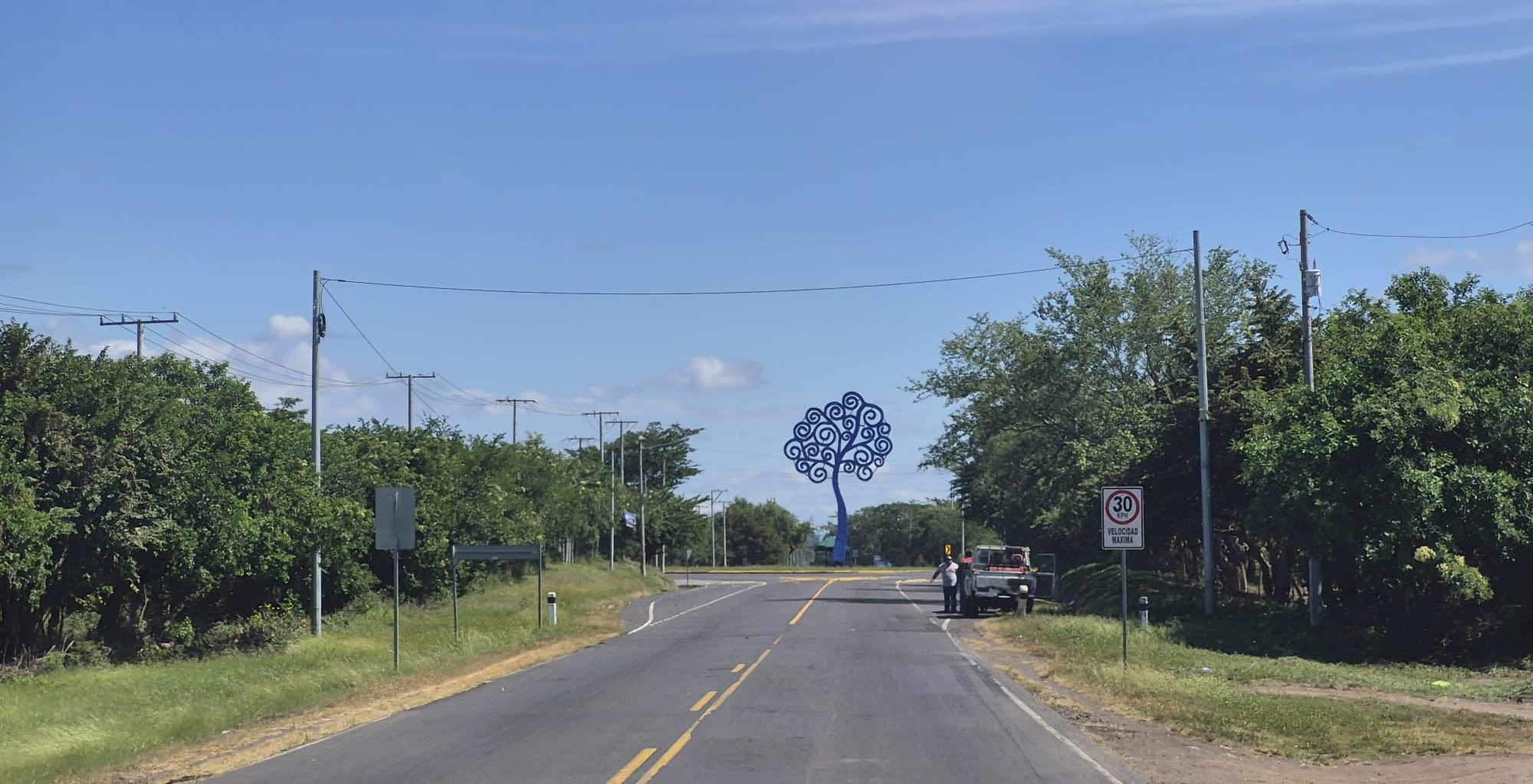
When crossing Nicaragua, something hits the traveller’s eye immediately. It’s not the volcanoes, the jungle, or the beaches, but enormous trees in garish colours sprouting in the middle of roundabouts. Officially named “Trees of Life”, though they possess none: they are inert metal structures.
It is almost absurd. In a country with enviable biodiversity and jungle, the monument chosen by the government to represent them is an iron skeleton without a drop of sap, yet painted in a riot of colours: red, yellow, green, blue, pink.
The origin of the Chayopalos
These trees do not need any earth; they were first erected in 2013 by order of Rosario Murillo, wife of Daniel Ortega and Vice President since 2017. What was sold as an improvement plan for Managua ended up being the personal hallmark of “La Chayo” (her nickname).
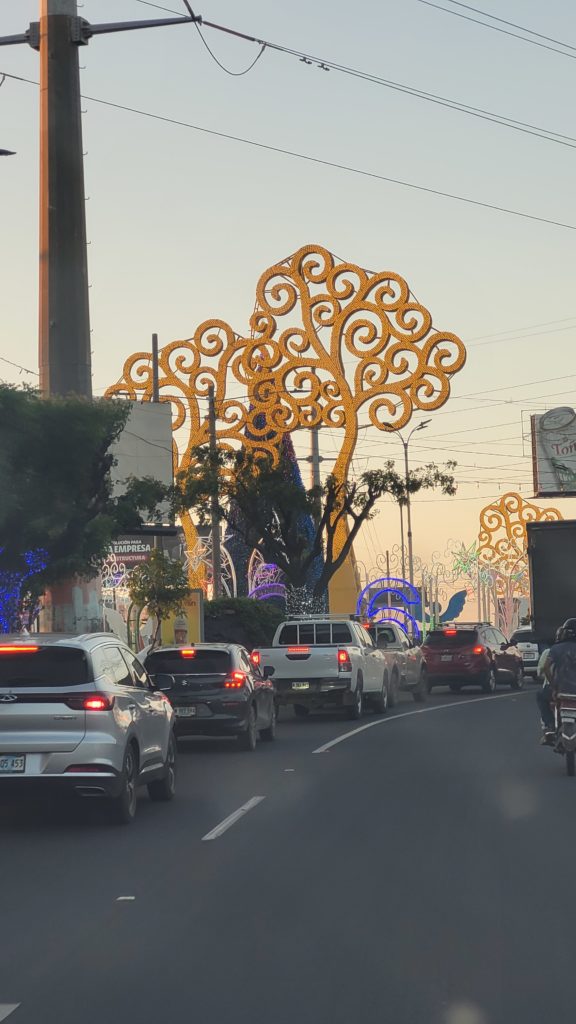
Today they are known as Chayopalos (Chayo’s sticks) or arbolatas (tin tress). There are 150 or more of these trees scattered across the country, each illuminated by more than two million light bulbs. Why they were erected is not known, there are theories of them being purely artistic or purely esoteric, reflecting the spiritual beliefs of a Vice President famous for her colourful outfits laden with amulets.
What is not theoretical in the slightest is the cost: each tree costs between 25 000 and 40 000 US dollars, not including the astronomical annual electricity bill. In a country with Nicaragua’s pressing needs, that money could clearly be invested in more urgent matters.
A country under lock and key
AWhen we were there just before Christmas, the trees almost passed as decorations. But behind the glow of their bulbs hides a dark reality: In 2018, during social protests, many were torn down as a symbol of rebellion. Since then, the paranoia of the state leadership has intensified, and what was once a democracy is now a full-blown dictatorship.
The regime’s distrust of the outside world has reached extreme levels. Any object that “smacks” of espionage is prohibited: drones, binoculars (especially night-vision ones), or professional photo cameras. There was even a time when travellers could not even carry knives, even if they were travelling in a motorhome.
For those of us living in a vehicle with all our belongings, this is a logistical challenge. We had to prepare thoroughly: we hid everything we could to keep it out of sight, including the machete—an indispensable multi-tool for any Latin American, one would think. As for the drone, we preferred not to risk it: we left it at Michael’s family home in Costa Rica, and his brother brought it to us in Guatemala weeks later. Many travellers opt to send them directly via DHL to avoid confiscation at the border.
The war on Word
The fear of rebellion has silenced the country. Independent newspapers no longer exist; information is hijacked by the official channel, and journalists work under the constant threat of imprisonment—at least the few who still dare to remain in the country. The censorship has bordered on the surreal: the entry of bibles and any text that might pose a danger to the regime has been banned.
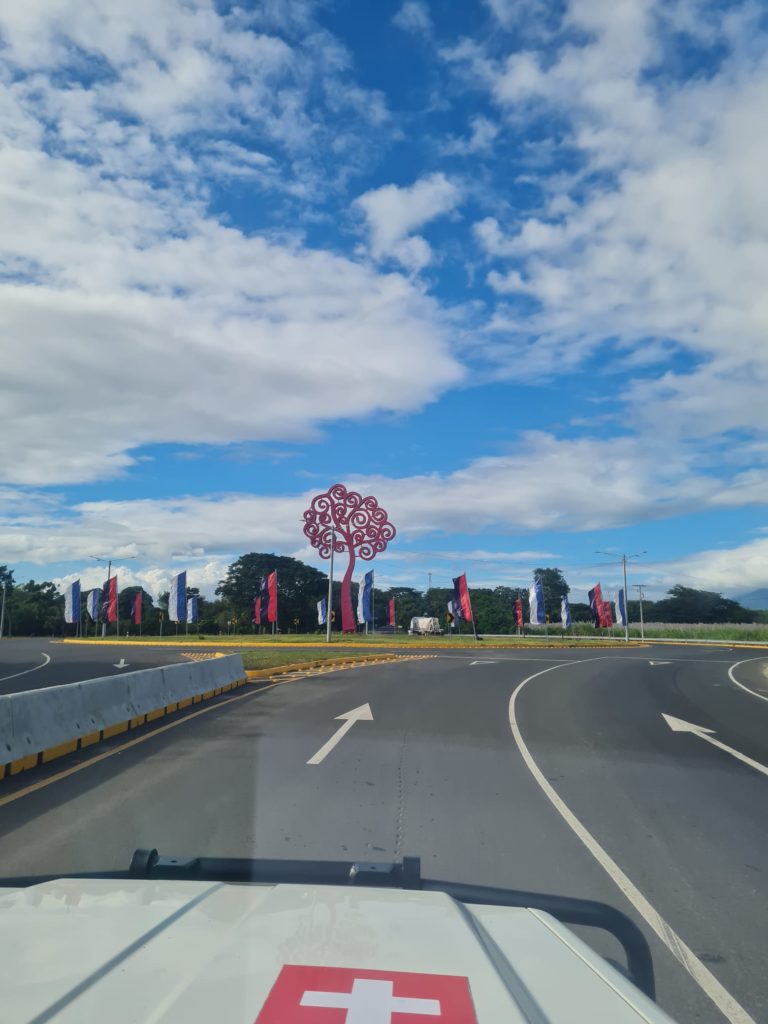
How do they apply this at the border? It is a lottery. We were lucky and were hardly searched, despite carrying a bible in the car that had been gifted to us a long time ago.
Most curious of all is the open war against the Catholic church. Since religious institutions supported the 2018 protests, Ortega has been at war with the bishops. In any case, only Rosario’s ideals are accepted. This has led to unusual situations: while Catholicism is persecuted, the Nicaraguan health system funds non-scientific alternative therapies, many of which are banned in other countries.
Nicaragua today is a constant and painful ambiguity. A ruling elite demonstrating that it does not care about the price to be paid—whether in cash or in freedoms—as long as it maintains absolute control.