
The guardians of colour
Incas, Mayas or Quechuas – for most people, these names conjure up memories of history lessons or images of wonders of the world such as Machu Picchu and Chichen Itzá. But who has ever heard of the Lencas? As we wind our way through the misty highlands of Honduras, one thing becomes clear: we are on our way to meet a people who have almost been forgotten.
A turn into another world
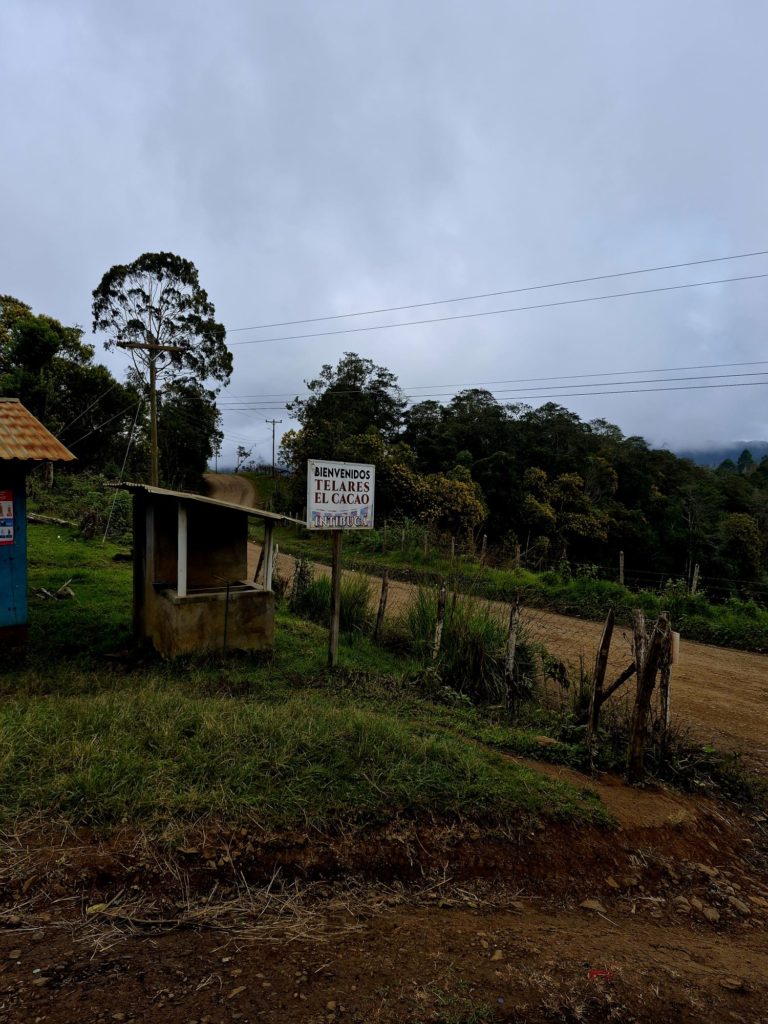
Honduras has a reputation for being a rough place. This also applies to the driving skills of the locals. Anyone behind the wheel here seems to regard life as an optional extra. However, as soon as you leave the main roads and head into the highlands, the scenery changes. The roads narrow and fill with potholes, and finally we turn onto a dirt road where we no longer encounter any cars.
Deep in the mountains, near the village of Intibuca, we pass simple stone houses and cows pasturing on green fields. It is foggy and cold – unexpected for Central America.
The steadfast Maya?
The seclusion of the mountains was once a safe haven for the Lenca people. After being driven out of the fertile valleys by Spanish conquerors, they settled at altitudes of over 1650 metres. The rugged highlands remain their home to this day
Their origins remain a mystery to anthropologists. Researchers such as Rivas and Castro suspect that they are descendants of the Maya. However, they are not ‘modern’ Maya; they did not leave their homeland when the great Maya cities collapsed but remained in what is now Honduras and El Salvador when the first Spanish galleons landed. Although they once formed the largest indigenous group in the country, alarmingly little is known about them today. An estimated 400 000 Lencas still keep their few traditions alive today.
Colour in the mist
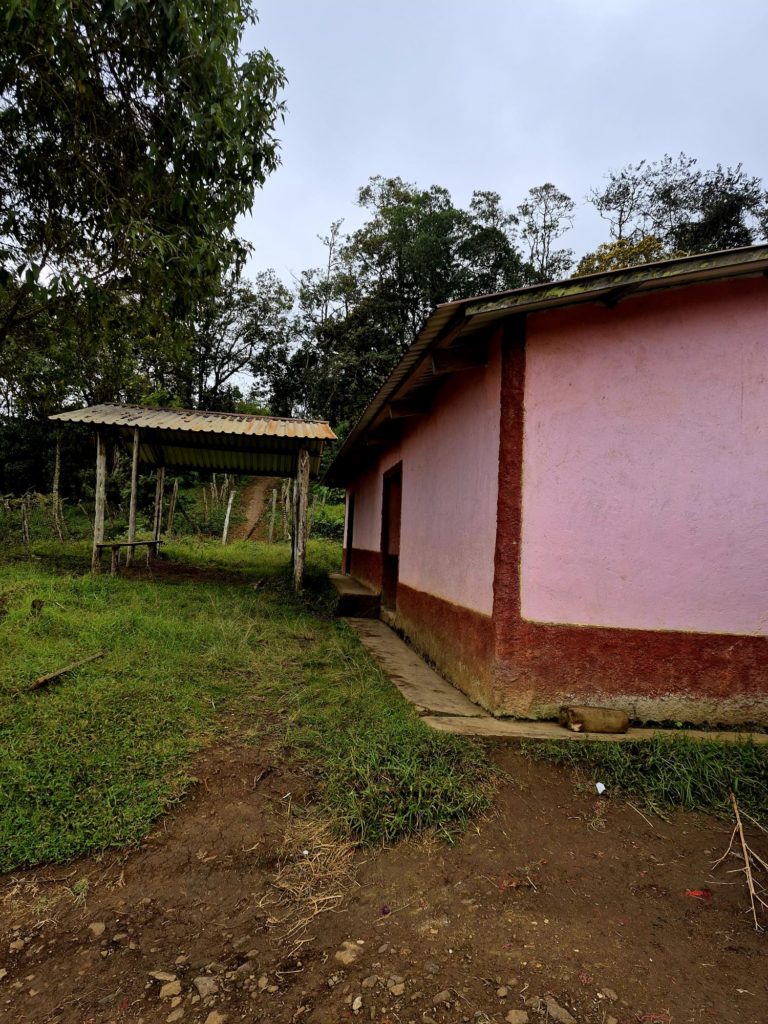
Children and men walk along the side of the road, on their way to school or work. At a sharp bend, we see a lorry unloading a calf. Right behind it is our destination: a small weaving mill.
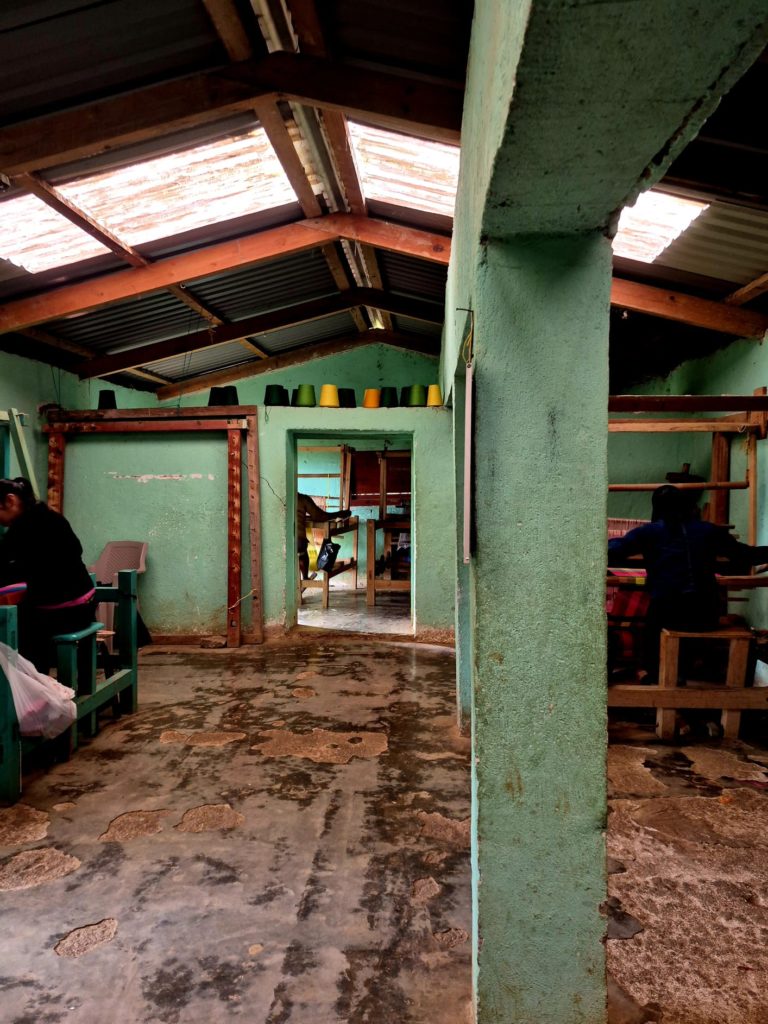
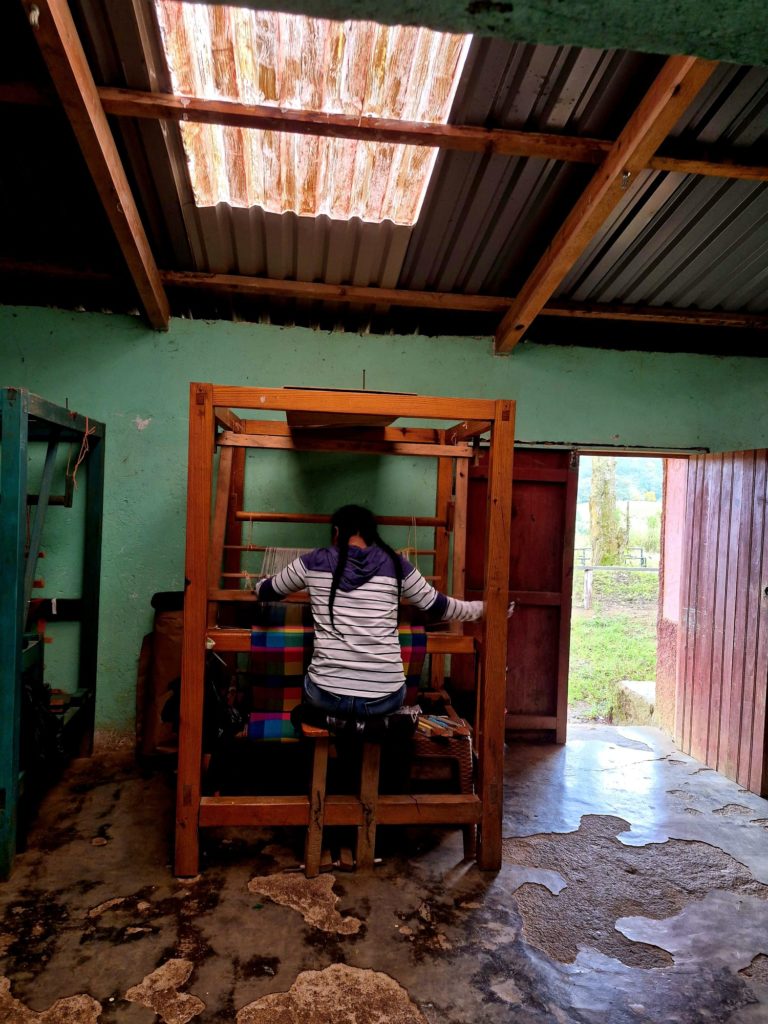
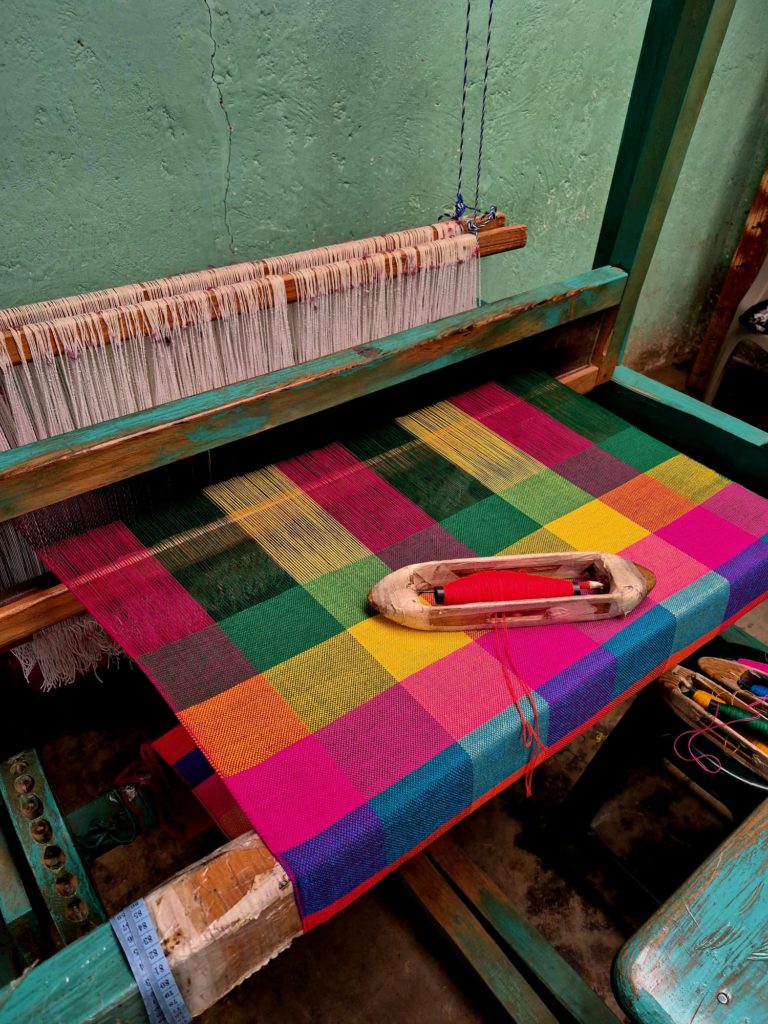
The building is unassuming, and the sign is almost illegible. However, when we ask timidly, a woman waves us into the parlour in a friendly manner. Inside, there are seven wooden looms strung with brightly coloured threads. It is a stark contrast to the grey mist outside.
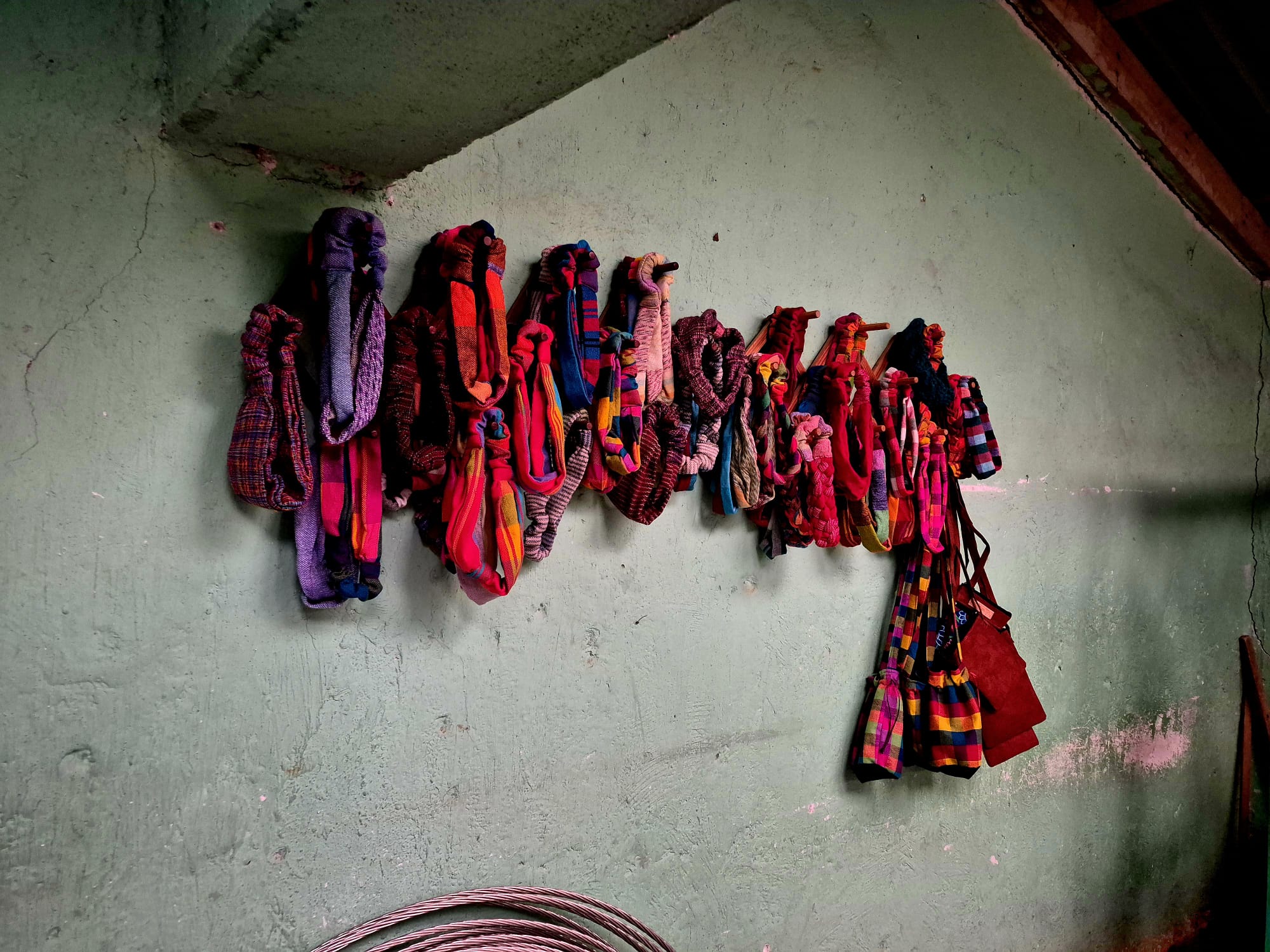
The work here follows its own rhythm. The women come and go, sitting down at the loom for ten minutes, letting the shuttle fly and then taking another break. The process is entirely manual: stretching the warp threads takes a whole day, and another day is needed to weave the pattern. The end products are magnificent scarves, tablecloths and throws in checked patterns.
Tradition versus ‘Made in China’
While we’re chatting, we notice the women’s accent. They speak Spanish, but their actual native Lenca language has been lost. Only a few phrases and individual words survive, and there are only a few speakers left. The origins of the language are unclear, and it is unfortunately clearly not far from becoming extinct.
And rummaging around, we discover a sticker on one of the balls of wool: ‘Made in China’ it says. Even here, in the most remote corner of the Honduran highlands, the global economy has left its mark.
It is a fascinating mix: the women weave according to centuries-old traditions, securing an independent income for themselves. The looms are antique, but the wool comes from overseas. There is no marketing, but there is an entry on Google Maps. And those who no longer have any lempiras in their pockets can quite pragmatically pay in US dollars.
We leave it open whether the scarves are made of pure cotton or sheep’s wool, as the women first told us that the wool was from Honduras. For us, it’s the encounter that counts. With a few colourful gifts in our luggage and knowledge of an almost forgotten people, we leave the misty mountains behind. The trip to meet the Lencas was worth every lempira.