


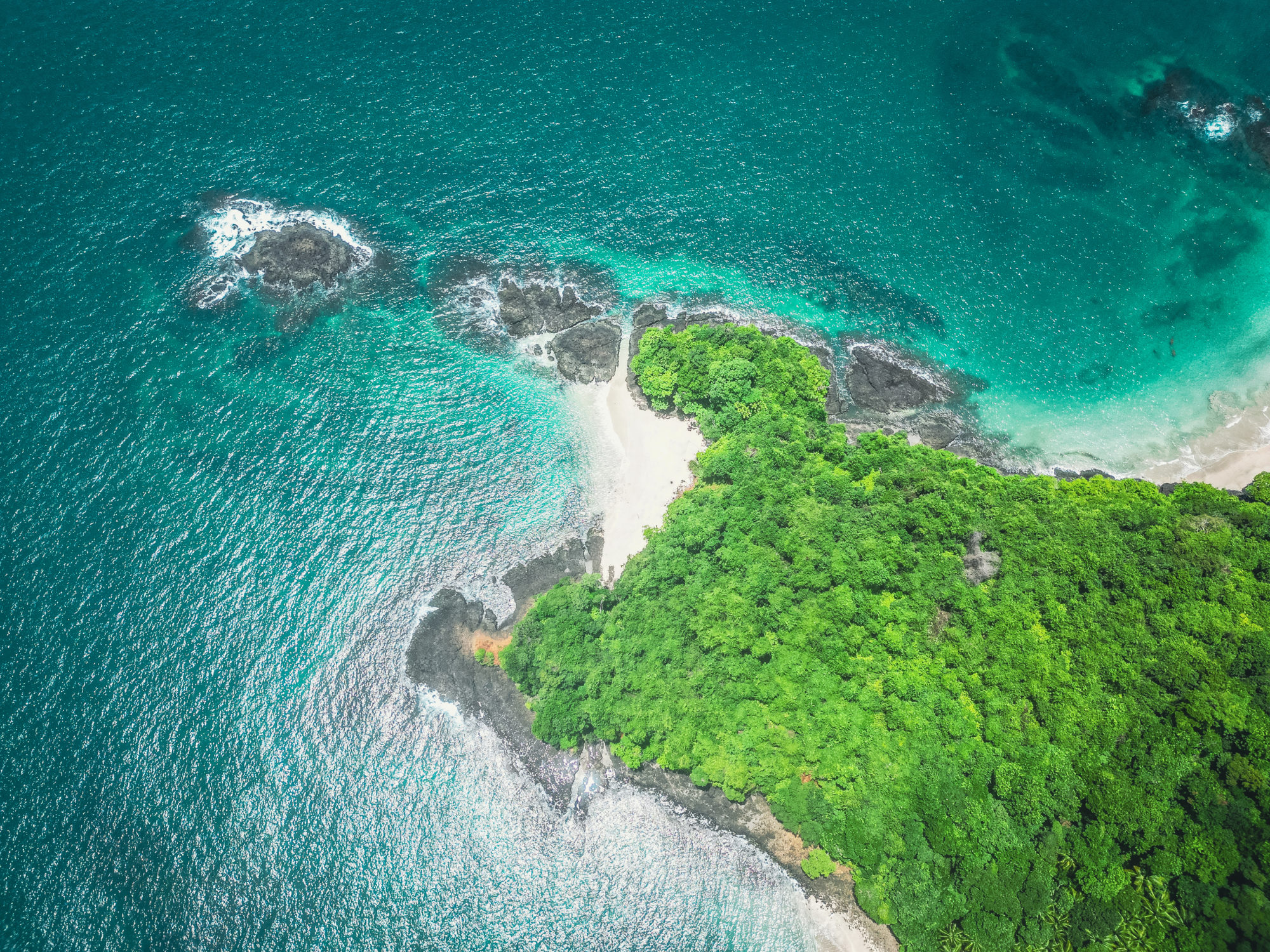
From our perspective, the American continent is bordered by two oceans: the Atlantic and the Pacific. For most travellers, the sea accompanies them along the entire route from north to south, or vice versa. For us, however, it was slightly different. For long periods, we travelled almost exclusively inland through South America.
But now, in Central America, there is no escape. The sea is never far away and provides us with wonderful places to stay time and time again. The sea creatures are fascinating too, especially in the middle of whale season.
Visiting humpback whales
Humpback whales live in all oceans. They spend the summer in polar seas and migrate to tropical and subtropical waters in winter. These winter quarters are essential for reproduction, both for mating and for the birth of calves. They like to stay in shallow areas of the sea, making them easy to observe.
We hadn’t seen any for a long time because we hadn’t been near the coast. In Ecuador, we arrived either too early or too late for the season, as there was no sign of the whales.
But in Panama, we arrived at just the right time. This meant that we absolutely had to get out on the water to see them!
A calf practises acrobatics
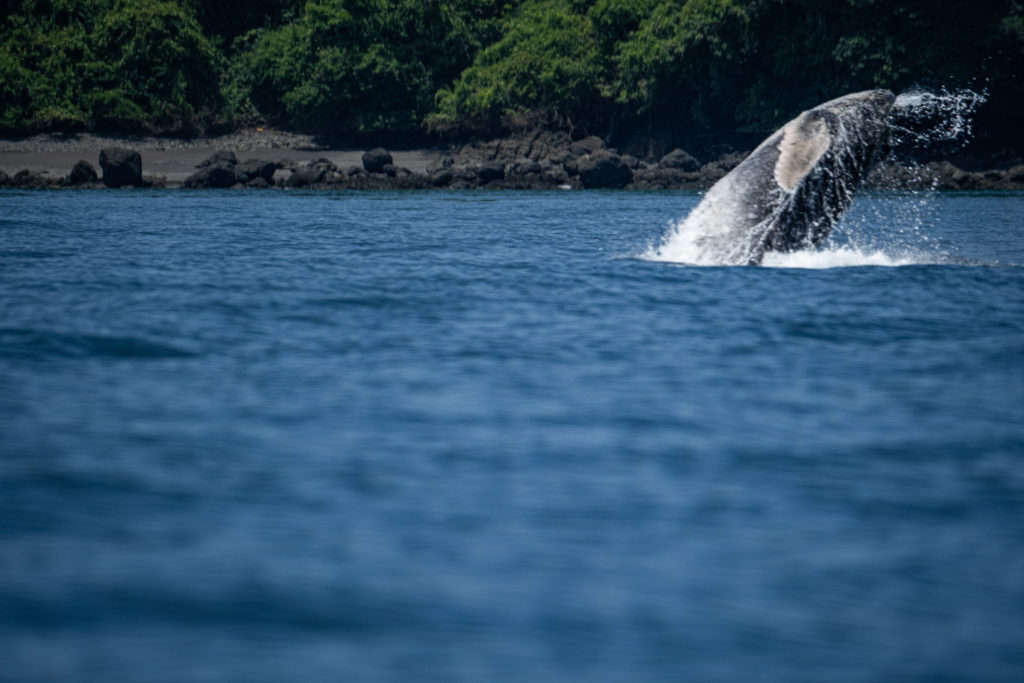
Humpback whales are known for their spectacular leaps out of the water. These serve to rid them of parasites through the impact, but they also use them as a means of communicating with other whales. Researchers have discovered that, when underwater noise levels are high and other whale groups are more than four kilometres away, they use jumps or fin slaps to communicate.
Unfortunately, we were unable to observe a large humpback whale performing a spectacular jump, but we did see a calf practising. These little ones, already measuring 4 metres in length, are impressive to behold. Seeing the adult animals further north will certainly be an even more impressive experience.
Humpback whales are also known for their singing. Up to 622 different sounds have been identified, and we actually heard them underwater while diving! We knew the whales were nearby, but hearing them was impressive. It would have been magnificent if they had swum past us. But maybe we’ll be even luckier later on in the trip.
Fewer tourists, more nature
Whale watching has become big business in this region. Prices are often correspondingly high. In Panama, specifically in Santa Catalina, they wanted to charge between 80 and 100 US dollars. To be fair, this includes not only whale watching but also snorkelling and the park entrance fee.
However, we received a tip from other travellers about a cheaper option with fewer tourists. Since we had already been fortunate enough to see a humpback whale calf practising its jumps and observe other whales from a distance during our diving trip, we thought long and hard about it. But at 30 US$ per person for six hours on the water, we couldn’t complain.
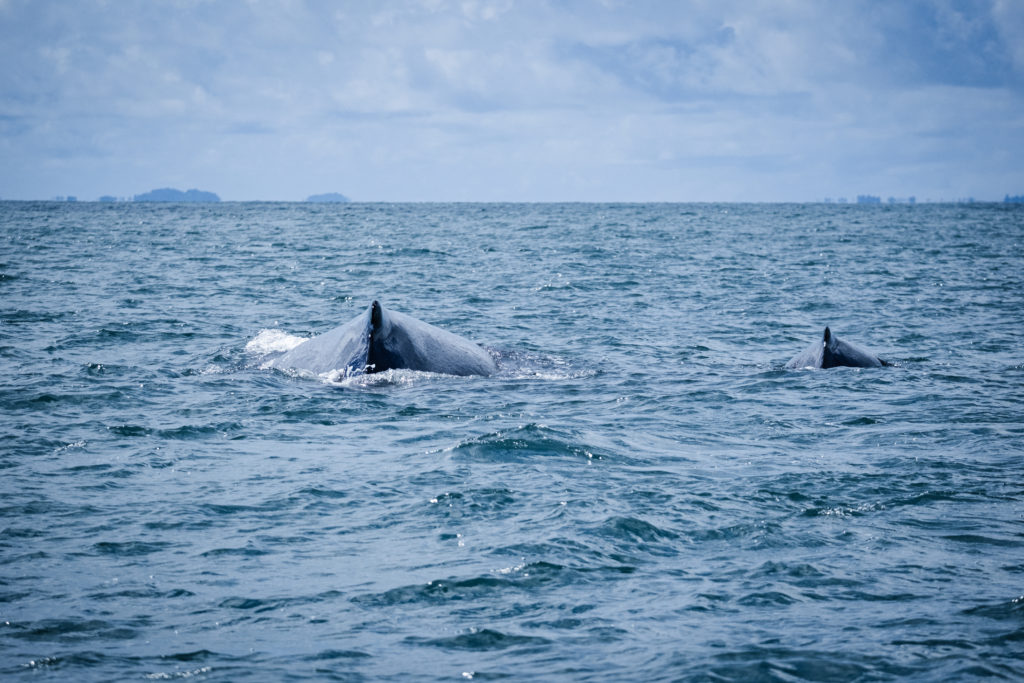
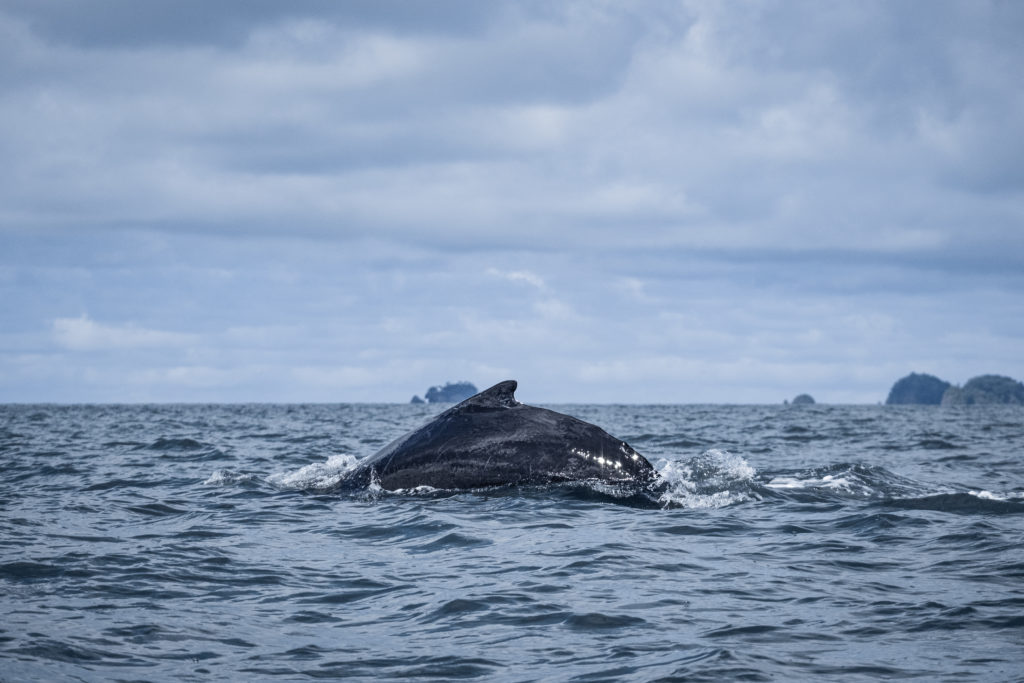
We drove to Boca Brava. Despite it being the rainy season, our guide was waiting for us there on a beautiful sunny day. Five American expats joined us on the boat. The eight of us set off in the small boat for Chiriquí National Park. Right in the middle was a mother swimming with her calf. They kept coming very close to the boat! It took an hour for another tourist boat to arrive. So we were almost alone the entire time.
Seeing these little calves swimming, and then seeing the mothers appear right next to them, was deeply impressive. This is especially impressive given how much bigger they are than our little boat. These giants can grow up to 15 metres long, which is rather small for the rorqual family, and weigh between 25 and 30 tonnes. We saw whales repeatedly that day, both from the beach and from the boat.
Can you do whale watching from bed?
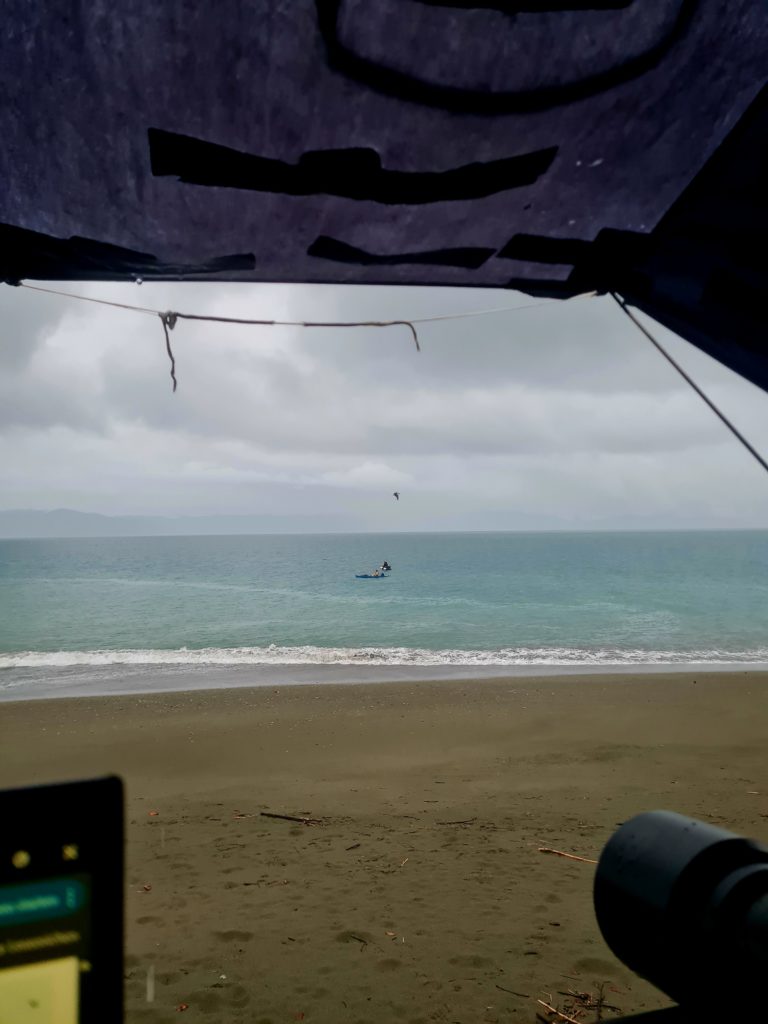
In Costa Rica, we tried again. This time, from our bed looking through the tent window, parking on a beach near Puerto Jiménez where whales are often seen. We didn’t see the whales, but we did see dolphins, rays and turtles.
The second time we went whale watching, it was in Uvita, with a colleague of Michi’s brother who organises whale-watching tours. He took us on a fishing trip with his friends. I still find fishing boring, but there were whales in the bay. We saw them jumping in the distance repeatedly, and then a mother and calf came very close.
It was different here, though. Despite it being the off-season, five other boats carrying up to 15 people surrounded the animals. So much for whale watching alone! It’s a completely different experience to have the animals almost exclusively to yourself. We are looking forward to new encounters on our way north. After all, we will continue to encounter the coast and its fascinating inhabitants all along the way.
Pingback:Eye to eye with the world’s largest fish in Mexico – Travel & Wildlife
Pingback:Three whales, three worlds – Travel & Wildlife