
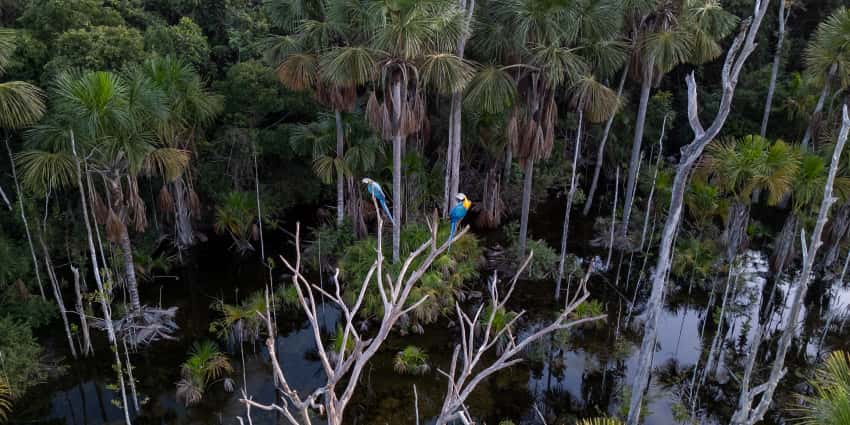
When leafing through travel brochures, it is impossible to imagine the tropics without colourful birds in the sky. Parrots, toucans and hummingbirds seem to be everywhere. These colourful birds are indeed an integral part of the image of the tropics.
We also enjoy watching these vibrant creatures, particularly macaws, which are the largest species of true parrot, in South and Central America. They are exclusively native to this continent and vary greatly in size and colour, but their cries betray their presence wherever they are. Macaws are intelligent, social and extremely communicative. This makes them fascinating, but unfortunately also makes them popular for keeping as pets. This spells disaster for them in the wild.
The alarm clock
Before you see them, you hear them — their loud screeching is unmistakable. Like the rooster on the farm, macaws often wake us up early in the morning. And all this in the middle of the rainforest!
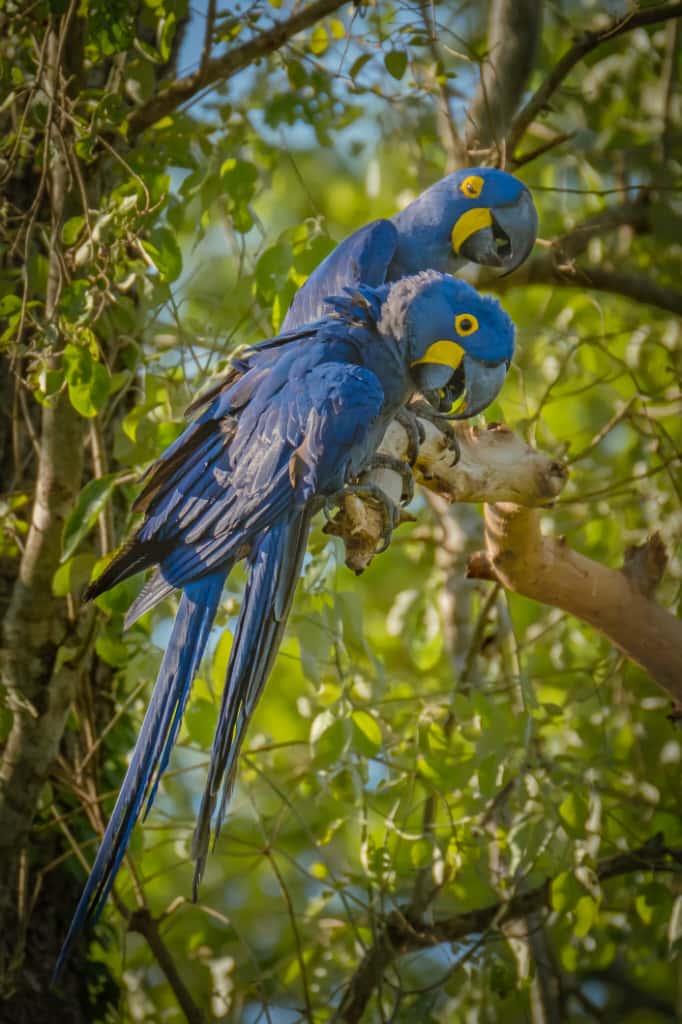
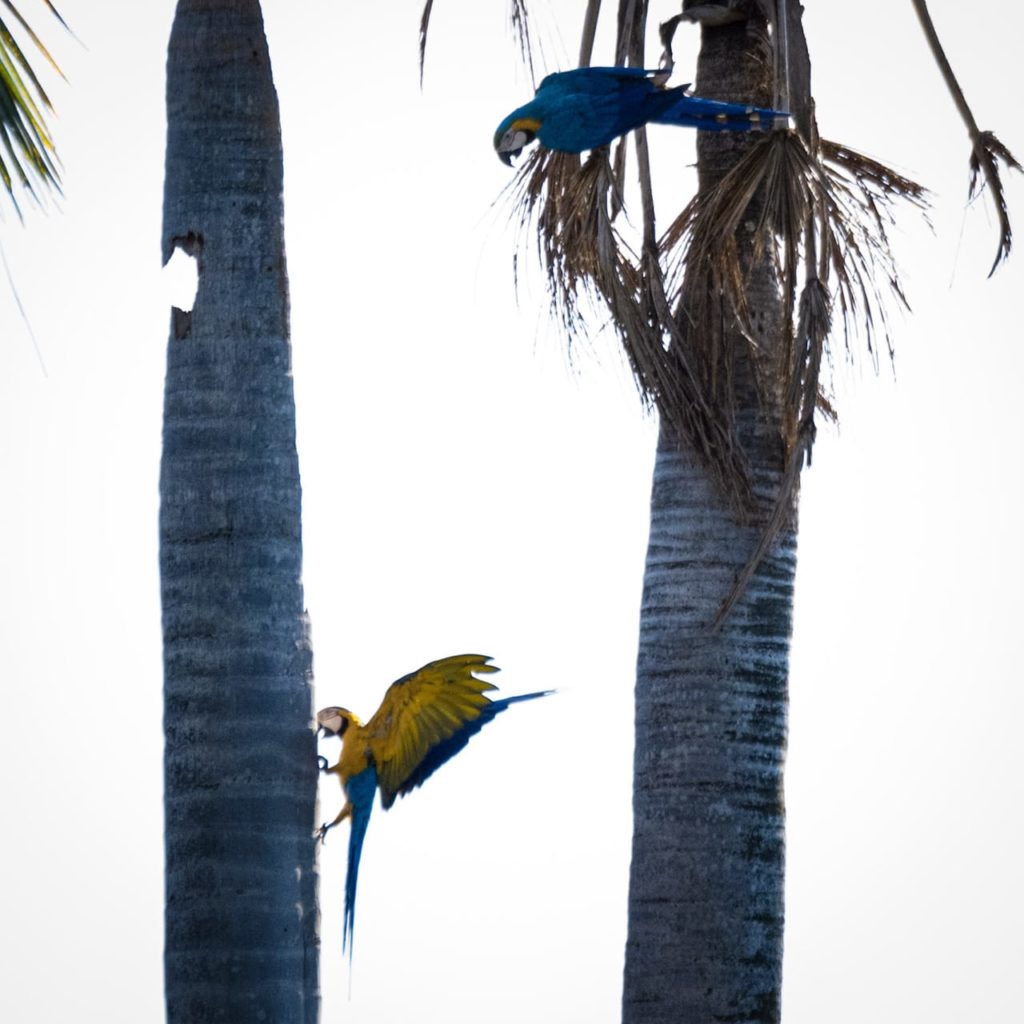
While we mainly saw blue species in the south, they became increasingly redder the further north we went. The largest of these is the hyacinth macaw, which can grow to a length of up to one metre. Its deep blue plumage and yellow skin around the beak make it unmistakable.
The scarlet macaw is probably the best known, with its bright red, yellow and blue feathers. However, the blue-and-yellow macaw is also a classic of the tropical rainforest. There are eight species in total and two are already extinct, while four are critically endangered. Seeing the birds in the wild is incredibly impressive.
These animals are special for more than just their colour
Although macaws may appear striking, their colourful plumage actually serves as camouflage in nature. They blend in remarkably well with the rainforest, thanks to the interplay of light, shadow and leaves. However, when they fly, they are easily recognized.
Their powerful beak is a real tool. It is so strong that they can crack hard nuts with it. It also acts as a ‘third claw’ when they climb in the treetops. Their favourite foods include nuts and fruit. If they grab something, it hurts because they pinch to show that they want something when they are in captivity.
A fascination with a downside
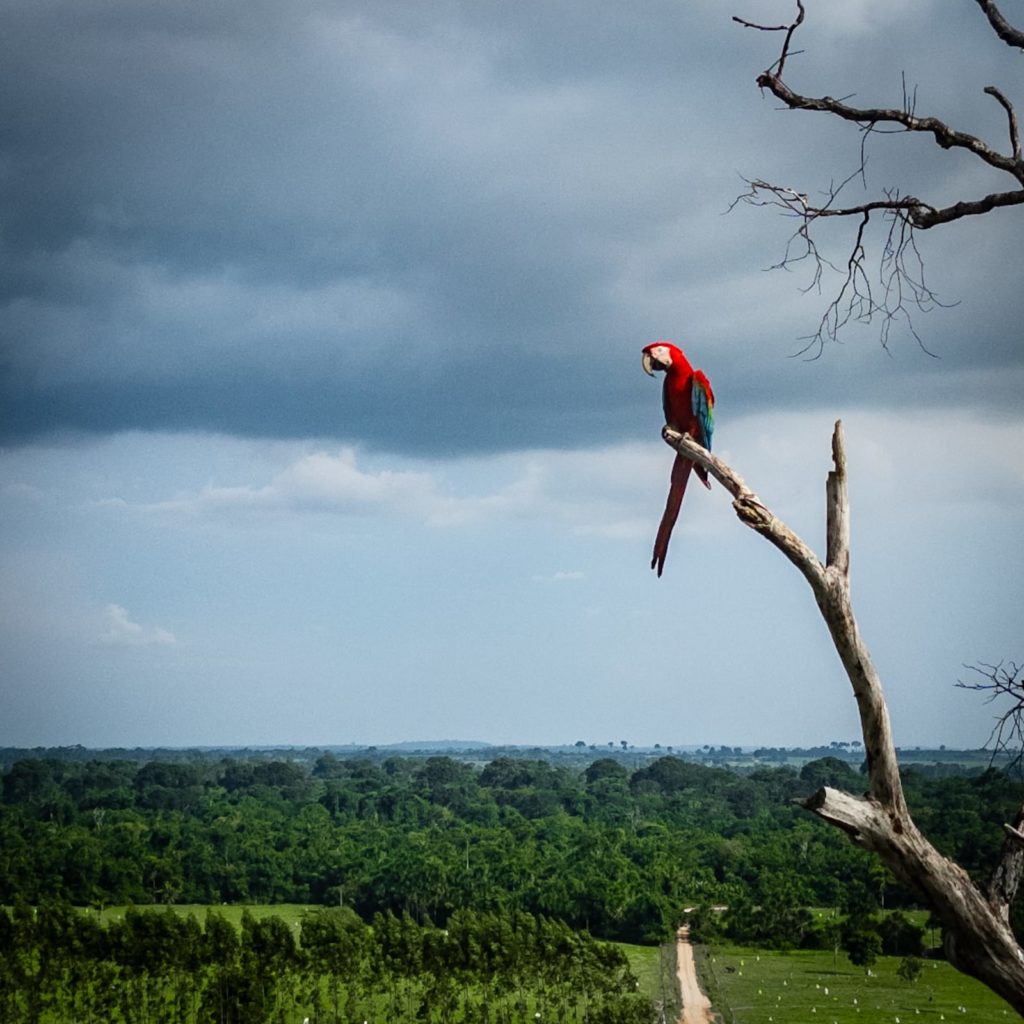
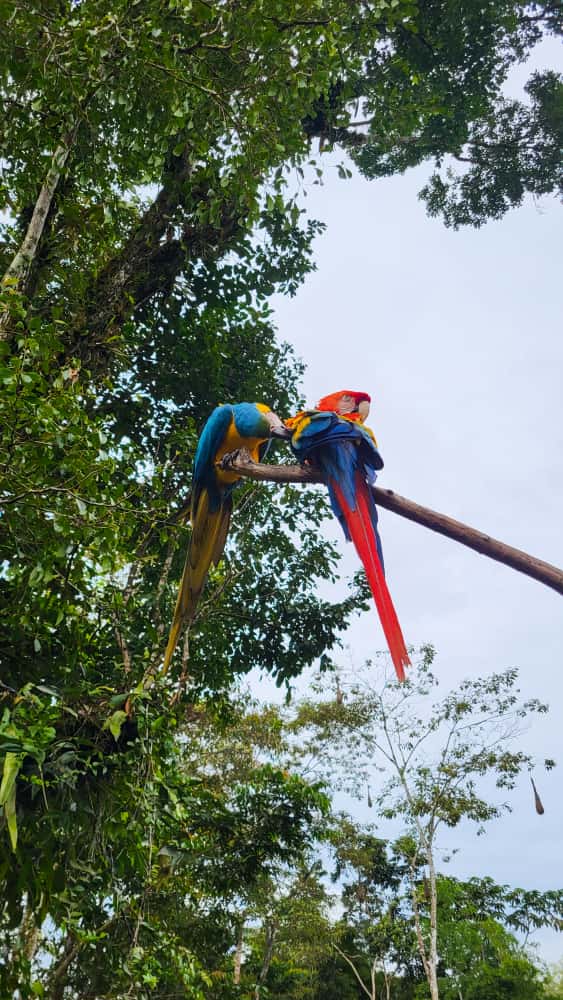
Unfortunately, macaws’ beauty and ability to mimic sounds also make them popular pets. Their wings are often clipped to stop them flying away. We saw many such animals on our trip. They make popular photo subjects and tourist attractions. Even though measures are being taken to combat this, once the birds have become accustomed to humans, they cannot simply be returned to the wild — especially if they can no longer fly.
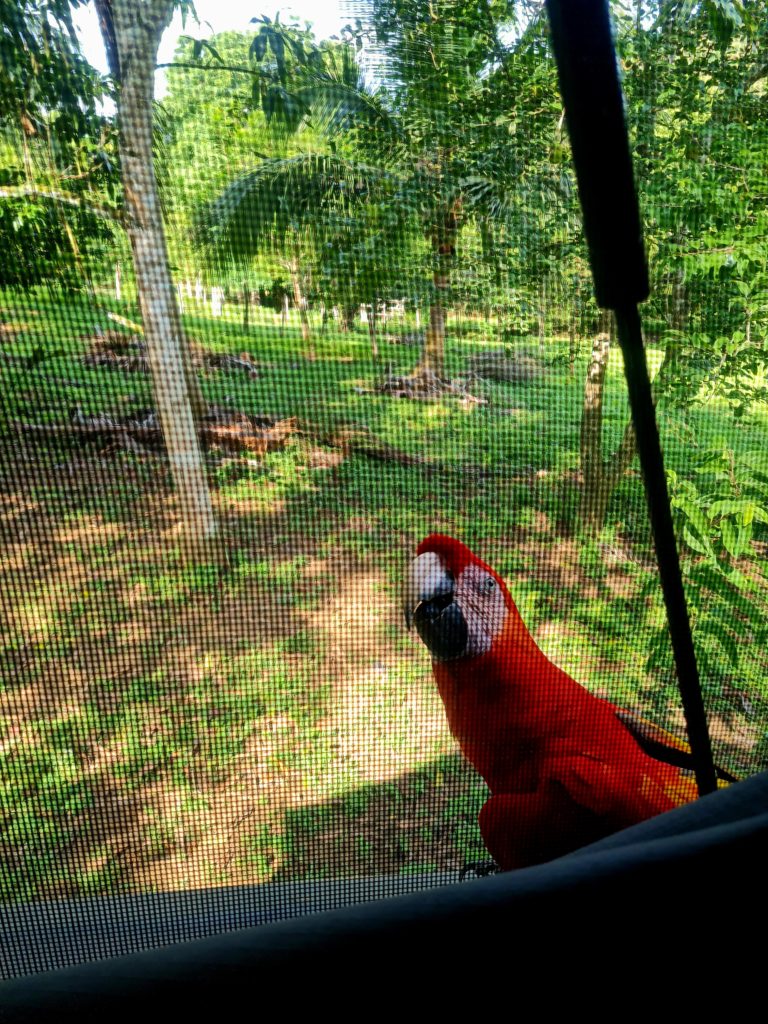
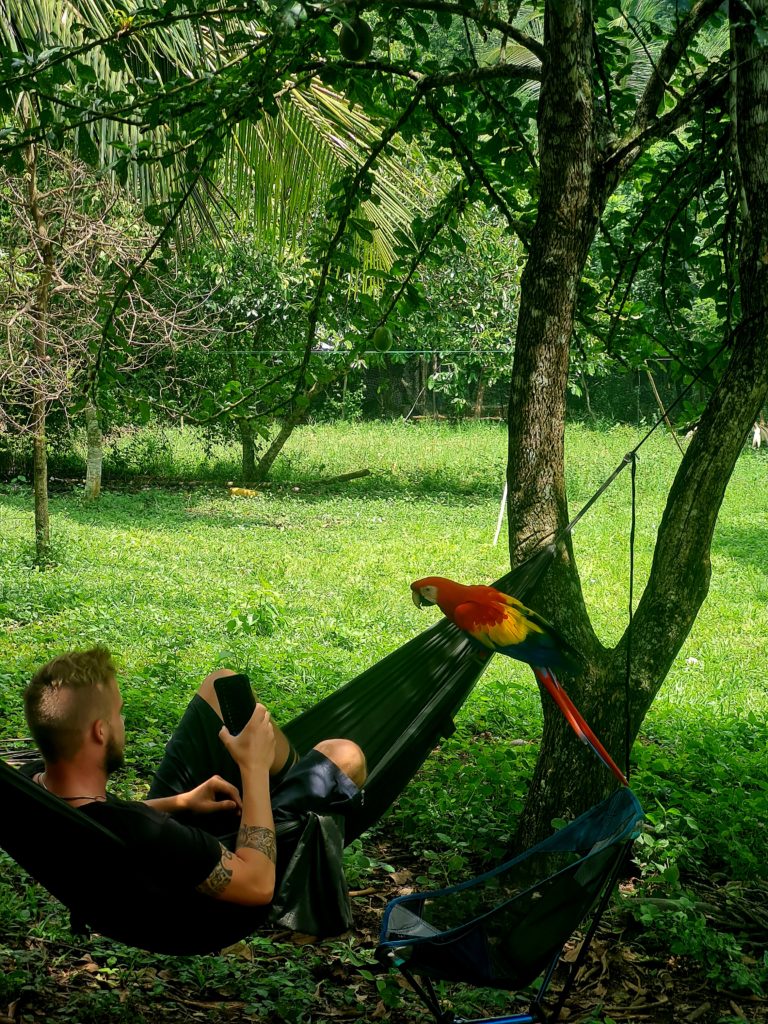
In Colombia, however, we encountered an unusual pair of macaws that were allowed to fly freely. They had been living with a family for years. They could have flown away at any time, but chose to stay, probably because they had grown up there as chicks. The male was extremely territorial and would regularly attack men. Only the grandmother could control all the birds, but unfortunately she was not there that day. So, we had to constantly defend our plates of rice from the two macaws.
One of the macaws was particularly inquisitive. He inspected our handwashing routine, tested the hammock, tasted the coffee, and finally examined our entire car. With them around, it was never boring.
Endangered paradise
In the wild, adult macaws have few natural enemies. The greatest threat to their survival is the loss of their habitat due to deforestation and land conversion for agriculture. Like many other animals in the tropical rainforest, macaws are also suffering from the disappearance of their natural habitat. Old trees provide them with a home, and without the forest, there are no nests.
Poaching and the illegal wildlife trade also hinder efforts to preserve populations in the wild. However, there are some successful conservation projects, such as the one in Costa Rica where macaws can easily find food thanks to the planting of sea almond trees, and their numbers have recovered.
Macaws live in stable pair relationships. They are almost always seen flying in pairs and are faithful to each other for life. In captivity, they can live up to 65 years. I think that’s because they have one advantage over us: if they can’t stand each other for a while, they have the whole sky at their disposal! We, on the other hand, are stuck sharing a few square metres in the Land Cruiser!